“ At length I saw tears starting from her beauteous eyes—perfidious tears! 'Oh heavens!' I cried, 'my dearest Manon, why allow your sorrows to afflict you to this degree without imparting their cause to me?' She answered me only with sighs, which increased my misery. I arose trembling from my seat: I conjured her, with all the urgent earnestness of love, to let me know the cause of her grief: I wept in endeavouring to soothe her sorrows: I was more dead than alive. A barbarian would have pitied my sufferings as I stood trembling with grief and apprehension. ”
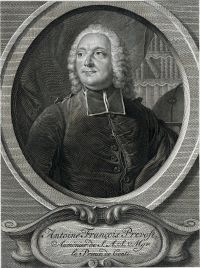
abbé Prévost
Summary
Manon Lescaut, written by Abbé Prévost, is an 18th-century novel chronicling the doomed romance between the titular heroine, Manon, and the impoverished nobleman Lescaut, set against the backdrop of Paris, Amiens, and New Orleans. The narrative explores themes of love’s destructive power, moral decay, and the conflict between passion and virtue, as the protagonists navigate betrayal, sorrow, and social ostracism.
Through their tragic interplay of loyalty and despair, the work examines the transient nature of happiness and the corrosive impact of desire, culminating in a harrowing reflection on human vulnerability and the illusion of contentment.
Quotes from Manon Lescaut (abbé Prévost)
“ It was then that honour and virtue made me feel the most poignant remorse, and that I recalled with bitterness Amiens, my father's house, St. Sulpice, and every spot where I had ever lived in happy innocence. By what a terrific interval was I now separated from that blessed state! I beheld it no longer but as a dim shadow in the distance, still attracting my regrets and desires, but without the power of rousing me to exertion. 'By what fatality,' said I, 'have I become thus degraded? Love is not a guilty passion! why then has it been to me the source of profligacy and distress? ”
“ At last we agreed for half that sum—all that my purse contained. "I tried to console Manon as we went along, but despair was rankling in my own heart. I should have destroyed myself a thousand times over, if I had not felt that I held in my arms all that could attach me to life: this reflection reconciled me. 'I possess her at least,' said I; 'she loves me! she is mine! Vainly does Tiberge call this a mere phantom of happiness.' I could, without feeling interest or emotion, see the whole world besides perish around me. Why? Because I have in it no object of affection beyond her. ”
