
“ Our generation has carried this dilettantism, this playing with serious ideas into science, into literature, into politics, and into everything which it is not too lazy to go into, and with its dilettantism has introduced, too, its coldness, its boredom, and its one-sidedness and, as it seems to me, it has already succeeded in developing in the masses a new hitherto non-existent attitude to serious ideas. ”
Dilettantism
Definition and stakes
The theme of “dilettantism” has been addressed by authors such as Anton Chekhov, John Ruskin, Richard Francis Burton, Johann Wolfgang von Goethe and Max Weber. It is often associated with terms like education, physical, school, science and university.
Quotes about “dilettantism”
 John Ruskin,
On the Old Road Vol. 1 (of 2…
John Ruskin,
On the Old Road Vol. 1 (of 2…
“ I appeal, finally, to all those who are to become the pupils of these schools, to keep clear of the notion of following Art as dilet [Pg 301] tantism: it ought to delight you, as your reading delights you—but you never think of your reading as dilettantism. It ought to delight you as your studies of physical science delight you—but you don't call physical science dilettantism. If you are determined only to think of Art as a play or a pleasure, give it up at once: you will do no good to yourselves, and you will degrade the pursuit in the sight of others. ”
 Richard Francis Burton,
The Sentiment of the Sword — The Second Evening
Richard Francis Burton,
The Sentiment of the Sword — The Second Evening
“ He doesn't show to advantage amongst men who've begun the study in their boyhood, and who've possibly inherited it from father and grandfather; he'd stand out far better if men looked at his ledger or his cash book. Dilettantism is very well in its way as that great political compromise ' half a loaf,' but it will boast itself to be the whole. ”
 Johann Wolfgang von Goethe,
Autobiography: Truth and Fiction Relating to My Life
Johann Wolfgang von Goethe,
Autobiography: Truth and Fiction Relating to My Life
“ Conscious of his acquirements, with the certainty of faithful perseverance, and distrusting the teachers of the day, my father undertook to instruct his own children, allowing them to take particular lessons from particular masters only so far as seemed absolutely necessary. A pedagogical /dilettantism/ was already beginning to show itself everywhere. The pedantry and heaviness of the masters appointed in the public schools had probably given rise to this evil. ”
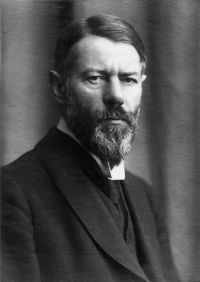 Max Weber,
The Protestant Ethic and the Spirit of Capitalism
(1930)
Max Weber,
The Protestant Ethic and the Spirit of Capitalism
(1930)
“ But dilettantism as a leading principle would be the end of science. He who yearns for seeing should go to the cinema, though it will be offered to him copiously to-day in literary form in the present field of investigation also. ”
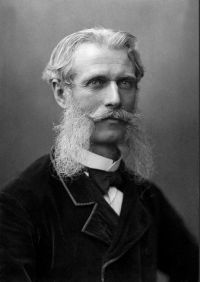 Karl Hilty,
Happiness: Essays on the meaning of life
(1903)
Karl Hilty,
Happiness: Essays on the meaning of life
(1903)
“ For many such persons, a specific business would be a redemption from the dilettantism which now threatens their peace of mind. They might well follow the example of that Bavarian prince who has undertaken the profession of an oculist. I am even inclined to believe that part of the movement toward the higher education which is so conspicuous among women in our day is simply the response to this demand of human nature for some definite vocation. ”
Helen Dawes Brown, Talks to Freshman Girls
“ When I dwell on the delight of Studies, I take no thought of ease. Let us have no royal road to learning, but meet valiantly all the hardships of the way. No girl of stamina is looking for 6 “soft courses.” I trust that in your freshman year you are having just what Schiller meant when he talked of “sport in art”; I hope you are having sport in education, the spirited conquest of difficulty! Do you not feel the great adventure of education, the romance of the quest of knowledge? You should know the keen delight of competition, not so much with one another as with yourselves. ”
Emperor of Rome Julian, The Works of the Emperor Julian…
“ What professional athletes love to call the pink of condition you thought unsuitable for a king who must enter for contests that are not make-believe. Such a one must put up with very little sleep and scanty food, and that of no precise quantity or quality or served at regular hours, but such as can be had when the stress of work allows. And so you thought you ought to train yourself in athletics with a view to this, and that your exercises must be military and of many kinds, dancing and running in heavy armour, and riding. ”
 John Boyle O'Reilly,
Athletics and Manly Sport
(1890)
John Boyle O'Reilly,
Athletics and Manly Sport
(1890)
“ There ought to be a first, second, and third prize in every school, public and private, for such accomplishments as walking, swimming, running, jumping, boxing, and climbing. Our scholars should be taught to cultivate body as well as mind; to breathe as well as to calculate; to know that strength is as sure to follow exercise as knowledge to follow study. Then they will truly know the meaning of the wise man (Johnson) , who said: "Such is the constitution of man that labor may be said to be its own reward;" ”
Lev Nikolayevich Tolstoy, Non-Activity
“ The value attributed to work in our society could only occur as a reaction against idleness, exalted to a sign of nobility and is still considered to be a sign of dignity among the wealthy and little educated classes. Work, an exercise for our body parts, is always a need for a human, just as it is demonstrated by calves, galloping around the stake to which they are tied, and by people of wealthy classes, martyrs of gymnastics, - all kinds of games: chess, cards, lawn tennis, etc., as they’re unable to find a more sensible exercise for their body parts. ”
Henry Paul Mainwaring Jones, War Letters of a Public-School Boy
“ At present, we see that the poor, despised athlete or sportsman—call him what you will—is coming to the front, (p. 050) practically and metaphorically, in a way which makes one wonder if, for the higher purposes of duty, athletics are not really the very best of all systems of training. When we look at the matter in the broadest light, the explanation shines forth clearly. All learning and all business are in the end simply and solely selfish. For example, you work hard for a scholarship at Oxford or Cambridge—why? ”
Emory Adams Allen, The Golden Gems of Life; Or, Gathered Jewels for the Home Circle
“ In this world nothing of value is to be obtained without labor. So there are some who will question the value of that education which is not born of patient perseverance and hard work. As in the exercises of the gymnasium the value consists in the exertions required to {210} perform them, so that knowledge and mental power acquired by arduous exertion is of the most lasting and real value. ”
Albertus T. Dudley, The School Four
“ You can’t mean right unless you have principles to follow, and the only way to work right is to work hard. Here in school is the place to make a good start. I don’t need to say anything about your studies, for your teachers will see to that, but in your athletics, unless there’s been a big change since my day, there’s room for improvement. ”
John M. Tyler, The Whence and the Whither of Man
“ And the battle of brute force can be fought in a multitude of ways—by mere strength, by activity, by offensive or defensive armor, or even by running into the mud and skulking. It is harder to gain knowledge, and yet many roads lead to an education. Colleges are by no means the only seats of education. And many totally uneducated men have college diplomas. ”
Charles Reynolds Brown, The Cap and Gown (1910)
“ The work of the school is not to enable the shoemaker to stick to his last and make more money out of it than uneducated men are making out of their lasts. “Education is to lift the shoemaker above his last, and to carry the merchant beyond his store, the lawyer beyond his brief, the minister beyond his sermon.” The supreme reward for being educated lies in the enlarged capacity one gains for life. The reward [Pg 139] for physical exercise, for mental drill, for hard study, for the steady effort to do one’s duty, is to be found in that increased power to live. ”
 Letitia Elizabeth Landon,
Living Literary Characters, No V. Edward Lytton Bulwer
(1831)
Letitia Elizabeth Landon,
Living Literary Characters, No V. Edward Lytton Bulwer
(1831)
“ The evaded study and dissipation of a public school is succeeded by the equally evaded study and dissipation of a college; and too many of our youthful aristocracy begin life with self-sufficiency for knowledge, prejudices for opinions, and with pleasure a habit rather than an enjoyment. ”
Viscount James Bryce Bryce, Promoting good citizenship (1909)
“ This development, in itself fraught with laudable means of enjoyment, has had the unforeseen yet natural result of reducing the interest in public affairs among the educated classes, while the ardour with which competitions in physical strength and skill are followed has in like manner diverted the thoughts and attention of the less educated—and indeed, not of them alone but of many also in a class from whom better things might have been expected. ”
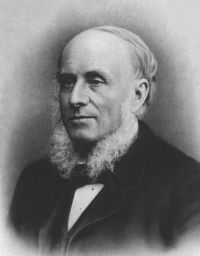 Alexander Bain,
Popular Science Monthly
(1877)
Alexander Bain,
Popular Science Monthly
(1877)
“ Bodily training, fine art (itself an aggregate of alternations) , language, science, do not exhaust all the varieties of acquirement, but they indicate the chief departments whose alternation gives relief to the mental strain, and economizes power in the whole. Under these, as already hinted, there are variations of attitude and exercise ”
 Orison Swett Marden,
Architects of Fate; Or, Steps to Success and Power
Orison Swett Marden,
Architects of Fate; Or, Steps to Success and Power
“ What are the chances for success of students who "cut" recitations or lectures, and gad, lounge about, and dissipate in the cities at night until the last two or three weeks, sometimes the last few days, before examination, when they employ tutors at exorbitant prices with the money often earned by hard-working parents, to stuff their idle brains with the pabulum of knowledge; not to increase their grasp or power of brain, not to discipline it, not for assimilation into the mental tissue to develop personal power, but to fatten the memory, the liver of the brain ”
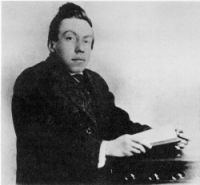 Randolph Silliman Bourne,
Education and living
(1917)
Randolph Silliman Bourne,
Education and living
(1917)
“ The degree has become a sort of honorific badge for all classes of society, and the colleges have been forced to give it this quasi-athletic setting and fix the elaborate rules of the game by which it may be won—rules which shall be easy enough to get all classes competing for it, and hard enough to make it a sufficient prize to keep them all in the race. ”
Charlotte Marie Mason, Home Education (Mason) — Part III: 'Habit Is Ten Natures'
“ But with these great aids from without and from above, there was still the depressing sense of labouring at education in the dark; the advance made by the young people in moral, and even in intellectual, power was like that of a door on its hinges--a swing forward to-day and back again to-morrow, with little sensible progress from year to year beyond that of being able to do harder sums and read harder books. ”
 Charles Egbert Craddock,
The windfall
Charles Egbert Craddock,
The windfall
“ A young man who goes to college to study, and who does it, is contemned as a grind. Such a thing as taking exercise for health merely in order to be able to study, to clear the brain—like a horseback ride, or a long walk—is antiquated. ”
Carl Brown Riddle, College Men Without Money
“ The vital question of work while in school, which at first seemed dark and gloomy, has changed its aspect entirely. In the first place the thing that impressed me most forcibly was that the boys and girls who take class honors are students who are compelled to work their way through college. It is not that any of us lack talent. We all have sufficient talent, but where we are deficient is in will-power to persistently 223 keep our ideals before us and attain that ideal with the vigor of a Field or a Lincoln. ”
Thomas Dyke Acland, The education of the farmer — Appendix (1857)
“ Under the pressure of mere secondary matters, the ancient languages, history, and mathematics, the principal foundations of all mental culture, sink down themselves to be mere secondary subjects, and the boy loses the true preparatory training for all higher study. The proper end of the gymnasium, TO LEARN HOW TO LEARN, is lost ”
Various, The Atlantic Monthly (1858)
“ No normal training could keep pace with his abnormal growth. No school discipline could supply the fuel necessary to feed the consuming fire of that ravenous intellect. Grammars, manuals, compends,—all the apparatus of the classes,— were only oil to its flame. ”
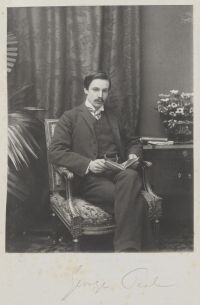 Arthur George Villiers Peel,
The Future of England
(1912)
Arthur George Villiers Peel,
The Future of England
(1912)
“ The individual needs to be shepherded towards aptitude and efficiency, and this, next to our care for the physique of the race, is the other main problem which for many decades far into the future, if we are to judge from the analogous history of our primary education, must exercise us most. ”
John S. Hart, In the School-Room: Chapters in the Philosophy of Education
“ Those who at the beginning of a course in school make to themselves a distinct aim, towards which day after day they work their course, undiscouraged by defeat, unseduced by ease or the temptation of a temporary pleasure, not only win the immediate objects of pursuit, but gain for themselves those habits of aiming, of perseverance, of self-control, which will make them hereafter controlling and governing men. ”
Alexander Bain,
Popular Science Monthly
(1883)
“ We have, at last, the division of labor in teaching; outside the university, teachers too much resemble the regent of old—having too many subjects, and too much time spent in grinding. Our teachers are exactly the reverse. ”
Susan Swain Madders, Rambles in an Old City
“ The amusements and sports naturally partook of the character of the age, and hunting, hawking, tilting, and tournaments were at once the schools for gaining strength and dexterity, as well as safety-valves for the overflowing mobility engendered by the spirit of the times. These pursuits were elevated to the rank of perfect sciences, and the education of a youth was incomplete that did not embrace regular tuition in all of them. Nor were they, as we know, confined to the “lords of the creation.” ”
George Herbert Betts, New Ideals in Rural Schools
“ As the spirit of adventure and pioneering finds less to stimulate it, the gregarious impulse, the tendency to flock together for our work and our play, gains in ascendancy. Growing out of the greater intellectual opportunities and demands of modern [Pg x] times, the standard of education has greatly advanced. And under the incentive of present-day economic success and luxury, comfortable circumstances and a moderate competence no longer satisfy our people. ”
 Wendell Phillips,
The Scholar in a Republic
(1881)
Wendell Phillips,
The Scholar in a Republic
(1881)
“ Education is not Greek and Latin and the air-pump. Still, I rate at its full value the training we get in these walls. Though what we actually carry away is little enough, we do get some training of our powers, as the gymnast or the fencer does of his muscles: we go hence also with such general knowledge of what mankind has agreed to consider proved and settled, that we know where to reach for the weapon when we need it. ”
Graham Wallas, Human Nature in Politics
“ The competition for the second division has become incomparably more severe, and there is no reasonable test under which some of those second class officials who have continued their education by means of reading and University teaching in the evening would not show, at thirty years of age, a greater fitness for the highest work than would be shown by many of those who had entered by the more advanced examination. ”
William Blaikie, How to Get Strong and How to Stay So
“ The very natural result follows, that the great majority of students, at graduation, average no better in size, strength, health, vigor, endurance, or stamina than those of a generation ago, or are any fitter to stand successfully the wear and tear of their life's work. ”
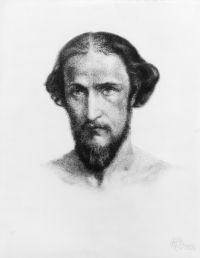 William James Stillman,
The Autobiography of a Journalist…
William James Stillman,
The Autobiography of a Journalist…
“ In the senior year I turned back in my life and sought not to hasten, but to linger in the precincts of study, and the imperious necessity of getting to the only occupation which would give me the independence I desired, alone deterred me from a post-graduate course of study to compensate for the inadequacy of the past years. ”
Orison Swett Marden,
How to Succeed; Or, Stepping-Stones to Fame and Fortune
“ You do not carry away the Greek and Latin text-books, the geometry and algebra into your occupations any more than the athlete carries the apparatus of the gymnasium, but you carry away the skill and the power if you have been painstaking, accurate and faithful. ”
 Charles Webster Leadbeater,
The Inner Life: volume I — Fifth Section…
Charles Webster Leadbeater,
The Inner Life: volume I — Fifth Section…
“ But there is another large class who might succeed by determined effort, but fail for want of that effort. These exactly correspond to the boy who drops behind his class not because he is too young, but because he is too lazy to do his work. ”
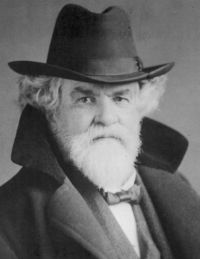 Edward Eggleston,
The Hoosier School-boy
Edward Eggleston,
The Hoosier School-boy
“ Happy boys and girls that go to school nowadays! You have to study harder than the generations before you, it is true; you miss the jolly spelling-schools, and the good old games that were not half so scientific as base-ball, lawn tennis, or lacrosse, but that had ten times more fun and frolic in them; but all this is made up to you by the fact that you escape the tyrannical old master. ”
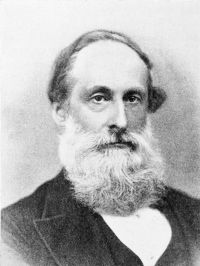 Daniel Hack Tuke,
Popular Science Monthly
(1880)
Daniel Hack Tuke,
Popular Science Monthly
(1880)
“ It would be well, however, if the masters would consider whether they do not sometimes, by the amount of work set the boys, render it difficult to those who have only average ability to do all that is expected of them without encroaching on the time of recreation. In one school I find, as might be expected, that some boys do and some do not complain of the pressure put upon them out of school. ”
