Chyme

Definition and stakes

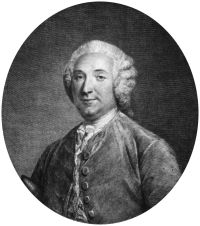
Portrait of James Duncan James Duncan,  The Naturalist's Library (1840)

“ The changes which the alimentary substances undergo in the part of the canal behind the insertion of the vessels just spoken of, depends in some measure on its length. When very short the chyme contained in it affords no chyle, as may be observed in caterpillars; but when of great length, there is no doubt that the chyme is further elaborated, and chyle separated, just as it was in the chylific ventricle. It is scarcely possible that the small egg-shaped ventricle of the Lepidoptera could separate all the chyle necessary for the support of life, unless aided by the long intestine ”

Source: Wikisource

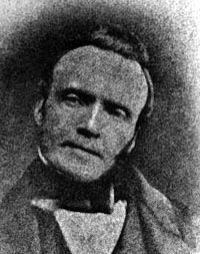
Portrait of William A. Alcott William A. Alcott,  The Young Mother: Management of Children in Regard to Health

“ For, suppose the chyme to be perfect, though even this may be mere pulp, rather than chyme, and suppose it pass quietly along into the duodenum and other small intestines. All this process, thus far, may go on naturally enough, and yet the chyle may not be well formed, and the chymous mass may find its way out of the system without answering any of the purposes of nutrition. For no matter how well the food is dissolved in the stomach, if it do not become good and proper chyle, the blood which is formed will not be good and perfect blood ”
Source: Gutenberg

Portrait of Andrew Combe Andrew Combe,  The physiology of digestion considered with relation to the principles of dietetics… (1836)

“ It is true that, by the agency of gastric juice on food out of the body, a change very similar to chymification can be effected on it; but when we remember that chyme or the result of real digestion, is essentially the same in its elementary or component principles, whatever be the kind of food from which it is formed,—and that, as yet, we are acquainted with no purely chemical agent, which, applied to different substances, gives rise to the same uniform product,—we shall be more willing to believe that chymification is neither a purely mechanical nor a purely chemical operation ”
Source: Gutenberg

Get perspective with Kwize: daily news enlightened by great literature