Duodenum

Definition and stakes

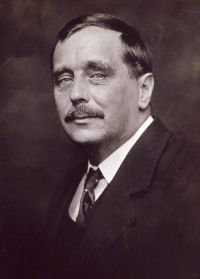
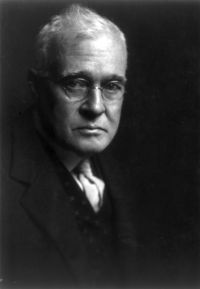
Portrait of Horace Fletcher Horace Fletcher,  The A.B.-Z. of our own nutrition

“ The course of the food in the small intestine.—Chyme is not forced from the stomach by every wave that passes over the antrum, but only at intervals. When the pylorus relaxes, the food, moved towards the pylorus under considerable pressure, is squirted along the duodenum for two centimetres or more. Careful watching of this food shows that usually it lies for some time in the curve of the duodenum until additions have been made to it from the stomach, and a long, thin string of food is formed. ”

Source: Gutenberg

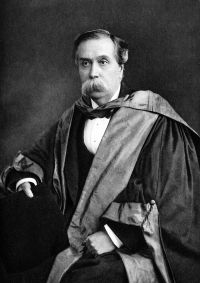
Portrait of Andrew Combe Andrew Combe,  The physiology of digestion considered with relation to the principles of dietetics… (1836)

“ They are comparatively few in number in the part of the duodenum near the stomach, and gradually multiply in the course downwards till they arrive at the maximum of development at its lower end and in the jejunum: they again diminish in the ileum, and disappear altogether in the large gut. The bloodvessels and nerves of the duodenum are extremely numerous, and indicate the importance of its functions. ”
Source: Gutenberg

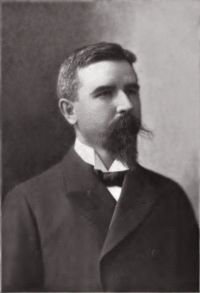
George S. Huntington,  The Anatomy of the Human Peritoneum and Abdominal Cavity

“ Into it empty the ducts of the liver and pancreas. In some animals a pear-shaped enlargement is found, corresponding to the duodenal antrum of the human intestine, as the dilated proximal portion of the duodenum immediately beyond the pylorus is called. Examples of this condition are furnished by the cetaceans, several rodents, the llama and dromedary and the koala (Phascolarctos) .
In the birds and in many mammals (e. g., dog, Fig. 200, and many rodents, as the rabbit) the duodenum is drawn out into a long loop surrounding the pancreas.
”
Source: Gutenberg

Get perspective with Kwize: daily news enlightened by great literature