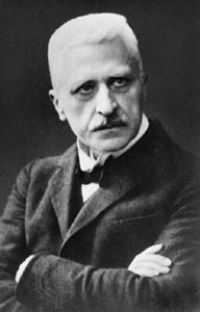
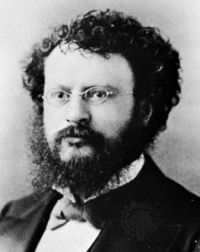
Homogeneity, the condition of uniformity or sameness within a system, has been a central concept in philosophical and scientific discussions, exploring how consistency leads to diversity and structure. From Herbert Spencer's idea of an original uniformity evolving into distinct forms to Miguel de Unamuno's contemplation of entropy as a return to a fundamental evenness, writers have wrestled with its significance.
Giovanni Papini viewed homogeneity as the cosmic source of all variety, while Rudolf Otto pondered how consistent elements could produce the world's intricacy. These viewpoints, covering philosophy, biology, and psychology, highlight homogeneity as both a foundational condition and a transformative force in the development of complexity, revealing its dual function as an origin and a final state in processes of differentiation.
 Giovanni Papini,
Four and Twenty Minds
(1922)
Giovanni Papini,
Four and Twenty Minds
(1922)