Anaximander

Definition and stakes

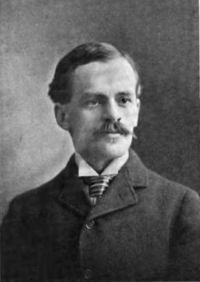
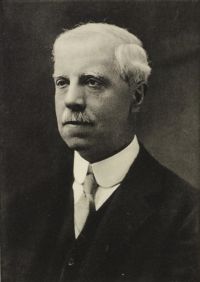
Portrait of Sir Thomas Little Heath Sir Thomas Little Heath,  The Copernicus of Antiquity (Aristarchus of Samos…

“ His originality is illustrated by his theory of evolution. According to him animals first arose from slime evaporated by the sun; they lived in the sea and had prickly coverings; men at first resembled fishes.
But his astronomical views were not less remarkable. Anaximander boldly maintained that the earth is in the centre of the universe, suspended freely and without support, whereas Thales regarded it as resting on the water and Anaximenes as supported by the air. It remains in its position, said Anaximander, because it is at an equal distance from all the rest of the heavenly bodies.
”
Source: Gutenberg

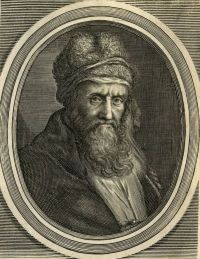
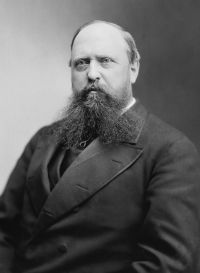
Portrait of Othniel Charles Marsh Othniel Charles Marsh,  Popular Science Monthly (1880)

“ To this same cause, as we shall see, many later authors attributed the origin of all fossil remains.
Previous to this, Anaximander, the Miletian philosopher, who was born about 610 years before Christ, had expressed essentially the same view. According to both Plutarch and Censorinus, Anaximander taught that fishes, or animals very like fishes, sprang from heated water and earth, and from these animals came the human race; a statement which can hardly be considered as anticipating the modern idea of evolution, as some authors have imagined.
”
Source: Wikisource

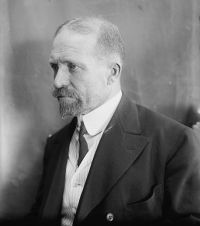
Portrait of James Frederick Ferrier James Frederick Ferrier,  Philosophical Works of the Late James Frederick Ferrier (1888)

“ The principle of Thales was too sensible, too material, too definite, to be the universal in all things. The principle of Anaximander again was too indefinite to be comprehended. But air combines the two. It is sufficiently indefinite to be universal: it is sufficiently definite to be perceived and understood it is, in short, a determinate infinite. Such appears to be the position occupied by Anaximenes in the philosophical genealogy which we are sketching. He attempted to effect a sort of compromise between the philosophy of Thales and the philosophy of Anaximander. ”
Source: Wikisource

Get perspective with Kwize: daily news enlightened by great literature