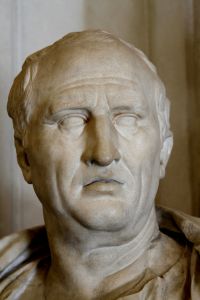
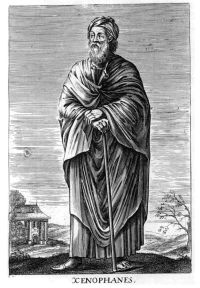
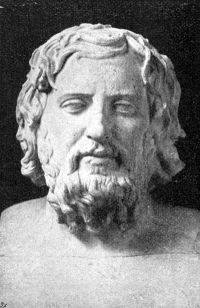
Xenophanes

Definition and stakes

Baron Edward Bulwer Lytton Lytton,  Athens: Its Rise and Fall, Complete

“ He divested the Great Deity of the human attributes which human vanity, assimilating God to man, had bestowed upon him. The divinity of Xenophanes is that of modern philosophy—eternal, unalterable, and alone: graven images cannot represent his form. His attributes are— ALL HEARING, ALL SIGHT, and ALL THOUGHT.
To the Eleatic school, founded by Xenophanes, belong Parmenides, Melissus the Samian, Zeno, and Heraclitus of Ephesus.
”
Source: Gutenberg

W. T. Stace,  A critical history of Greek philosophy

“ Xenophanes is the originator of the quarrel between philosophy and religion. He attacked the popular religious notions of the Greeks with a view to founding a purer and nobler conception of Deity. Popular Greek religion consisted of a belief in a number of gods who were conceived very much as in the form of human beings. Xenophanes attacks this conception of God as possessing human form. It is absurd, he says, to suppose that the gods wander about from place to place, as represented in the Greek legends. It is absurd to suppose that the gods had a beginning. ”
Source: Gutenberg

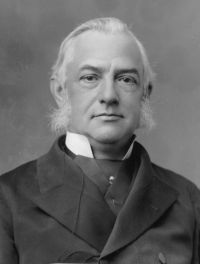
Portrait of F. Max Müller F. Max Müller,  Chips from a German Workshop, Volume 5

“ For let us bear in mind that Xenophanes, though he boldly denied the existence of all the mythological deities, and declared his belief in One God, “neither in form nor in thought like unto mortals,”22 was not therefore considered a heretic. He never suffered for uttering his honest convictions: on the contrary, as far as we know, he was honored by the people among whom he lived and taught. ”
Source: Gutenberg

Get perspective with Kwize: daily news enlightened by great literature