Summary

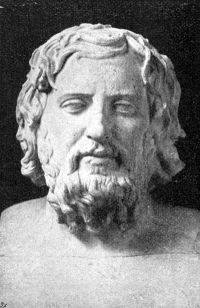
Portrait of Xenophon Xenophon The First Four Books of Xenophon's Anabasis

Cyrus is indeed a most valuable friend to those to whom he is a friend, but a most violent enemy to those to whom he is an enemy. He has forces, too, both infantry and cavalry, as well as a naval power, as we all alike see and know; for we seem to me to be encamped at no great distance from him. It is therefore full time to say whatever any one thinks to be best.
Source: Gutenberg

Portrait of Xenophon Xenophon The First Four Books of Xenophon's Anabasis

Tissaphernes replied as follows: 16. "I am delighted, O Clearchus, to hear your judicious observations; for, with these sentiments, if you were to meditate anything to my injury, you would appear to be at the same time your own enemy. But that you may be convinced that you have no just cause for distrusting either the king or me, listen to me in your turn. 17. If we wished to destroy you, do we appear to you to be deficient in numbers either of cavalry or infantry, or in warlike equipments, with the aid of which we might be able to do you injury, without danger of suffering any in return?
Source: Gutenberg

Portrait of Xenophon Xenophon The First Four Books of Xenophon's Anabasis

The Greeks then withdrew, and, after some deliberation, gave their answer, Clearchus speaking for them: "We neither formed ourselves into a body, with the view of making war upon the king, nor, when we set out, was our march directed against him; but Cyrus, as you yourself are well aware, devised many pretences for his proceedings, that he might both take you by surprise, and lead us up hither. 22. But when we afterwards saw him in danger, we were ashamed, in the face of gods and men, to desert him, as we had before allowed him to bestow favours upon us.
Source: Gutenberg

Get perspective with Kwize: daily news enlightened by great literature