Hearsay, a legal term, refers to an out-of-court statement presented in court to establish its validity, usually considered inadmissible unless specific exceptions apply. Legal systems across the globe, from the U.S. to England and Canada, govern its admissibility, seeking to balance reliability with the right to confrontation.
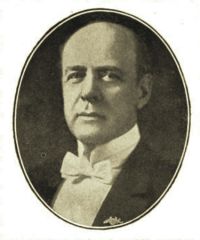
Writers such as Voltaire have criticized its influence on shaping opinions, while Ambrose Bierce pointed out its contradictory role in law and religion. William H. Taft emphasized the importance of cross-examination in revealing the truth, contrasting it with the constraints of hearsay. These viewpoints highlight hearsay as both a legal instrument and a philosophical dilemma, illustrating the tensions between evidence, witness accounts, and the pursuit of certainty.
 Voltaire,
Voltaire's Philosophical Dictionary
Voltaire,
Voltaire's Philosophical Dictionary