“ The person who joins an assurance society is in a different position. His annual or quarterly saving becomes at once a portion of a general fund, sufficient to realize the intention of the assured. At the moment that he makes his first payment, his object is attained. Though he die on the day after his premium has been paid, his widow and children will receive the entire amount of his assurance. ”
Assurance
Definition and stakes
Assurance, encompassing both financial stability and personal confidence, has been a recurring theme in literature and legal discussion. From Samuel Smiles’ analysis of life assurance societies, which frame savings as collective security for dependents, to Ralph Waldo Emerson’s assertion of self-reliance as a source of inner certainty, the concept spans material and existential realms.
Texts like John Badcock’s satirical take on medical insurance and the Encyclopædia Britannica’s distinction between life assurance and risk-based insurance highlight its varied role in shaping human vulnerability. These diverse perspectives collectively emphasize assurance as both a practical tool and a philosophical stance against uncertainty.
Quotes about “assurance”
1922 Encyclopædia Britannica (1922)
“ In an ordinary life assurance or endowment assurance contract the policyholder has the knowledge that either he or his dependents are assured of the payment of a sum on the occurrence of an event that must happen. In the various forms of insurance, such as fire insurance, marine insurance, accident insurance or burglary insurance, the policyholder pays a premium in order to be insured against a contingency which, if he is an honest man, he hopes will never occur. ”
Anonymous, The Atlantic Monthly (1866)
“ To decide which of these is most advantageous to the assured, we must consider the subject of premiums, and understand whence companies derive their surplus, or, as it is sometimes called, the profits. This is easily explained. As the liability to death increases with age, the proper annual premium for assurance would increase with each year of life. ”
active 1816-1830 John Badcock, Real Life In London, Volumes I. and II
“ Among the various improvements of these improving times, for we are still improving, notwithstanding complaint, a learned little Devil, inflated with gas, has suggested a plan for the establishment of a Medical Assurance-office, where person and property might be insured at so much per annum, and the advantages to be derived from such an Institution would be, that instead of the insurance increasing with years, it would grow less and less. ”
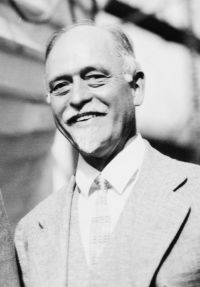 Irving Fisher,
Harper's Pictorial Library of the World War…
Irving Fisher,
Harper's Pictorial Library of the World War…
“ Insurance contracts shall be considered as contracts of life assurance for the purpose of Paragraphs 11 to 14 when they depend on the probabilities of human life combined with the rate of interest for the calculation of the reciprocal engagements between the two parties. ”
of the Bank of England John Francis, Annals, Anecdotes and Legends: A Chronicle of Life Assurance
“ But there was a further and more remarkable fact in operation; as an annuitant enjoying a life-rent or pension could make an insurance on his life, by way of provision for his family. These, however, were only exceptional cases, for which the premiums were probably distressingly heavy; if we may judge from the fact, that a century later the life of a healthy man, [38] of any age, was estimated at only seven years’ purchase. The great merchants of that day were chiefly responsible for such assurances, and many of the corporations engaged in these and similar adventures. ”
Parliament of the United Kingdom, Probate and Legacy Duties Act 1808… (1808 |noyear)
“ POLICY of Assurance, or Insurance, or other Instrument, by whatever Name the same shall be called; whereby any other lawful Insurance whatsoever, not herein-before charged, shall be made upon any Property or Interest whatever, from Loss or Damage of any Kind; Where the Premium or Consideration for such Insurance, actually and bonâ fide paid, given, or contracted for, shall not exceed the Rate of Twenty Shillings per Centum on the Sum insured; If the whole Sum insured shall not exceed 100l. ”
 Ralph Waldo Emerson,
Self-Reliance
(1841)
Ralph Waldo Emerson,
Self-Reliance
(1841)
“ Few and mean as my gifts may be, I actually am, and do not need for my own assurance or the assurance of my fellows any secondary testimony. ”
Anonymous, London and Its Environs Described…
“ XII. The insurance of any goods, &c. in this society, which shall be insured in any other office at the same time, to be void: And yet such insurer shall be liable to his covenants. Nevertheless a liberty is given to insure in any other office, so as such other insurance is indorsed on this society’s policy, and subscribed by two of the trustees, for which 6d. per cent. is to be paid; and in which case a proportionable part of any loss is to be paid by this society. ”
Anonymous, London and Its Environs Described…
“ II. Every person designing to insure, shall before surveying the goods, pay 10s. earnest money, to go towards the charge of insuring, if agreed to, and the policy be taken up within three months after, otherwise the said 10s. is sunk to the society: but if the directors do not agree to such insurance, the earnest money to be returned. Also old policies directed to be renewed, and not taken away within three months are also to be cancelled, and the charge of the policies and stamps of such renewals deducted out of the deposit-money of such insurers. ”
 Ambrose Bierce,
The Devil's Dictionary — I
Ambrose Bierce,
The Devil's Dictionary — I
“ INSURANCE AGENT: But if your house burns without insurance it will be a total loss. HOUSE OWNER: Beg your pardon -- by your own actuary's tables I shall probably have saved, when it burns, all the premiums I would otherwise have paid to you -- amounting to more than the face of the policy they would have bought. But suppose it to burn, uninsured, before the time upon which your figures are based. If I could not afford that, how could you if it were insured? INSURANCE AGENT: O, we should make ourselves whole from our luckier ventures with other clients. Virtually, they pay your loss. ”
Stanley Matthews, Thommessen v. Whitwill — Dissent
“ It seems to us equally clear that no distinction can be drawn between the case just supposed and that of insurance; for the policy of insurance in cases of total loss is analogous to a contract of sale, by which the ship, or what remains of her, or the hope of her recovery, become. on the happening of the contingency, the property of the insurer, and the insurance money payable, the price, as upon a conveyance. ”
Various, The Girl's Own Paper, Vol. VIII, No… (1880)
“ The object for which insurance exists is to guard against certain accidents to which we are all liable, such as the destruction of property by fire, or the loss of future earnings by disablement or death. An agreement is entered into by which one party, known as the insurer or assurer, agrees to pay to another, called the insured or assured, a certain sum in the event of the particular event insured against happening.The document which states the conditions of this agreement is called the policy, and the payment made on account of the insurance is known as the premium. ”
William J. Brennan, Jr., United States v. Bess — Opinion of the Court
“ The obligation of an insurer in a policy of life insurance is made up of a number of promises, of which one is to pay to the beneficiary the amount of the insurance-the 'proceeds'-and another is to pay the 'surrender value' to the insured upon his demand. ”
Anonymous, London and Its Environs Described…
“ And every insurer, or their representatives, at the end of their insurance may in a great measure (if not entirely) reimburse themselves their purchase-money (originally paid by them for their numbers) by disposing of them at a market price, which they may do without any farther trouble than applying to the Society’s office.The regulations of the Society are as follow:All persons at the time of their admission are to be between the ages of twelve and forty-five, and must then appear to be in a good state of health. ”
Anthony Florian Madinger Willich, Domestic Encyclopædia (1802)
“ When the sum insured is large, a higher premium per cent. is demanded; and money, papers, pictures, gunpowder, and jewels, are excluded.—If an article be falsely described, in order that it may be insured at a lower premium, the policy is justly void. An insurance made on the same subject at different offices, must be specified by indorsement on the policy; and, in case of loss, the offices pay a sum in proportion ”
Samuel Nelson, Union Insurance Company v. Hoge…
“ The eighth section of the charter provides that the rates of insurance shall be fixed and regulated by the company; and premium notes therefor shall be received from the insured, and shall be paid at such time or times and in such sum or sums as the company shall from time to time require; and any person applying for insurance, so electing, may pay a cash premium, in addition to a premium note, or a definite sum in money, to be fixed by the company, in full of said insurance and in lieu of a premium note. ”
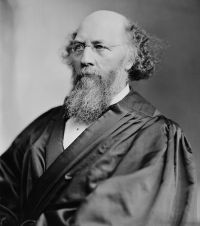 Stephen Johnson Field,
Warnock v. Davis — Opinion of the Court
Stephen Johnson Field,
Warnock v. Davis — Opinion of the Court
“ They hold that a valid policy of insurance effected by a person upon his own life, is assignable like an ordinary chose in action, and that the assignee is entitled, upon the death of the assured, to the full sum payable without regard to the consideration given by him for the assignment, or to his possession of any insurable interest in the life of the assured. ”
William J. Brennan, Jr., Commissioner of Internal Revenue v…
“ A policy of insurance on the life of any person expressed to be for the benefit of, or duly assigned, transferred or made payable to, any married woman, or to any person in trust for her, or for her benefit, by whomsoever such transfer may be made, shall inure to her separate use and benefit and that of her children, independently of her husband or his creditors or any other person effecting or transferring the policy or his creditors. ”
 Samuel Freeman Miller,
Bates v. Equitable Insurance Company…
Samuel Freeman Miller,
Bates v. Equitable Insurance Company…
“ Now, it is a well known and frequent thing in insurance business, for a person to insure his life, or his property, and either in the policy itself, or by indorsement at the time it is made, or by subsequent indorsement, to which the consent of the company is generally required, to direct the loss to be paid to some third party. ”
Charles Evans Hughes, Lanasa Fruit Steamship Importing Company v…
“ For all that appears the insured may have been advised and may have assumed that the coverage clause of the policy gave protection in such a case as is here involved and may not have desired to continue to pay the additional premium for the other losses described. We are not called upon to speculate as to the state of mind of the insured's officers and one asserted ambiguity is not to be cured by another. If the general coverage clause permits recovery, we see nothing to defeat it in what was done in connection with the rider. ”
of Exeter F.S.A. William Cotton, Everybody's Guide to Money Matters
“ If insurance be made in this manner, for which a slightly higher rate of pre- mium is paid, it will be found that, however long a person might live, more would accrue at death by insurance than by saving. There are in active existence so many insur- ance companies of good repute and undoubted stability that no difficulty need be experienced in making a judicious selection. Of course, the intelligent insurer would prefer an office whose system would best suit his own requirements. ”
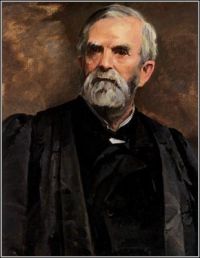 William Burnham Woods,
Klein v. Insurance Company — Opinion of the Court
William Burnham Woods,
Klein v. Insurance Company — Opinion of the Court
“ The assured assumes the risk of paying premiums during the life on which the insurance is taken, even though their aggregate amount should exceed the insurance money. He also takes the risk of the forfeiture of his policy if the premiums are not paid on the day they fall due. ”
Anthony Florian Madinger Willich, Domestic Encyclopædia (1802)
“ In this respect also, several societies grant policies of insurance for certain premiums: and, though our limits do not allow us minutely to specify the rules and rates of computation which different associations have adopted, yet we think it will be useful to exhibit a few particulars relative to the premiums paid by persons, who insure either their own lives, or those of others in which they have a certain interest. ”
Mahlon Pitney, McCoach v. Insurance Company of North America…
“ In determining the liabilities upon its contracts of insurance of any insurance company other than life insurance, and the amount such company should hold as a reserve for reinsurance, he shall, for casualty insurance companies, charge one half of the premium on all annual policies written within one year, and on policies written for more than one year he shall charge one half of the current year's premiums, plus the whole of the premiums for subsequent years. ”
 Harlan F. Stone,
Landress v. Phoenix Mutual Life Insurance Company…
Harlan F. Stone,
Landress v. Phoenix Mutual Life Insurance Company…
“ On the other hand, the average man is convinced that there is, and so certainly is the man who takes out a policy of accident insurance. It is his reading of the policy that is to be accepted as our guide, with the help of the established rule that ambiguities and uncertainties are to be resolved against the company. ”
1911 Encyclopædia Britannica (1911)
“ When the insured effects insurance with an underwriter through a broker, then, unless otherwise agreed, the broker is liable for the premium to the underwriter, who is, however, directly responsible to the assured for losses or liabilities falling on the policy and for returnable premium. ”
Joseph McKenna, Aetna Life Insurance Company v…
“ Has any proposal or application to insure your life been made to any company, association, or agent on which a policy of insurance is now pending? Or has any such proposal or application ever been made for which insurance has not been granted, or on which a policy or certificate of insurance was not issued in full amount, and of the same kind as applied for? ”
Government of the Republic of Korea, Commercial Act
“ Where the whole or a part of a insurance contract is null and void, if the policyholder and the insured have acted in good faith and without gross negligence, the insurer may be demanded to return the whole or a part of the premium. ”
 Hugo Black,
United States v. South-Eastern Underwriters Association…
Hugo Black,
United States v. South-Eastern Underwriters Association…
“ Perhaps no modern commercial enterprise directly affects so many persons in all walks of life as does the insurance business. Insurance touches the home, the family, and the occupation or the business of almost every person in the United States. ”
Anthony Florian Madinger Willich, Domestic Encyclopædia (1802)
“ And if the value of an article be partially insured, and receive damage by fire, the society is bound to make restitution only to the extent of the sum for which the premium is paid. III. For lives: by virtue of which, on the demise of the party insured, a sum of money becomes due to the person for whose benefit the insurance was made. ”
various contributors, Punch, Volume 147, Issue 3825… (19th and 20th century)
“ In these circumstances you will no doubt be persuaded of the desirability of sending me the premium forthwith, in order to effect an insurance which has your Lessors' approval. It possible that the office you name would give you credit for so much of is the premium as is proportionate to the risk unexpired. ”
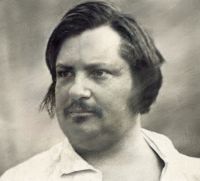 Honoré de Balzac,
The Illustrious Gaudissart
(1833)
Honoré de Balzac,
The Illustrious Gaudissart
(1833)
“ Therefore, in view of your circumstances and of your age, I quite understand that you have no need of insurance for yourself; but, Monsieur, you might induce others to insure, either because of their inherent qualities which need development, or for the protection of their families against a precarious future. Now, if you will subscribe to the 'Globe,' and give me your personal assistance in this district on behalf of insurance, especially life-annuity,—for the provinces are much attached to annuities—Well, if you will do this, then we can come to an understanding about the wine. ”
Anonymous, London and Its Environs Described…
“ V. Any number of houses, out-houses, with goods or wearing apparel therein may be insured in one policy, provided the sum insured on each is particularly mentioned; but in all insurances the premium is to be paid for even hundred pounds. ”
Albert Sidney Bolles, Putnam's Handy Law Book for the Layman
“ The modern policy provides that it shall be void if the insured "now has or shall hereafter make or procure any other contract of insurance, whether valid or not, on property covered in whole or in part by this policy." If the insured effects other insurance he must not forget to obtain consent of the insurer, and should he forget his good intention will not preserve his policy. ”
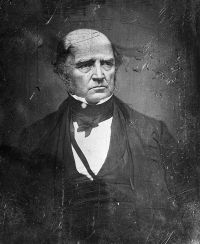 Levi Woodbury,
Carpenter v. Providence Washington Insurance Company…
Levi Woodbury,
Carpenter v. Providence Washington Insurance Company…
“ The insured are required by the terms of the policy to notify the company of all sales of the property insured, and the assent of the insurance company is necessary in order to cover the property for the new owner. ”
Stephen Johnson Field,
Franklin Insurance Company v. Colt…
“ The preliminary arrangements for the amount and conditions of insurance are in a great majority of instances made by agents. It is always so where the insurance is effected out of the State where the company is incorporated and has its principal place of business. ”
1911 Encyclopædia Britannica (1911)
“ If fires destroy a million of dollars’ worth in property insured for its full value, and a million’s worth more in property insured for one-tenth of its value, the insurers will pay $1,000,000 upon the first group and more than $750,000 upon the second. But if all the insurance is taken at the same rate the insurers will have received premiums ten times as great on the former group as upon the latter. ”
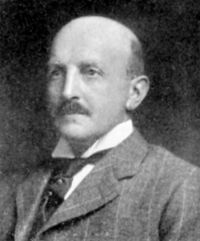 Chauncey Goodrich Parker,
The Nature of a Policy of Insurance With Regard to its Assignability
(1888)
Chauncey Goodrich Parker,
The Nature of a Policy of Insurance With Regard to its Assignability
(1888)
“ Duer is of opinion that insurance policies, like bills of exchange, are negotiable, and that a bona fide purchaser for value will take the policy, subject, to be sure, to every legal defence which would be available against the original insured, but free from all equities existing between the original insured and the underwriter. ”
