Summary

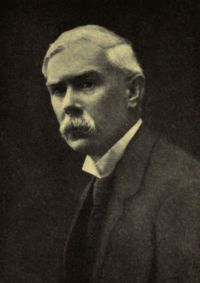
Portrait of John Arthur Thomson John Arthur Thomson The Outline of Science — Part VII

Some of the puzzle-boxes, with a reward of food inside, are quite difficult, for the various bolts and bars have to be dealt with in a particular order, and yet many mammals master the problem. What is plain is that they gradually eliminate useless movements, that they make fewer and fewer mistakes, that they eventually succeed, and that they register the solution within themselves so that it remains with them for a time. It looks a little like the behaviour of a man who learns a game of skill without thinking. It is a learning by experience, not by ideas or reflection.
Source: Wikisource

Portrait of John Arthur Thomson John Arthur Thomson The Outline of Science — Part VII

But how are we to know when to credit the animal with intelligence and when with something less spontaneous? Above all, how are we to know when the effective action, like opening the mouth the very instant it is touched by food in the mother's beak, is just a physiological action like coughing or sneezing, and when there is behind it--a mind at work?
Source: Wikisource

Portrait of John Arthur Thomson John Arthur Thomson The Outline of Science — Part VII

To the sense of sight in birds, the sense of hearing comes a good second. A twig breaks under our feet, and out sounds the danger-call of the bird we were trying to watch. Many young birds, like partridges, respond when two or three hours old to the anxious warning note of the parents, and squat motionless on the ground, though other sounds, such as the excited clucking of a foster-mother hen, leave them indifferent. They do not know what they are doing when they squat; they are obeying the living hand of the past which is within them. Their behaviour is instinctive.
Source: Wikisource

Get perspective with Kwize: daily news enlightened by great literature