“ No one can read the chapters of The Descent of Man which Darwin devotes to a consideration of the mental characters of man and animals without noticing, on the one hand, how sedulous he is in his search for hereditary foundations, and, on the other hand, how fully he realises the importance of acquired habits of mind. The fact that educability itself has innate tendencies—is in fact a partially differentiated educability—renders the unravelling of the factors of mental progress all the more difficult. ”
Educability
Definition and stakes
The theme of “educability” has been addressed by authors such as . It is often associated with terms like education, teacher, knowledge, curriculum and learning.
Quotes about “educability”
Various, The Continental Monthly, Vol. 1…
“ If we sum up in one word the most pervading, constant, and obvious characteristic of our schools, and of the teaching and the learning in them to this day, that word must be, immethodical. Although admitting that the education of the young should distinctly embrace the four departments of a training, physical, intellectual, moral, and social, yet, for the sake of clearness in our discussion and its results, not less than through the necessities of a restricted space, we shall here confine our remarks wholly to education in its intellectual aspect. ”
 George S. Boutwell,
Thoughts on Educational Topics and Institutions
George S. Boutwell,
Thoughts on Educational Topics and Institutions
“ But our schools ought to do something always and for every one, for the full development of a character that is essential to artisans, merchants, lawyers, or farmers. Learning should not be prized merely as an aid to the daily work of life,—though this it properly is and ever ought to be,—but for its expansive power in the mind and soul, by which we attain to a more perfect knowledge of things human and divine. ”
 Charlotte Mason,
School Education — 1904 Preface
Charlotte Mason,
School Education — 1904 Preface
“ Under the phrase, 'Education is a life,' I have tried to show how necessary it is to sustain the intellectual life upon ideas, and, as a corollary, that a school-book should be a medium for ideas, and not merely a receptacle for facts. That normal children have a natural desire for, and a right of admission to, all fitting knowledge, appears to me to be suggested by the phrase, 'Education is the science of relations.'These considerations clear the ground towards that of a curriculum. ”
 William Edward Burghardt Du Bois,
The Talented Tenth
(1903)
William Edward Burghardt Du Bois,
The Talented Tenth
(1903)
“ Men we shall have only as we make manhood the object of the work of the schools—intelligence, broad sympathy, knowledge of the world that was and is, and of the relation of men to it—this is the curriculum of that Higher Education which must underlie true life. ”
James Gall, A Practical Enquiry into the Philosophy of Education
“ By every person of learning, then, and even by individuals of humbler attainments, in the exercise of a plain common understanding, the importance of the rule in education which we are here recommending, must at once be admitted;—That in the selection of truths and exercises for educating and training the young, a decided preference should always be given to those which have a reference to their well-being and happiness, not in time so much as in eternity. ”
 Bertrand Russell,
Education and the good life
(1926)
Bertrand Russell,
Education and the good life
(1926)
“ Finally, I shall discuss intellectual education, its aims, its curriculum, and its possibilities, from the first lessons in reading and writing to the end of the university years. The further education which men and women derive from life and the world I shall regard as lying outside my scope; but to make men and women capable of learning from experience should be one of the aims which early education should keep most prominently in view. ”
Charlotte M. Mason, An Essay Towards a Philosophy of Education…
“ Here we find the sole justification of the scanty curricula provided in most of our schools, for the tortuous processes of our teaching, for the mischievous assertion that “it does not matter what a child learns but only how he learns it.” If we teach much and children learn little we comfort ourselves with the idea that we are ‘developing’ this or the other ‘faculty.’ A great future lies before the nation which shall perceive that knowledge is the sole concern of education proper, as distinguished from training, and that knowledge is the necessary daily food of the mind. ”
George D. Strayer, A brief course in the teaching process (1911)
“ This problem will be treated in considerable detail when we come to consider the study lesson.Pupils at work forming habits of thought, feeling, and action; acquiring knowledge of nature and of society; forming ideals which make for social well-being; and learning in all of this work to act independently, to function in the society of which they are a part: this is education, and these are the goals which we should strive to achieve every day and every hour that we teach. ”
 John Dewey,
Democracy and Education
(1916)
John Dewey,
Democracy and Education
(1916)
“ What is the significance of our definition in application to reading, writing, mathematics, history, nature study, drawing, singing, physics, chemistry, modern and foreign languages, and so on? Let us recur to two of the points made earlier in our discussion. The educator's part in the enterprise of education is to furnish the environment which stimulates responses and directs the learner's course. In last analysis, all that the educator can do is modify stimuli so that response will as surely as is possible result in the formation of desirable intellectual and emotional dispositions. ”
Susanna Elizabeth Hull, The Education of the Deaf and Dumb Practically Considered (1865)
“ Education, properly considered, is the training of a child, the patient developing of faculties, both of mind and body, the pruning of the evil, the fostering of the good, fanning the flame of intellect, pouring water on the thirsty soul, till the full-grown man stands forth the glorious image of his Maker. ”
J. M. Wilson, Three Addresses to Girls at School
“ It should be the aim of us all, Council, parents, mistresses, and girls, to show that our ideal of education includes both the training of the intelligence and reason, and the storing the mind with treasures of beauty and instruments of power for opening new avenues into the storehouse of knowledge and delight that the world contains ”
James Gall, A Practical Enquiry into the Philosophy of Education
“ Those connected with education, therefore, are here taught, that the training of the young should be so conducted, that while the attainments of the pupil shall in every instance benefit himself, they shall at the same time be of such a kind, and shall be communicated in such a way, as shall advantage the persons with whom he is to mingle, and the community of which he is to form a part. Unless this lesson, taught us by Nature, be attended to, her plan is obviously left incomplete. ”
 Hugh Miller,
My Schools and Schoolmasters; Or…
Hugh Miller,
My Schools and Schoolmasters; Or…
“ I found that the intelligence which results from a fair school education, sharpened by a subsequent taste for reading, very much heightened in certain items the standard by which my comrades regulated their conduct. Mere intelligence formed no guard amongst them against intemperance or licentiousness ”
 G. Stanley Hall,
Youth: Its Education, Regimen, and Hygiene
G. Stanley Hall,
Youth: Its Education, Regimen, and Hygiene
“ This brings us, finally, to the highest and also immediately practical method of moral education, viz., training the will by and for intellectual work. Youth and childhood must not be subordinated as means to maturity. Learning is more useful than knowing. It is the way and not the goal, the work and not the product, the acquiring and not the acquisition, that educates will and character. ”
William C. Bagley, Craftsmanship in Teaching
“ I wish to discuss with you some phases of the problem that is perhaps foremost in the minds of the teaching public to-day: the problem, namely, of making education bear more directly and more effectively upon the work of practical, everyday life. ”
Giovanni Gentile, The Reform of Education
“ By culture we mean the content of education, the presupposed heirloom which in the course of time must pass from the teacher to the pupil. This spiritual content, in being apprehended, appears under different aspects: as erudition and information; as formation of personal capacities and training of spiritual activities; as art and science; as experience of life and as concept and ideal of existence; as simple cognition and as a norm of conduct. It includes everything that comes within the scope of teaching, and from whose value education derives its peculiar worth. ”
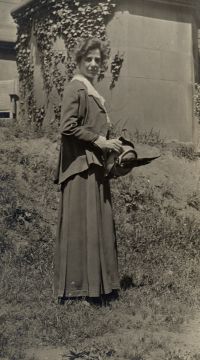 Naomi Norsworthy,
How to Teach
Naomi Norsworthy,
How to Teach
“ After deciding upon the aims of education, the goals towards which all teaching must strive, the fundamental question to be answered is, "What have we to work with?" "What is the makeup with which children start in life?" ”
Giovanni Gentile, The Reform of Education
“ And looking attentively at this universal foundation on which our own human value is supported—call it language, logic, law,—we were led to study the relationship existing between individuality, which is the aim of all forms of education, and this universal spirit which here intervenes as it does in every moment of the human life. It intervenes in education, as the science and the conscience and the entire personality of the teacher. ”
Charlotte M. Mason, An Essay Towards a Philosophy of Education…
“ I am anxious to bring a quite successful educational experiment before the public at a moment when we are told on authority that “Education must be ... an appeal to the spirit if it is to be made interesting.” Here is Education which is as interesting and fascinating as a fine art to parents, children and teachers.During the last thirty years thousands of children educated on these lines have grown up in love with Knowledge and manifesting a ‘right judgment in all things’ so far as a pretty wide curriculum gives them data. ”
 John Ruskin,
Sesame and Lilies
John Ruskin,
Sesame and Lilies
“ They never seek, as far as I can make out, an education good in itself; even the conception of abstract rightness in training rarely seems reached by the writers. But, an education “which shall keep a good coat on my son’s back;—which shall enable him to ring with confidence the visitors’ bell at double-belled doors; which shall result ultimately in establishment of a double-belled door to his own house;—in a word, which shall lead to advancement in life;—this we pray for on bent knees—and this is all we pray for.” ”
Charlotte M. Mason, Parents and children (1897)
“ If the development of character rather than of faculty is the main work of education, and if people are born, so to speak, ready-made, with all the elements of their after-character in them, certain to be developed by time and circumstances, what is left for education to do? ”
George D. Strayer, A brief course in the teaching process (1911)
“ Our course of study contains much which should result in increased appreciation and sympathy in the activities which characterize our modern society. Geography, history, nature study, literature, all deal with men in their [152] relationship with one another in a common environment. If teaching means anything more than gaining knowledge, the method employed in school subjects cannot be without moral significance. ”
Charles A. McMurry, The Elements of General Method…
“ How to establish the moral aim in the center of the school course, how to subordinate and realize the other educational aims while keeping this chiefly in view, how to make instruction and school discipline contribute unitedly to the formation of vigorous moral character, and how to unite home, school, and other life experiences of a child in perfecting the one great aim of education—these are some of the problems whose solution will be sought in the following chapters. ”
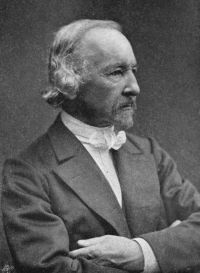 Zacharias Topelius,
The Book of Our Country
Zacharias Topelius,
The Book of Our Country
“ And so, teaching goes like a beam of light through all parts of the people, from folk school and toddler school to university, offering all the knowledge and good practices worth more than silver and gold. ”
 William Wordsworth,
The Prose Works of William Wordsworth
William Wordsworth,
The Prose Works of William Wordsworth
“ Education, I need not remark to you, is everything that draws out the human being, of which tuition, the teaching of schools especially, however important, is comparatively an insignificant part. Yet the present bent of the public mind is to sacrifice the greater power to the less—all that life and nature teach, to the little that can be learned from books and a master. ”
 Ray Stannard Baker,
Adventures in Contentment — Chapter XIII
(1907)
Ray Stannard Baker,
Adventures in Contentment — Chapter XIII
(1907)
“ Not a question have I ever heard in any school meeting of the necessity of educating every American child—at any cost. Think of it! Think how far we have come in that respect, in seventy—yes, fifty—years. Universal education has become a settled axiom of our life. ”
 Theodore Parker,
Speeches, Addresses, and Occasional Sermons…
Theodore Parker,
Speeches, Addresses, and Occasional Sermons…
“ These forces act on the people, making us such men as we are; they act indirectly on the child before he comes to consciousness; directly, afterwards, but most powerfully on the man. What is commonly and technically called education—the development and instruction of the faculties of children, is only preparatory; the scholastic education of the boy is but introductory to the practical education of the man. It is only this preparatory education of the children of the people that is the work of the school-masters. ”
Bertrand Russell,
Mysticism and Logic and Other Essays
(1917)
“ In the narrower sense, education may be confined to instruction, the imparting of definite information on various subjects, because such information, in and for itself, is useful in daily life. Elementary education—reading, writing, and arithmetic—is almost wholly of this kind. But instruction, necessary as it is, does not per se constitute education in the sense in which I wish to consider it. ”
 Agnes Repplier,
Counter-Currents
(1916)
Agnes Repplier,
Counter-Currents
(1916)
“ Hear what one teacher, both sane and experienced, has to say concerning the riot of facts and theories, of art and nature, of science and sentiment, which the school is expected to reduce into an orderly, consistent, and practical system of education. ”
Charlotte M. Mason, An Essay Towards a Philosophy of Education…
“ Shortly we shall have a new rule,—every school must educate every scholar in the three sorts of knowledge proper to him as a human being. What is knowledge? some one will say, and there is no pat, neatly-framed answer to be given; only this we can assert,—Knowledge is that which we know; and the learner knows only by a definite act of knowing which he performs for himself. ”
Charlotte Marie Mason, Home Education — Part 5
“ Value of Dominant Ideas.--But how does this theory of the vital and fruitful character of ideas bear upon the education of the child? In this way: give your a child a single valuable idea, and you have done more for his education than if you had laid upon his mind the burden of bushels of information; for the child who grows up with a few dominant ideas has his self-education provided for, his career marked out. ”
 Herbert Spencer,
Essays on Education and Kindred Subjects
Herbert Spencer,
Essays on Education and Kindred Subjects
“ In brief, you will have to carry on your own higher education at the same time that you are educating your children. Intellectually you must cultivate to good purpose that most complex of subjects—human nature and its laws, as exhibited in your children, in yourself, and in the world. ”
M. Alderton Pink, Procrustes; or, the future of English education (1927)
“ Thus even if we imagine a perfect educational process, carried out by teachers who are all men and women of light and leading, the result of that process will be ultimately conditioned by the quality of the human beings who pass through it. Just as democracy pre-supposes education, so education pre-supposes children who are educable. ”
E. R. Murray, Froebel as a pioneer in modern psychology
“ All true education is double-sided, prescribing and following, active and passive, positive yet giving scope, firm and yielding.... Between educator and pupil should rule invisibly a third something to which both are equally subject. ”
Evelyn Dewey, Schools of to-morrow
“ The scientific interest which requires personal observation, reflection, and experimental activity, will be added to the teacher’s sympathetic interest in the welfare of children. Education that associates learning with doing will replace the passive education of imparting the learning of others. ”
M. Alderton Pink, Procrustes; or, the future of English education (1927)
“ And when we have taken more account than at present of the profound differences in individual capacities we shall cease to think of an education as something extraneous to the person educated, and to regard the school-curriculum as a Procrustean bed, to suit the dimensions of which the child’s mentality can be extended or truncated as required. ”
 James Hutchins Baker,
Education and life
(1900)
James Hutchins Baker,
Education and life
(1900)
“ They form right habits by every-day requirements of the schoolroom; they provide the personal influence of teachers whose good character is the first passport to their position; they employ the lessons of history and literature, and in distinct ways impart principles of right conduct; they inspire courage to overcome difficulties; they direct the better impulses of children toward discovery in the great world of truth, and, by the very exercise of power required in the process of education, prepare them for life. ”
