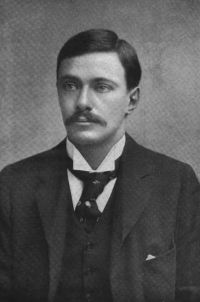
“ A label was attached to you then, which gave your name and address, and you find the same label round your neck still. For the sake of convenience you continue to answer to your name, and, in a manner of speaking, are responsible for the old lease. But all the time you feel that another person wears the label now. A different identity (that is your private opinion) inhabits your house. He wears the same (or similar) boots and shoes; he comes when he is called; he has a face that is still recognized by his friends. ”
Label
Definition and stakes
A label is a marker used to identify, classify, or convey information about an object, concept, or entity. From practical uses in libraries and gardening to metaphorical examinations of identity and meaning, the theme of labeling reveals diverse perspectives. Charles A.
Cutter emphasized its role in cataloging knowledge, while John Morley critiqued it as a means of bypassing intellectual effort. E. F. Benson compared labels to social roles, and Ada M. Marzials highlighted their creative potential in design. These varied approaches underscore how labels both structure reality and reflect human attempts to impose order on complexity.
Quotes about “label”
Various, Popular Science Monthly (1903)
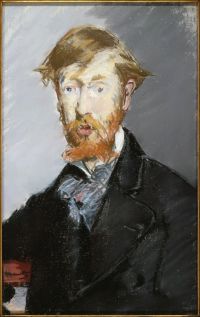
“ Thousands of persons each year see in this little collection something that by its beauty or oddity attracts them, and the provision of a general label showing that all are hardy, and of the individual label, telling its name, causes them to wish it for their own garden and enables them to order it of their florist, or, if he does not know how to supply it, puts them in the way of seeking it in the lists of other dealers. ”
 George Moore,
Journal of a Voyage across the Atlantic
George Moore,
Journal of a Voyage across the Atlantic
“ She showed her perception of this similarity by laying the label key upon the key, and the label spoon upon the spoon. She was encouraged here by the natural sign of approbation—patting on the head. The same process was then repeated with all the articles she could handle, and she very easily learned to place the proper labels upon them. It was evident, however, that the only intellectual exercise was that of imitation and memory. She recollected that the label book was placed upon a book ”
Ada M. Marzials, More Tales in the Land of Nursery Rhyme
“ Jill strained her eyes to read some of the labels in the dim light. "Showers," "Dew," "Drinking-water!" "What extraordinary labels!" she said to herself, and went on to the next row. "Taps," "Washing-water," "Streams," "Rivers," "Mists," "Frosts." One very large one was labelled "Thunder-storms." The next one to it, "Raindrops, Special, extra loud patterers." The next one, "Steam reserved for Boats, second best quality only." Rows upon rows of them, all empty, and all labelled with these curious labels! "Bring the bag here," said the old Witch, pointing to a cask labelled "Spring Showers. ”
Ella Victoria Dobbs, Primary Handwork
“ Art.—The art side also may receive due attention in the general proportioning and arrangement of the stores, in the modeling of certain features from clay, as enumerated above, in the making of labels for boxes and cans, in the writing of signs and advertisements, and in the color combinations. These features are to a great extent incidental to other problems just as the use of good [Pg 74] taste is incidental to all the affairs of life and should receive corresponding emphasis. ”
 John Morley,
Critical Miscellanies, Vol. 1, Essay 2…
John Morley,
Critical Miscellanies, Vol. 1, Essay 2…
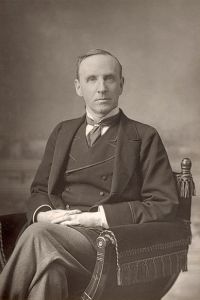
“ Labels are devices for saving talkative persons the trouble of thinking. ”
 Gottlob Frege,
On Sense and Reference
(1948)
Gottlob Frege,
On Sense and Reference
(1948)
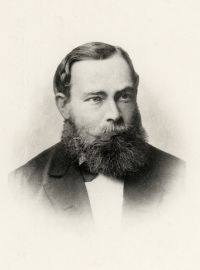
“ Equality [1] gives rise to challenging questions which are not altogether easy to answer. Is it a relation? A relation between objects, or between names or signs of objects? In my Begriffsschrift I assumed the latter. The reasons which seem to favour this are the following: a = a and a = b are obviously statements of differing cognitive value; a = a holds a priori and, according to Kant, is to be labeled analytic, while statements of the form a = b often contain very valuable extensions of our knowledge and cannot always be established a priori. ”
Henry B. Wheatley, How to Make an Index
“ I know well that I shall be told that I am out of date, that such an opinion is as the voice of one crying in the wilderness—that the dictionary catalogue has won its battle—but even so, perhaps the more so, do I feel it the part of a serious and immovable conviction to declare my belief that—for student and librarian alike—this twofold catalogue, author and subject each in its own division, is the best catalogue a library can have, and that the dictionary catalogue is the very worst. ”
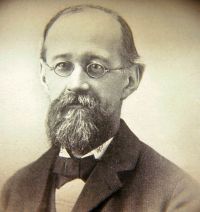 Charles A. Cutter,
Rules for a Dictionary Catalogue
Charles A. Cutter,
Rules for a Dictionary Catalogue
“ There are thousands of possible matters of investigation, some of which are from time to time discussed, but before the catalogue can profitably follow its “specific” rule in regard to them they must attain a certain individuality as objects of inquiry, and be given some sort of name, otherwise we must assign them class-entry.And it is not always easy to decide what is a distinct subject. Many catalogues have a heading Preaching. Is Extempore preaching a sufficiently distinct matter to have a heading of its own? ”
Charles A. Cutter,
Rules for a Dictionary Catalogue
“ There are certain headings which belong both to the Subject and the Form family. “Encyclopædias,” inasmuch as the books treat of all knowledge, is the most inclusive of all the subject-classes; inasmuch as (with few exceptions) they are in alphabetic form, it is a form-class. Heading, the word by which the alphabetical place of an entry in the catalogue is determined, usually the name of the author, of the subject, or of the literary or practical form, or a word of the title. ”
Charles A. Cutter,
Rules for a Dictionary Catalogue
“ The systematic alone advances to the third.Classification in the first sense, it is plain, is the same as “entry;” in the second {11} sense it is the same as “class-entry;” and in the third sense it is the same as the “logical arrangement” of the table on p. 12, under “Classed catalogue.”It is worth while to ascertain the relation of subject and class in the subject-catalogue. Subject is the matter on which the author is seeking to give or the reader to obtain information; Class is, as said above, a grouping of subjects which have characteristics in common. ”
Willem Sijbrand Logeman, Introduction to the study of the history of language
“ The situation awakens certain groups of ideas in the mind of the hearer before the word is uttered, and itself aids powerfully in fixing the meaning. We affix a different meaning to the word sheet according as we hear it in a haberdasher’s shop, or on a yacht, or at a book-binder’s: as we do to the words ‘to bind,’ according as we hear them in a book-binder’s or in a harvest field. Different trades and professions use the same word and affix their own meaning to it, and no ambiguity arises in their own circle: take such words as ‘a goose’ in the mouth of a tailor; ‘a form’ among hatters. ”
Alfred B. Chambers, The New Century Standard Letter-Writer
“ In ordering goods of any kind, care should be used to state very explicitly the color, size, quality, and quantity of the articles desired. If manufactured goods, the name of the manufacturer, or his trade mark or brand, should be given. ”
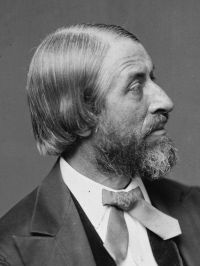 Ainsworth Rand Spofford,
A Book for All Readers
Ainsworth Rand Spofford,
A Book for All Readers
“ The object of classification is to bring order out of confusion, and to arrange the great mass of books in science and literature of which every library is composed, so that those on related subjects should be as nearly as possible brought together. Let us suppose a collection of some hundred thousand volumes, in all branches of human knowledge, thrown together without any classification or catalogue, on the tables, the shelves, and the floor of an extensive reading-room. ”
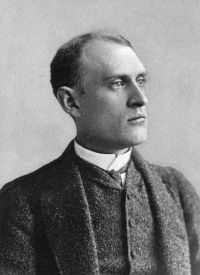 Eugene Field,
The Love Affairs of a Bibliomaniac
Eugene Field,
The Love Affairs of a Bibliomaniac
“ I myself have been a famous reader of catalogues, and I can testify that the habit has possessed me of remarkable delusions, the most conspicuous of which is that which produces within me the conviction that a book is as good as mine as soon as I have met with its title in a catalogue, and set an X over against it in pencil. ”
Jaime Luciano Balmes, Fundamental Philosophy, Vol. 2…
“ We might compare language to the catalogue of a library, which is the more perfect, the more it unites simplicity with variety, so as to designate exactly the classes of the books and the shelves whereon they are to be found. ”
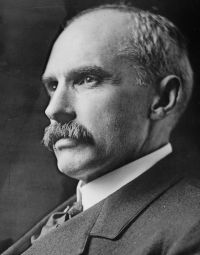 John Cotton Dana,
A Library Primer — Chapter XX, Classifying
(1899)
John Cotton Dana,
A Library Primer — Chapter XX, Classifying
(1899)
“ Before putting a book, about which there is any opportunity for choice, in the class you have selected for it, examine your shelf-list and see that the books already there are of like nature with it.Classify as well as you can, and don't worry if you find you have made errors. There are always errors. ”
John Henry Quinn, Library Cataloguing
“ It is a useful axiom for the cataloguer that he must ascertain clearly what is the definite subject of a book before he decides upon the proper subject-heading for it in the dictionary catalogue, as he is compelled to do before he can assign the exact place for a book in the classified catalogue. ”
 Clement of Alexandria,
Ante-Nicene Fathers Vol. II, The Stromata…
(1885)
Clement of Alexandria,
Ante-Nicene Fathers Vol. II, The Stromata…
(1885)
“ Whence Division furnishes the class of matter, seeking for the definition the simplicity of the name; and the definition of the artisan and maker, by composition and construction, presents the knowledge of the thing as it is ”
 Herbert Spencer,
The Principles of Biology — Chapter II.11
(1898)
Herbert Spencer,
The Principles of Biology — Chapter II.11
(1898)
“ That orderly arrangement of objects called Classification has two purposes, which, though not absolutely distinct, are distinct in great part. It may be employed to facilitate identification, or it may be employed to organize our knowledge. If a librarian places his books in the alphabetical succession of the author's names, he places them in such way that any particular book may easily be found, but not in such way that books of a given nature stand together. ”
George Iles, Inventors at Work, with Chapters on Discovery
“ When one visits a public library, the title of a particular book is found in the catalogue in a moment. Every book as acquired has its title written on a card, and thousands of such cards are placed in alphabetical order, just like the words in a dictionary. ”
 Gilbert Keith Chesterton,
Charles Dickens — IX: Later Life and Works
(1906)
Gilbert Keith Chesterton,
Charles Dickens — IX: Later Life and Works
(1906)
“ No catalogue, of course, can contain all the facts even of five minutes; every catalogue, however long and learned, must be not only a bold, but, one may say, an audacious selection. Bat if a great many facts are given, the reader gains a blurred belief that all the facts are being given. In a professedly personal judgment it is therefore clearer and more honest to give only a few illustrative facts, leaving the other obtainable facts to balance them. ”
 James Mill,
Analysis of the Phenomena of the Human Mind
James Mill,
Analysis of the Phenomena of the Human Mind
“ As we have occasion to speak of things; animals, vegetables, minerals; so we have occasion to speak of the marks, which we are under the necessity of using, in order to record or to communicate our thoughts respecting them. We cannot record or communicate our thoughts respecting names, as man, tree, horse, to walk, to fly, to eat, to converse, without marks for them. We proceed in the case of names, as we do in other cases. We form them into classes, some more, some less, comprehensive, and give a name to each. ”
 Thomas De Quincey,
The Collected Writing of Thomas De Quincey…
Thomas De Quincey,
The Collected Writing of Thomas De Quincey…
“ With this explanation, therefore, of the famous categories, I shall close my slight sketch of the system. Has the reader ever considered the meaning of the term Category—a term so ancient and so venerable from its connexion with the most domineering philosophy that has yet appeared amongst men? The doctrine of the Categories (or, in its Roman appellation, of the Predicaments) is one of the few wrecks from the Peripatetic philosophy which still survives as a doctrine taught by public authority in the most ancient academic institutions of Europe. ”
 A. S. W. Rosenbach,
The Unpublishable Memoirs
A. S. W. Rosenbach,
The Unpublishable Memoirs
“ I read all the catalogues, became skilled in bibliography, lived in the bookshops; spent all my time collating and going over my precious volumes. In the evenings, instead of talking to my wife about the Ives' coming ball, or a problem in bridge, or the newest shades of silk, I pored over the catalogues which came to me from all parts of the world. ”
Henry B. Wheatley, How to Make an Index
“ I have formed, so far as I know, but one dogmatic conviction, and it is this: that the best catalogue which the art of man can invent is a catalogue in two inter-dependent yet independent parts; the first and greater part an [pg 131] alphabetical catalogue of authors, the second and lesser part a subject-index. ”
Portal:The Folk-Lore Society, The Folk-Lore Journal (1888)
“ If the first broad outline of classification is made clear and simple, expressed in ordinary English words used in their natural sense, study and experience will presently show the worker the need for a fuller nomenclature, and he will welcome the technical words—life-casket, husk-myth, cumulative tale, and so forth—as he becomes acquainted with the ideas or the things they have been formed to describe. ”
William Minto, Logic, Inductive and Deductive
“ You must have a wide genus with its fundamentum divisionis, and, within this, species distinguished by their several differentiæ.Next, as to the verbal process, rules are commonly laid down mostly of a trifling and obvious character. That "a definition should state neither more nor less than the common attributes of the class," or than the attributes signified by the class-name, is sometimes given as a rule of definition. This is really an explanation of what a definition is, a definition of a definition. ”
 Karl Rosenkranz,
Pedagogics as a System
Karl Rosenkranz,
Pedagogics as a System
“ In all sciences and arts there exists a quantity of material which is common property, which is disposed of now in one way, now in another. The majority of compendiums can be distinguished from each other only by the kind of paper, printing, the name of the publisher or bookseller, or by arbitrary changes in the arrangement and execution. ”
St. George William Joseph Stock, Deductive Logic
“ Common terms, other than attributives, ought always to admit of definition. For things are distributed by the mind into classes owing to their possessing certain attributes in common, and the definition of the class-name can be effected by detailing these attributes, or at least a sufficient number of them. ”
William James, Psychology: Briefer Course
“ The properties which are important vary from man to man and from hour to hour. Hence divers appellations and conceptions for the same thing. But many objects of daily use—as paper, ink, butter, overcoat—have properties of such constant unwavering importance, and have such stereotyped names, that we end by believing that to conceive them in those ways is to conceive them in the only true way. ”
“ You will find on the contrary that the characteristics of each School and of each artist can best be discovered and observed by watching how each modifies or alters pre-existing and conventional conceptions. In order to thoroughly understand any early picture, you must look at it first as a representation of such-and-such a given subject, for which a relatively fixed and conventional set of figures or accessories was prescribed by tradition. The number and minuteness of the prescribed accessories will grow upon you as you watch them. ”
 Benjamin N. Cardozo,
Cooper v. Dasher — Opinion of the Court
Benjamin N. Cardozo,
Cooper v. Dasher — Opinion of the Court
“ The validity of this order is to be subjected to a kindred test. Words after all are symbols, and the significance of the symbols varies with the knowledge and experience of the mind receiving them. The certainty of a description is always a matter of degree. ”
 Richard Chenevix Trench,
English Past and Present
Richard Chenevix Trench,
English Past and Present
“ Let me urge here the advantage of a complete collection, or one as nearly complete as the industry of the collectors would allow, of all the notices in our literature, which mark, and would serve as dates for, the first incoming of new words into the language. These notices are of the most various kinds. Sometimes they are protests and remonstrances, as that just quoted, against a new word’s introduction; sometimes they are gratulations at the same; while many hold themselves neuter as to approval or disapproval, and merely state, or allow us to gather, the fact of a word’s recent appearance. ”
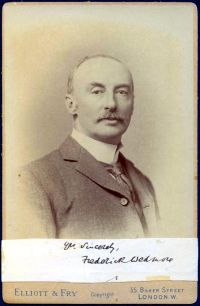 Sir Frederick Wedmore,
Fine prints
(1905)
Sir Frederick Wedmore,
Fine prints
(1905)
“ It has been customary in books on Collecting to say something about the qualities that are desirable in a print—the qualities, I mean, that, in their combination constitute, not a fine subject—that is a different matter altogether—but a fine impression, an impression such as the collector should wish to possess. ”
Herbert Spencer,
Essays on Education and Kindred Subjects
“ Let us next notice that the recognition of likeness and unlikeness, which underlies classification, and out of which continued classification evolves the idea of complete likeness—let us next notice that it also underlies the process of naming, and by consequence language. For all language consists, at the beginning, of symbols which are as like to the things symbolised as it is practicable to make them. The language of signs is a means of conveying ideas by mimicking the actions or peculiarities of the things referred to. ”
Jean Wilde Clark, A Desk Book on the Etiquette of Social Stationery (1910)
“ YOU OUGHT to know about writing paper—what it is that makes it fine and good. You ought to be able to select for your own use the paper that Trained Taste becomes you most and that is consistent with your social position, just as you select materials for a gown. ”
