“ Should government be, on the other hand, elected by universal suffrage, and so be the emanation, more or less sincere, of the wish of the majority? But if you consider these worthy electors as incapable of providing for their own interests, how can they ever be capable of themselves choosing directors to guide them wisely? How solve this problem of social alchemy: To elect a government of geniuses by the votes of a mass of fools? And what will be the lot of the minority, who are the most intelligent, most active and most advanced in society? ”
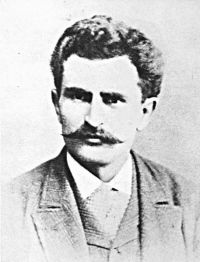
Errico Malatesta
Biographical details

Errico Malatesta (1853–1932) was an influential Italian anarchist propagandist, theorist, and revolutionary socialist, renowned for his critiques of state power and promotion of syndicalist organization. A prolific writer and editor of radical publications such as La Questione Sociale and Umanità Nova, he spent much of his life in exile across Europe, Argentina, and the United States, evading imprisonment and surveillance for his activism.
His works, including Anarchy, examined the contradictions of governance, arguing that true freedom arises not from hierarchical authority but from collective self-management. Malatesta’s legacy endures through his rigorous defense of anarchism as a practical, evolving force for social transformation, rooted in solidarity and direct action.
Quotes by Errico Malatesta
“ If these are ignorant, miserable, or enslaved, my existence is limited by their ignorance, misery, or slavery. I, though an intelligent and enlightened man, am made stupid by their stupidity; though brave, am enslaved by their slavery; though rich, tremble before their poverty; though privileged, grow pale at the thought of possible justice for them. I, who wish to be free, cannot be so, because around me are men who do not yet desire freedom, and, not desiring it, become, as opposed to me, the instruments of my oppression. ”
“ But what reason is there for the existence of government? Why abdicate one's own liberty, one's own initiative in favor of other individuals? Why give them the power to be the masters, with or contrary to the wish of each, to dispose of the forces of all in their own way? Are the governors such very exceptionally gifted men as to enable them, with some show of reason, to represent the masses, and act in the interest of all men better than all men would be able to do for themselves? ”