Martin Luther King, Jr., Letter from a Birmingham Jail (16 April 1963)
“ In any nonviolent campaign there are four basic steps: collection of the facts to determine whether injustices exist; negotiation; self purification; and direct action. ”
Direct action is a form of activism in which individuals or groups use agency—economic, political, or otherwise—to tackle social issues, often through nonviolent or radical approaches. Voltairine de Cleyre described it as an impulsive reaction to oppression, while Martin Luther King Jr. approached it as a planned strategy to drive change.
Ranging from civil disobedience to sabotage, direct action encompasses a wide array of methods, highlighting the tensions between anarchism, syndicalism, and organized opposition. Its effectiveness is debated, yet it continues to serve as a crucial instrument for challenging power structures and imagining new possibilities.
Martin Luther King, Jr., Letter from a Birmingham Jail (16 April 1963)
“ In any nonviolent campaign there are four basic steps: collection of the facts to determine whether injustices exist; negotiation; self purification; and direct action. ”
 Voltairine De Cleyre,
Direct Action
Voltairine De Cleyre,
Direct Action
“ Every person who ever in his life had a difference with anyone to settle, and went straight to the other persons involved to settle it, either by a peaceable plan or otherwise, was a direct actionist. ”
Voltairine De Cleyre,
Direct Action
“ These actions are generally not due to any one's reasoning overmuch on the respective merits of directness or indirectness, but are the spontaneous retorts of those who feel oppresses by a situation. In other words, all people are, most of the time, believers in the principle of direct action, and practices of it. However, most people are also indirect or political actionists. ”
Peter Vivian Daniel, Barnard v. Adams — Dissent
“ And it is, as far as I have been able to learn, the practice of all countries.' The same will, the same positive action, the same purpose, and, it may be added, the same predicament or position of the actors, must exist in each class of cases. There must be intent and act, prompted by, and tending to, a practicable, or at least a probable result, and not mere endurance or submission to uncontrollable necessity in either case. ”
 George S. Boutwell,
Thoughts on Educational Topics and Institutions
George S. Boutwell,
Thoughts on Educational Topics and Institutions
“ Government, which is the organized expression of the will of society, should represent the best elements of which society is composed; and it ought, therefore, to combat error and wrong, and seek to inaugurate labor, justice, and truth, as the elements of stability, growth, and power. It must accept as its principles of action the best rules of conduct in individuals. The man who avenges his personal wrongs by personal attacks or vindictive retaliation, must sacrifice in some measure the sympathy of the wise, the humane, and the good. ”
 G. E. Moore,
Ethics — Chapter VII
(1912)
G. E. Moore,
Ethics — Chapter VII
(1912)
“ All that could be agreed upon was that a voluntary action is right whenever and only when its total consequences are as good, intrinsically, as any that would have followed from any action which the agent could have done instead. ”
Men of Mark in America (1905)
“ They have called for that determined will-power which effects changes for good, by putting into execution, in prompt and vigorous action, the plan which after due deliberation seems the next and inevitable step in progress. ”
Samuel Smiles, Self Help; with Illustrations of Conduct and Perseverance
“ And where men or nations have broken down, it will almost invariably be found that neglect of little things was the rock on which they split. Every human being has duties to be performed, and, therefore, has need of cultivating the capacity for doing them; whether the sphere of action be the management of a household, the conduct of a trade or profession, or the government of a nation. ”
Demosthenes, The Public Orations of Demosthenes…
“ But to find words or actions which will enable us to rectify what is now amiss with us, is a task indeed. Moreover, the present is not, perhaps, the time for entering into every point: but if only you can confirm the policy which you have chosen by some suitable action, it may be that other conditions will each in turn show some improvement. ”
 Franklin Roosevelt,
Fireside Chat
Franklin Roosevelt,
Fireside Chat
“ The course we have followed fits the American practice of Government, a practice of taking action step by step, of regulating only to meet concrete needs, a practice of courageous recognition of change. ”
Sutton E. Griggs, The Hindered Hand; or, The Reign of the Repressionist
“ Under these circumstances, the thought must unavoidably develop that that for which all are to be held responsible must, when the need arises, be made the subject of inquiry and action on the part of all. ”
 Herbert Spencer,
The Data of Ethics
Herbert Spencer,
The Data of Ethics
“ So that the three differentiated forms of control which grow up along with militant organization and action, while enforcing kindred restraints and incentives, also enforce one another; and their separate and joint disciplines have the common character that they involve the sacrifice of immediate special benefits to obtain more distant and general benefits. ”
Charles Bullard Fairbanks, My Unknown Chum: "Aguecheek"
“ But to leave this great primary virtue, which policy teaches most men to practise, though they love it not,—there are two or three principles of action which I have found very useful in my career, and which form a part of my philosophy of life. ”
William Hazlitt, The Collected Works of William Hazlitt…
“ If, however, it be granted, not only that it is in itself right and best, but that a period might come, in which it would be possible for men to be actuated by the sole principles of truth and justice, then it would seem to follow that the subordinate and auxiliary rules of action might be dispensed with, being superseded by the sense of higher and more important duties. ”
 Georg Wilhelm Friedrich Hegel,
Science of Logic
(1816)
Georg Wilhelm Friedrich Hegel,
Science of Logic
(1816)
“ The will or action of the individuals is the intermediating force which procures for these needs satisfaction in society, in law, &c., and which gives to society, law, &c. their fulfilment and actualisation. ”
 James Anthony Froude,
The English in the West Indies…
James Anthony Froude,
The English in the West Indies…
“ The leading of the wise few, the willing obedience of [Pg 155] the many, is the beginning and the end of all right action. Secure this, and you secure everything. Fail to secure it, and be your liberties as wide as you can make them, no success is possible. ”
G. E. Moore,
Ethics — Chapter IV
(1912)
“ Our theory does assert that, if any voluntary action is once right, then any other voluntary action which resembled it in one particular respect (or rather in a combination of two respects) must always also be right ”
Viscount Edward Grey Grey of Fallodon, Recreation by Viscount Grey of Fallodon…
“ That voluntary action by so many millions over so great an extent of country was a tremendous example, showing what an ideal and a public spirit and a call to action can do for people in making them forget private interests and convenience and making them great. ”
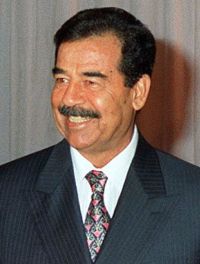 Saddam Hussein,
The Planned Progress of the Revolution
(1976)
Saddam Hussein,
The Planned Progress of the Revolution
(1976)
“ Firstly, our doctrine and theory of action have their own distinct character, which makes it impossible to copy the experiences of other peoples and their methods of treating such questions or social problems. ”
William Hazlitt, Essays on the Principles of Human Action (1835)
“ All voluntary action, that is all action proceeding from a will, or effort of the mind to produce a certain event, must relate to the future, or to those things, the existence of which is problematical, undetermined, and therefore capable of being affected by the means made use of with a view to their production or the contrary. ”
Henri Frédéric Amiel, Amiel's Journal: The Journal Intime of Henri-Frédéric Amiel
“ To know where one is going and what one wishes—this is order; to keep one’s word and one’s engagements—again order; to have everything ready under one’s hand, to be able to dispose of all one’s forces, and to have all one’s means of whatever kind under command—still order; to discipline one’s habits, one’s effort, one’s wishes; to organize one’s life, to distribute one’s time, to take the measure of one’s duties and make one’s rights respected; to employ one’s capital and resources, one’s talent and one’s chances profitably—all this belongs to and is included in the word order. ”
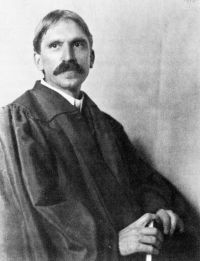 John Dewey,
Democracy and Education
(1916)
John Dewey,
Democracy and Education
(1916)
“ This directs their action to a common result, and gives an understanding common to the participants. For all mean the same thing, even when performing different acts. This common understanding of the means and ends of action is the essence of social control. ”
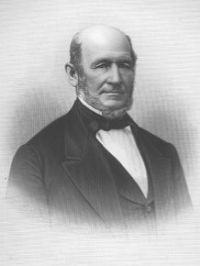 Heber C. Kimball,
Journal of Discourses — Volume 9…
Heber C. Kimball,
Journal of Discourses — Volume 9…
“ Our calling is to do right, and to teach righteousness and virtue, industry and economy, that we may gain power over the world, over the flesh, and over the Devil, and over all that is combined to overthrow this work. ”
 Charles Horton Cooley,
Human nature and the social order
(1902)
Charles Horton Cooley,
Human nature and the social order
(1902)
“ What we are all forced to do is to choose a field of action which for some reason we look upon as specially interesting or important, and exercise 34our choice in that; in other matters protecting ourselves, for the most part, by some sort of mechanical control—some accepted personal authority, some local custom, some professional tradition, or the like. ”
Emory Adams Allen, The Golden Gems of Life; Or, Gathered Jewels for the Home Circle
“ Above all, the steady formation of virtuous habits, the subjection of all actions to principles rather than to policy, the firm and unyielding adherence to duty, as far as it is known, are the best safeguards against mistakes in life. ”
 Carl Schurz,
Speeches, correspondence and political papers of Carl Schurz
(1913)
Carl Schurz,
Speeches, correspondence and political papers of Carl Schurz
(1913)
“ We hear, indeed, some wild talk about the establishment of a social order, or disorder, without government and without laws and courts of justice, in which everybody can do what he or she pleases, and that when everybody can do what he or she pleases, everybody will do right, and have enough of the good things of the world, and be happy. ”
 Bertrand Russell,
War and Non-Resistance
(1915)
Bertrand Russell,
War and Non-Resistance
(1915)
“ But if we judge conduct, as I think we ought, by its power of promoting what we consider a good life or a good society, we cannot expect such simplicity in our moral precepts, and we must expect all of them to be subject to exceptions. ”
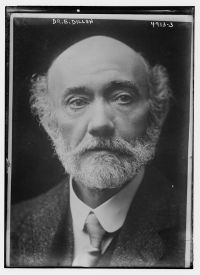 Emile Joseph Dillon,
England and Germany
Emile Joseph Dillon,
England and Germany
“ Respect for right, for liberty, for law and tradition, for relative truth and gradual progress, was widely diffused. Well-controlled energy, responsiveness to calls on one’s fellow-feeling, and the everyday honesty that tapers into policy were among its familiar features. ”
 Lady Mary Fox,
Account of an expedition to the interior of New Holland
(1837)
Lady Mary Fox,
Account of an expedition to the interior of New Holland
(1837)
“ Let society, therefore, but do its duty, and it is plain that it may, by a proper exertion of the power which it has, and which it actually exercises even now, restrain, and restrain much more effectually, without duelling, the very evils which duelling professes to remedy. ”
 Irvah Lester Winter,
Public Speaking: Principles and Practice
Irvah Lester Winter,
Public Speaking: Principles and Practice
“ Can there then be a more stringent public duty for every man—and the greater the intelligence the greater the duty—than to take care, by all the influence he can command, that the country, the majority, public opinion, shall have a mind to do only what is just and pure and humane? ”
William Gray Elmslie, Professor W. G. Elmslie, D.D.: Memoir and Sermons
“ For His claims reach you not as external facts to be passively gazed at, but as imperative, {236} active demands that lay hold of you, and insist that you shall take action upon them. You must yield or you must resist. ”
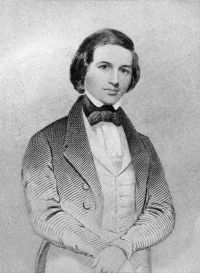 T. S. Arthur,
Riches have wings; or, A tale for the rich and poor
(1847)
T. S. Arthur,
Riches have wings; or, A tale for the rich and poor
(1847)
“ It will come only when the whole nation, as one man, shall be guided in every transaction, small and great, by justice and judgment, and not till then. In the mean time, it is every man’s duty, who sees and acknowledges this truth, to do all in his power to give it vitality in the minds of the people. ”
 Franklin Henry Giddings,
Towards an enduring peace
(1916)
Franklin Henry Giddings,
Towards an enduring peace
(1916)
“ They suggest action on the basis of combining the two most stable forms of harmonious organization, namely, the sympathy form growing out of like-mindedness, and the democratic-control-expert-executive form of the utility type. ”
George Herbert Walker Bush, Proclamation 6359
“ Let us reinforce, by word, deed, and example, the values that make law and order possible: personal responsibility, respect for others, and the fundamental sense of decency that comes from knowing the difference between right and wrong. ”
J. Marshall, A Short History of Greek Philosophy
“ Now since every activity, whether of knowing or doing, aims at some good, it is for us to settle what the good is which the civic activity aims at,—what, in short, is the ultimate end of all 'goods' connected with conduct? ”
Carl Schurz,
Speeches, correspondence and political papers of Carl Schurz
(1913)
“ Indeed, we want your aid in the pursuit of our purposes, as well as the aid of all men who act on the same principles in political life in the way of criticism, suggestion, advice and impulse—and I hope we shall have it. ”
 William Ralph Inge,
Outspoken Essays
William Ralph Inge,
Outspoken Essays
“ And this doctrine alone has stood the test—that we ought to be more afraid of doing than of suffering wrong; and that the prime business of every man [and nation] is not to seem good, but to be good, in all private and public dealings. ”
 Harriet Martineau,
Once a Week
(1863)
Harriet Martineau,
Once a Week
(1863)
“ What can be done? What do you advise?” “That we do not lose our time here, but do the best we can, in the absence of authority. We might easily learn what part the citizens will take; and then . . . .” “What part the citizens will take!” ”
 William Jennings Bryan,
Cross of Gold Speech
(1896)
William Jennings Bryan,
Cross of Gold Speech
(1896)
“ We reply that when we advocate a policy which we believe will be successful, we are not compelled to raise a doubt as to our own sincerity by suggesting what we shall do if we fail. I ask him, if he would apply his logic to us, why he does not apply it to himself. ”
Elizabeth Ryder Wheaton, Prisons and Prayer; Or, a Labor of Love
“ How are you to command the respect of those under you? Just where to draw the line, and how to enforce discipline? What advantage will you give to the men who are striving to obey rules, and do what is right? ”
Charles Horton Cooley,
Social organization
(1909)
“ I will not here inquire minutely how far or in what sense honesty is the best policy, but it is safe to say that the more life is organized upon a basis of freedom and justice the more truth there is in the proverb. ”
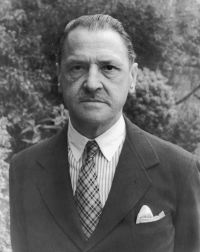 W. Somerset Maugham,
Of Human Bondage
(1915)
W. Somerset Maugham,
Of Human Bondage
(1915)
“ "Act so that every action of yours should be capable of becoming a universal rule of action for all men." ”
 Thomas Reid,
Two Voyages to New South Wales and Van Diemen's Land
Thomas Reid,
Two Voyages to New South Wales and Van Diemen's Land
“ My object is to excite inquiry, and draw to the subject the attention of those who can command the means of redressing the evils pointed out, a task which every good man, surely, will consider of vital importance to the morals and happiness of the community. ”
Moulavi Gerágh Ali, A Critical Exposition of the Popular 'Jihád'…
“ It was therefore necessary to give them a few positive precepts, moulding and regulating their moral and social conduct, to make them 'new creatures' with new notions and new purposes, and to remodel the national life. ”
 Abraham Myerson,
The Foundations of Personality
Abraham Myerson,
The Foundations of Personality
“ Everywhere we are commencing to hear of "social duty," of obligation to the lesser and unfortunate, of the responsibility of the leaders to the led, of the well to the sick, of the law-abiding to the criminal. ”
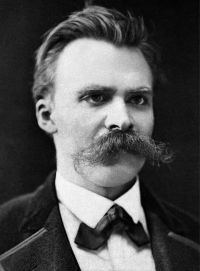 Friedrich Wilhelm Nietzsche,
The Will to Power: An Attempted Transvaluation of All Values…
Friedrich Wilhelm Nietzsche,
The Will to Power: An Attempted Transvaluation of All Values…
“ A multitude will do things an individual will not, because of the division of responsibility, of command and execution; because the virtues of obedience, duty, patriotism, and local sentiment are all introduced ”
Samuel Warren, Ten Thousand a-Year. Volume 3
“ It is equally a principle of our law, and of common sense, that people must be understood to have contemplated the natural and necessary consequences of their own acts, even if hastily—but by so much the more if deliberately done. ”
Benjamin R. Tucker, Instead of a Book — The Individual… (1897)
“ Already, among your fellows, several have recognized that justice is better, for each and for all, than iniquity; and they have agreed with each other to mutually keep faith and right,—that is, to respect the rules of transaction which the nature of things indicates to them as alone capable of assuring them, in the largest measure, well-being, security, peace. ”
Alexander Hamilton, The Federalist (1863, Dawson edition)
“ Has it not, on the contrary, invariably been found that momentary passions, and immediate interests, have a more active and imperious control over human conduct than general or remote considerations of policy, utility, or justice? ”
Joseph Butler, Whole Works of Joseph Butler — Public sermons… (1850)
“ And upon the whole, the same reasons which show, that they ought to be instructed and exercised in what will render them useful to society, secure them from the present evils they are in danger of incurring, and procure them that satisfaction which lies within the reach of human prudence; show likewise, that they ought to be instructed and exercised in what is suitable to the highest relations in which we stand, and the most important capacity in which we can be considered ”
G. E. MooreVoltairine De CleyreHerbert SpencerWilliam HazlittJohn DeweyMartin Luther King, Jr.George S. BoutwellSamuel SmilesDemosthenesSutton E. GriggsFranklin RooseveltCharles Bullard FairbanksPeter Vivian DanielGeorg Wilhelm Friedrich HegelJames Anthony FroudeViscount Edward Grey Grey of FallodonSaddam HusseinCharles Horton CooleyWilliam Gray ElmslieFranklin Henry Giddings