AI-generated from sources
The paradox of coercion: When the national guard becomes an instrument of political tension
In Brief
- The American republic operates under a foundational paradox: it must rely on coercive instruments like the National Guard to ensure order, constantly risking the erosion of constitutional liberties.
- The National Guard's ideal as a citizen-soldier force is designed to safeguard the constitution, but its hybrid nature makes it vulnerable to being viewed as a partisan tool when deployed in domestic political crises.
- George Washington explicitly warned that free governments are destroyed not by amendment but by the 'usurpation' of constitutional powers, a threat acutely relevant when executive authority bypasses established civilian norms.
- Crises reveal a tension between devotion to 'order' (negative peace) and the demand for 'justice' (positive peace), where state force applied in enforcement can be perceived as violent suppression of dissent.
Main authors
A foundational paradox of the American republic is that a nation conceived in liberty must rely on instruments of coercion to ensure its own "domestic tranquillity" [1]. This creates an inherent and perpetual tension between the coercive power of the state and the constitutional liberties of the citizenry. While the legitimate use of force is sometimes necessary for self-protection and the maintenance of a functional society, its application within civilian spaces represents a critical flashpoint [2]. The deployment of military or quasi-military forces like the National Guard to manage internal affairs forces a confrontation with the core question of how a free government wields power without consuming the principles it is sworn to protect.
This dilemma is not a modern invention but has been a feature of American governance since its inception. Early leaders grappled with balancing the need for an organized force capable of defending the nation with the profound historical fear that standing armies are "dangerous to public liberty" [3, 4]. In the 21st century, this tension has reemerged with stark clarity. Events such as the January 6th attack on the U.S. Capitol have illuminated the complex role of the guard, which can be simultaneously viewed as a necessary protector of democratic institutions and a potential instrument of improper executive influence [5, 6]. The central problem, therefore, is defining and maintaining the precarious boundary between the legitimate assertion of constituted authority and a form of coercion that threatens the constitutional order itself [7, 8].
The Constitutional Framework of Legitimate Force
The United States Constitution establishes a government that derives its authority directly from the people, with the explicit goals of establishing justice and securing liberty . Within this framework, the state's power to compel or coerce is implicitly sanctioned as a necessary tool for upholding the rule of law and ensuring societal order . This concept of coercion is not intended as arbitrary violence, but as the organized assertion of acknowledged authority, for purposes such as protecting public property or collecting federal revenues [9, 10]. The ideal is a system where citizens obey the law not out of fear, but because they recognize it as an expression of their country's honor and security [11].
This grant of authority is, however, carefully circumscribed by a deep-seated suspicion of concentrated power. Philosophically, the principle that compulsion should only be used for collective self-protection sets a high bar for state intervention in the lives of individuals . This idea is embedded in the American constitutional tradition, which manifests a particular anxiety toward permanent military establishments and officials, such as judges, who hold their positions for life and are not easily removed by the populace [12]. The Constitution itself is designed to be the primary safeguard against the usurpation of power, a stable instrument that preserves the balance between state authority and individual rights [13, 14].
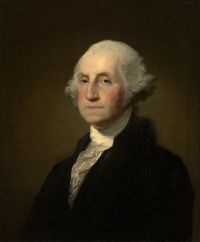
The interpretation of these constitutional limits remains a site of perpetual debate. While some view the Constitution as a fixed standard for governance [16], others have argued that in times of intense political division, the document can be wielded as an "instrument of wild and dark destruction" by a dominant party [17]. This highlights the inherent fragility of the system. George Washington, in his farewell address, warned specifically against altering constitutional powers through usurpation, noting that such an act, even if seemingly beneficial in one instance, is the primary method by which free governments are ultimately undone [15]. The line between defending the constitution and subverting it can become dangerously blurred, depending entirely on the motives and actions of those in power.
The National Guard: A Hybrid Instrument of Power
The National Guard is structured to embody the American ideal of the citizen-soldier, a concept intended to mitigate the risks associated with a large, professional standing army [18]. This force is composed of individuals who lead civilian lives, creating a direct link between the military institution and the communities it serves. The viability of this model depends significantly on societal integration, particularly the support of civilian employers who accommodate the dual responsibilities of their employees, facilitating their transition from civilian life to military service and back again [19]. In theory, this creates a coercive instrument that is inherently connected to, and protective of, the society from which it is drawn.
Historically, this connection to civilian life has been explicitly linked to constitutional fidelity. Visionaries like the Marquis de Lafayette conceived of the National Guard as "soldiers of the Constitution," whose primary duty was to unite for its defense and establishment [20, 21]. This perspective frames their power not as a threat to liberty but as essential for its preservation, ensuring that individual rights, property, and civil peace are protected under the law [22]. The guard's legitimacy, in this view, stems from its unwavering subordination to the constitutional framework.
This hybrid nature, however, also presents unique challenges and vulnerabilities. While a member of the guard is a citizen, they are also a soldier subject to a rigid chain of command and stark orders, which can include the directive to use lethal force [23]. When deployed in a domestic political crisis, this military function can place the institution in a precarious position. The mere presence of uniformed soldiers in a civilian setting can be perceived as an overreach of executive power, raising legitimate concerns about the political "optics" and the military wisdom of such a deployment . This reveals the acute tension between the soldier’s duty to obey orders and the politically sensitive context of a domestic operation, a tension that is less pronounced in overseas conflicts.
Coercion in Crisis: From Maintaining Order to Political Instrument
The deployment of coercive force is most profoundly tested during periods of intense social and political crisis, when the atmosphere is thick with unspoken tension and the potential for conflict [24, 25, 26]. It is in these moments that the fundamental friction between the desire for "order" and the demand for "justice" becomes most apparent, as articulated by civil rights leader Martin Luther King, Jr. [27]. An action viewed by the state as the legitimate enforcement of law can be experienced by segments of the population as the violent suppression of dissent, underscoring the idea that force often excites resistance rather than commanding willing obedience .
The events surrounding the January 6th Capitol attack offer a compelling contemporary case study of this dynamic. According to a congressional report, the president's perceived eagerness to involve the U.S. military in addressing domestic unrest had already prompted senior military leaders to take preventative measures against the possibility of improper orders . This situation reveals a critical vulnerability in the civil-military relationship: when the civilian commander-in-chief’s intentions are viewed with alarm by the military hierarchy, the chain of command itself becomes a locus of constitutional tension. The internal debate over the deployment of the D.C. National Guard, mired in concerns over optics and military judgment, further illustrates the immense political weight placed on what should be operational decisions .
This crisis also blurred the lines between the state's sanctioned instruments of coercion and partisan actors. Individuals, inspired by a political call to action, organized to fight to keep a president in power, viewing themselves as patriots [28]. This appropriation of the role of a "guard" demonstrates how the concept of a protective force can be co-opted for factional ends, transforming a symbol of state authority into one of political struggle. Such actions raise the specter of the very "usurpation" that George Washington warned could destroy free government, where constitutional processes are challenged not through amendment but by force . The extreme reluctance to deploy the Guard at the Capitol, even as officers were being beaten, highlights a paralyzing fear of how military force would be perceived in the heart of American democracy .
The relationship between coercive state power and constitutional governance in the United States is one of an enduring and necessary tension [29]. The nation's political framework, established to secure "domestic tranquillity" by a government of the people, remains deeply wary of the very military instruments it must authorize to fulfill that mandate . The National Guard, a force of citizen-soldiers, was conceived as a solution to this paradox—a body whose loyalty is pledged to the constitution rather than to a specific political leader . Yet, as recent crises have demonstrated, this ideal is fragile. When political leadership appears to view the military as a domestic tool, and when private groups adopt the mantle of a guard for partisan ends, the line separating a guardian of the republic from an instrument of factionalism grows dangerously thin .
Ultimately, the stability of the republic depends not on the absence of power, but on its strict subordination to legal and constitutional principles . State authority is only legitimate when it serves the system of rights and governance that the people themselves have ordained . If the law, when clearly defined by its proper tribunals, commands willing obedience, then the arbitrary use of force tends to provoke resistance . The ongoing challenge for the United States is to ensure that its guards remain protectors of the constitutional order, never becoming the instruments of its subversion .