AI-generated from sources
When local legislators appoint administrators: The systemic risk of politicizing the machinery of government
In Brief
- Delegating administrative appointment power (like County Clerk) to elected local legislatures fundamentally breaches the separation between political will and neutral administration.
- Historically, appointments made by collective public bodies are rarely based on merit, instead becoming political spoils influenced by partisan attachments and factional interests.
- This concentration of legislative and appointive power fosters a 'systemic betrayal' that leads to governmental incompetence, waste, and the debasing of public service quality.
- When legislative bodies appoint the officials managing elections, the public's ultimate constitutional remedy—the ballot box—is compromised, leading to a self-perpetuating crisis of legitimacy.
Main authors

The foundation of American governance rests on the principle that supreme power resides in the people, who delegate this authority to elected representatives [1]. This system of representation is intended to be the cure for any political disorder, a mechanism through which the citizenry can correct errors in the legislature or even the constitution itself . However, this delegation of power, particularly at the local level, harbors a fundamental tension. While designed to ensure government accountability to the populace, it also creates opportunities for legislative overreach, where representatives may prioritize partisan or personal interests above the public good, ultimately subverting the very principles of democratic self-government [2, 3].
This issue becomes particularly acute when the powers of an elected legislative body, such as a county Board of Supervisors, extend beyond lawmaking into the domain of administrative appointments. The authority to fill essential, non-partisan offices like County Clerk or members of an election board can transform these roles into instruments of political patronage [4]. This practice threatens to dismantle the wall between political will and neutral administration, turning public service into a reward system for party loyalists and creating what one official decried as a class of "offensive partizans and unscrupulous manipulators of local party management" [5].
The usurpation of administrative functions by local legislatures fuels a cyclical crisis of legitimacy. By politicizing the bureaucracy, these bodies can compromise the very machinery of elections, thereby insulating themselves from the popular will they are meant to serve [6]. This process not only leads to governmental incompetence and waste but also corrodes public trust by fostering a system where representation becomes a means of self-enrichment and control, rather than service [7, 8]. At its core, this dynamic represents a subtle but dangerous subversion of democratic norms, where the system itself appears to be at fault as much as any single individual [9, 10].
The Architecture of Local Control and its Inherent Risks
The legal framework for local governance in the United States often grants state legislatures broad discretion in determining how administrative offices are filled. Constitutions frequently stipulate that any officer whose selection is not explicitly defined may be elected or appointed as the legislature directs [11]. This authority is then delegated downward to local governmental bodies. County Boards of Supervisors, for instance, are often empowered not only to legislate but also to exert significant control over the administrative structure of the county. This can include appointing the members of boards that oversee elections or having the power to merge or separate key offices, such as that of the County Clerk and the register of deeds [12, 13]. This concentration of legislative and quasi-executive power in a single elected local body creates the conditions for potential overreach.
The ideal behind granting such appointive powers to a representative body was rooted in the belief that a legislature, drawing on collective wisdom, could be more effective at selecting talent for public service than a single executive [14]. In practice, however, local legislative bodies are often susceptible to a narrow parochialism. Members may feel compelled to sacrifice the long-term, comprehensive interests of their jurisdiction to satisfy the particular demands of the districts that elected them [15]. This tendency is exacerbated when representatives begin to see themselves as organs of their own interests rather than those of the public, a degeneracy that subverts the core tenet of majority rule and transfers governing power to a small cabal .
This dynamic can lead to a form of institutional usurpation, where local councils are perpetually tempted to overstep their prescribed boundaries and meddle in matters beyond their purview [16]. Such actions are not merely procedural violations but represent a fundamental breach of the constitutional order. George Washington, in his farewell address, warned that while a specific act of usurpation might appear to be a tool for good in one instance, it is the customary weapon by which free governments are destroyed [17]. When a legislative body alters the rules of governance for its own benefit, it engages in precisely this kind of dangerous overreach, challenging the separation of powers and the principle of neutral administration .
From Public Service to Political Spoil
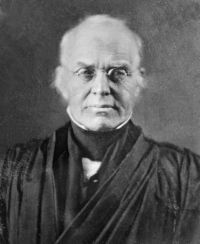
Once a local legislature possesses the power of appointment, the risk of it becoming a tool for patronage is immense. As jurist Joseph Story observed, appointments made by a collective public body are rarely based on merit alone. Instead, they become entangled in party affiliations, personal animosities, and backroom compromises that serve the selfish interests of individuals and factions . Administrative posts, which require impartiality and professional expertise, are thereby transformed into political spoils, distributed to reward loyalty and build alliances. This system inherently favors partisanship over competence, undermining the quality and integrity of public administration.
The consequences of this politicization are tangible and corrosive. It breeds a culture of incompetence and favoritism, which can manifest in significant public failures, such as the wasteful expenditure of funds on poorly managed projects [18]. More insidiously, it populates local government with officials who view their roles not as a public trust but as a position gained through partisan maneuvering . This environment makes it exceedingly difficult to maintain a professional administrative corps dedicated to serving the entire community. When key positions like the County Clerk, responsible for maintaining public records and often assisting in election administration, are filled based on political allegiance, the neutrality of the government itself is called into question.
This widespread failure cannot be attributed solely to the moral lapses of individual representatives. Analysts like Herbert David Croly argued that the problem is systemic, suggesting that the very structure of American local government has "courted failure" . The system of representation and the functions assigned to legislative bodies have often been organized in a way that debases the quality of the officials and nullifies the value of their work . Such a "flagrant betrayal of trust" stems from a flawed institutional design that grants legislative bodies powers they are ill-suited to wield impartially . This leads directly to a "perversion of popular sovereignty," where legislatures are manipulated by special interests and the general public is left to bear the burdens imposed by servants who have effectively become their masters .
The Unraveling of Trust and the Vicious Cycle of Legitimacy
The most dangerous consequence of legislative control over administrative appointments is the erosion of electoral integrity. When an elected Board of Supervisors has the authority to appoint the very officials who manage elections, it creates a profound conflict of interest . This arrangement opens the door to manipulating the electoral process for partisan advantage, a tactic historically warned against as a grave threat to public peace and order . The presence of officials in government whose competence or impartiality is in doubt can distort the political process, granting incumbents an unwarranted advantage and undermining the fairness of elections [19].
This systemic flaw places citizens in an untenable position. The ultimate recourse for the public against legislative abuses is supposed to be the ballot box [20]. The people are meant to be the final arbiters, capable of correcting governmental errors through regular elections . However, if the administrative infrastructure of those very elections is controlled by appointees of the incumbent legislature, the remedy itself is compromised. The public remains theoretically sovereign but is practically hobbled, forced to hold their representatives accountable through a process that may be tilted in their favor [21]. The state's duty to ensure every voter has an equally effective voice is thereby jeopardized [22].
This dynamic creates a self-perpetuating crisis of legitimacy. Legislative usurpation of administrative power fosters public distrust . The primary tool for citizens to address this—the vote—is managed by a system that may lack impartiality. This feedback loop can entrench a ruling faction, making it difficult for the public to enact meaningful change. It validates the deepest fears about representative government: that the elected can become a class unto themselves, detached from and dominant over the people they are meant to serve . This cycle of politicization and eroding trust poses a quiet but significant threat to the health of local democracy.
The delegation of administrative appointment powers to elected local legislatures, a practice intended to enhance democratic accountability, frequently yields the opposite outcome. It creates a pathway for partisanship to infect the neutral machinery of government, substituting patronage for merit and political loyalty for professional competence . This subtle but persistent form of usurpation allows legislative bodies to overstep their intended function, turning administrative offices into tools of power consolidation . The resulting decay in public service, marked by waste and favoritism, is not merely a matter of poor performance but a symptom of a deeper structural flaw in the design of local governance .
Ultimately, this issue exposes a core tension between the ideals of local self-government and the necessity of impartial administration [23, 24]. While the people theoretically hold the power to correct such legislative abuses at the polls, the politicization of the electoral apparatus itself can blunt this essential tool . The struggle to maintain a professional, non-partisan administrative state in the face of legislative encroachment serves as a critical lesson in governance. It underscores the necessity of institutional checks on representative bodies themselves and stands as a potent reminder that a democracy requires constant vigilance to protect its foundational principles from being undermined by the very officials entrusted to uphold them .