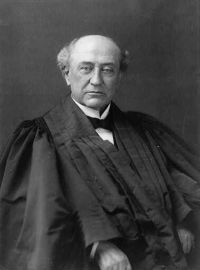
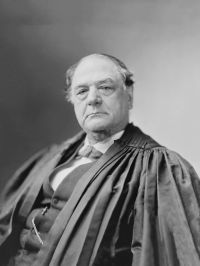
Morrison Remick “Mott” Waite (1816–1888), the seventh Chief Justice of the United States, influenced constitutional law through his limited views on federal power during the Reconstruction Era. His tenure (1874–1888) prioritized state authority over federal involvement in civil rights, as demonstrated in United States v.
Cruikshank and the striking down of the Civil Rights Act of 1875. Waite’s rulings, such as Munn v. Illinois, sought to balance government oversight with business interests, shaping legal perspectives in the 20th century. As a practical leader, his impact lies in streamlining judicial procedures and strengthening state influence during the turbulent years following the Civil War.

 Morrison Waite,
United States v. Cruikshank — Opinion of the Court
Morrison Waite,
United States v. Cruikshank — Opinion of the Court