AI-generated from sources
The constitutional dilemma: Federal protection of rights versus the claim of state sovereignty
In Brief
- American governance is defined by the tension between a proactive federal duty to enforce civil rights and the principles of state sovereignty and limited national power.
- Historical jurisprudence debated whether federal protection is a permanent necessity or a temporary measure designed to help protected groups achieve the status of a 'mere citizen,' ceasing to be a 'special favorite of the laws.'
- The scope of anti-discrimination law has expanded from race to include disability and gender identity in arenas like public schools, continuously testing the boundaries of federal jurisdiction.
- The withdrawal of federal enforcement mechanisms leaves citizens without recourse, highlighting the inherent paradox when the government demands allegiance but fails to provide adequate protection.
Main authors
A fundamental and enduring tension in American governance revolves around the proper allocation of power for the protection of individual rights. The system is caught between two competing philosophies: one that posits a robust, proactive federal duty to enforce civil rights against all infringements, and another that prioritizes the sovereignty of states, arguing that the defense of rights should ultimately reside at the local level [1, 2]. This ideological divide questions whether the federal government is the ultimate guarantor of liberty or a distant power that risks usurping the authority of communities to manage their own affairs [3, 4]. The core of the debate centers on the nature and duration of federal intervention, especially concerning groups historically subject to discrimination.
Proponents of vigorous federal action argue that the nation, having created new constitutional rights, bears the ultimate responsibility for their enforcement, particularly when states are unable or unwilling to act [5, 6, 7]. This perspective views federal power as an essential shield for the vulnerable, ensuring that the promises of equality are not left to the discretion of local authorities who may be indifferent or hostile [8]. Conversely, a powerful counter-argument suggests that perpetual federal oversight is unsustainable and philosophically fraught. This viewpoint contends that there must be a point at which members of a protected class transition to the status of ordinary citizens, whose rights are secured through the same legal channels as everyone else's, rather than remaining a "special favorite of the laws" [9]. This conflict shapes nearly every major debate over civil rights, from the post-Civil War era to contemporary legal battles.
The Foundational Conflict: National Obligation versus State Autonomy
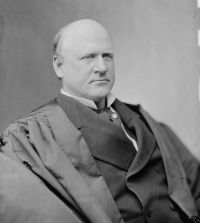
The argument for a preemptive federal mandate to protect civil rights gained its modern force in the aftermath of the Civil War. The establishment of a constitutional right to be free from racial discrimination was understood by some as a new national commitment, created by the nation and therefore enforceable by it [10]. In his dissent in the Civil Rights Cases, Justice John Marshall Harlan forcefully rejected the notion of remitting the civil rights of formerly enslaved people to the very states that had fought to maintain the institution of slavery . This view holds that the national legislature has the constitutional authority to protect human liberty and that the federal government must act decisively when any state, or any individual or corporation acting under state authority, infringes upon the fundamental immunities and privileges of citizenship on the basis of race [11, 12].
This nationalist interpretation is directly challenged by a philosophy rooted in the primacy of state sovereignty. From this perspective, the federal government is not a superior power but a limited agent created by the states for specific, enumerated purposes [13, 14]. It is the states that retain the core sovereign power to regulate internal affairs and define the legal status of their inhabitants, including crucial domestic matters often described as "fireside and home rights" [15]. This doctrine holds that a citizen's ultimate allegiance is to their state, creating a potential paradox where loyalty to one's state could be construed as treason against the federal government in a time of conflict [16]. Consequently, any effort to consolidate power in the national government is seen as a direct threat to the independence of the states and, by extension, to the liberty of the people [17].
Caught between these two poles is the concept of a transitional status for protected groups. The majority opinion that Harlan dissented from proposed that there must be a stage where, aided by foundational legislation, an individual emerges from a state of dependency and assumes the rank of a "mere citizen" . This suggests federal protection is a temporary, corrective measure designed to remedy a specific historical wrong, not a permanent condition of special legal status. This idea creates a deep and persistent tension with the argument that, without a reliable federal backstop, citizens whose states fail to protect them are left without any remedy at all, placing the government in the anomalous position of demanding allegiance without offering protection in return .
The Evolving Arenas of Civil Rights Protection
The debate over federal jurisdiction has often hinged on the distinction between different categories of rights. Even a strong advocate for federal power like Justice Harlan acknowledged a separation between technically legal rights, which are the government's concern, and purely social relations, which are not [18]. However, he immediately clarified that this distinction does not place public life outside the bounds of anti-discrimination principles. Access to public accommodations, such as highways, markets, post offices, and other public venues, constitutes a civil right, not a social one, and must therefore be available to all citizens on equal terms regardless of race [19]. Defining this boundary between the public sphere of civil rights and the private sphere of social choice has remained a central challenge in civil rights jurisprudence.
Over time, the principles of non-discrimination have expanded far beyond the initial focus on race. Modern anti-harassment policies, particularly in environments like public schools, now explicitly prohibit discrimination based on a wide array of characteristics, including religion, gender, sexual orientation, and disability [20, 21]. The legal consensus has evolved to recognize that educational institutions have an affirmative obligation to protect students from discriminatory harassment by their peers [22, 23]. This extension of civil rights law treats the classroom as a space entitled to no less protection than the workplace, reflecting a broader understanding that a safe and civil environment is a prerequisite for learning and equality [24].
Contemporary legal battles over disability and transgender rights continue to test the application of these principles, pushing the boundaries of federal and state authority. Federal guidance on disability rights, for example, mandates that public programs make reasonable modifications to policies and procedures to avoid discrimination, unless doing so would fundamentally alter the nature of the service [25]. In cases concerning the rights of transgender students, courts are forced to determine whether policies like bathroom restrictions are a form of invidious sex-based discrimination requiring heightened scrutiny or are facially neutral rules that merely have a disparate impact on a particular group [26, 27]. These modern conflicts demonstrate that the fundamental questions about the scope of protection and the locus of authority are far from settled.
Sovereignty, Liberty, and the Architecture of Protection
Underlying the entire debate is a deeper question about the nature of sovereignty itself in the American system. The foundational theory is that absolute sovereignty resides with the people, who have not parted with it but have merely delegated certain powers to state and federal governments as deemed necessary for the public welfare [28, 29, 30]. The formation of the United States required a new concept of "federal liberty," wherein states surrendered a portion of their political independence to a central authority, just as individuals in a state of nature surrender some personal sovereignty to form a civil society [31, 32]. This sacrifice of complete autonomy is presented as a necessary and difficult trade-off, essential to preserving the remaining rights and ensuring the collective interest and safety of all .
This structure implies that a strong central government is the ultimate guarantor of rights. Such a government is deemed necessary not only to provide for common defense against foreign threats but also to ensure that justice can be administered impartially, especially in disputes between citizens of different states where local bias might prevail [33, 34, 35]. The Constitution is thus framed as a deliberate act by the people to impose controls on state sovereignties, explicitly rejecting the notion that states should be guided only by their own unconstrained "feeling of justice" [36]. Federal representatives, having a common interest in representing all people, are expected to be as ready to preserve the rights of states as states are to preserve the rights of individuals [37].
However, a potent counter-narrative insists that individual rights are more sacred than the authority of any government, whether state or federal [38]. This view posits that the federal government is an agent with strictly delegated powers, and any attempt to consolidate its authority—for instance, by determining what constitutes property—is a dangerous overreach . It gives rise to a persistent fear that federal institutions, particularly the judiciary, will naturally exhibit a bias in favor of central power, progressively eroding the reserved rights of the states and, in doing so, undermining the very foundation of liberty in an extensive country . This perspective champions the inherent right of states to defend themselves from federal destruction, viewing such defense as a matter of necessity [39].
The American political and legal system remains defined by the unresolved tension between a national commitment to equality and a deep-seated tradition of state autonomy. One side posits an indispensable federal role in enforcing constitutional guarantees, viewing national power as the only reliable shield for civil rights when local authorities fail . The opposing view warns that this federal shield, if made permanent, risks creating a permanent dependency, treating certain groups as a "special favorite of the laws" in a manner that may ultimately be at odds with the goal of simple and equal citizenship . This is not merely a procedural dispute over jurisdiction but a profound philosophical disagreement over the meaning of equality and the structure of liberty.
The enduring relevance of this conflict is evident in its continuous evolution, from the foundational questions of race and citizenship after the Civil War to modern debates over harassment, disability, and gender identity in public life . The fundamental question is not whether rights should be protected, but by which authority, through what means, and for how long protective measures are necessary. The answer is not fixed but is constantly renegotiated through legislative action, judicial interpretation, and societal change. The American system, by design, leaves the precise line between surrendered federal powers and reserved state rights indistinct, ensuring that this vital debate over the stewardship of citizen rights remains a central and defining feature of the republic .