Summary

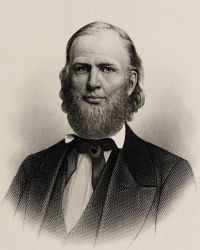
Portrait of Byron Paine Byron Paine Unconstitutionality of the Fugitive Act (1854)

And the people of the free States hold their liberties, not by the boasted safeguards of the constitution, but only by the honesty of bribed commissioners, and the veracity of interested and professed slave-hunters! By as much, therefore, as it is more important to preserve the liberties of freemen, than it is to perpetuate the slavery of slaves, is the argument of convenience stronger in favor of State, than national legislation, in this matter. But the supreme court on this point, as on all others, has paid no regard to the interests or convenience of liberty.
Source: Wikisource

Portrait of Byron Paine Byron Paine Unconstitutionality of the Fugitive Act (1854)

In spite of all the care of the founders of our government, to guard us against the exercise of an unwarranted criminal jurisdiction, we have here a law that brings under its ban, all things that are lovely and of good report. A law, that not only in spirit, but by its letter, would seize upon our mothers, who, by teaching us from our earliest years, to do to others as we would that others should do to us, lead us to aid a wandering fugitive to escape from a doom to which no human being would wish to be consigned himself.
Source: Wikisource

Portrait of Byron Paine Byron Paine Unconstitutionality of the Fugitive Act (1854)

Can it be then that States, possessing such vast powers upon subjects over which it is admitted that they are sovereign—clothed to such an extent with all the attributes of independent governments, may be deprived of them all, without the power or right to do one act in their own defense? Such a doctrine never can be admitted with safety. It is a right inherent in sovereignty to defend itself. It is a reserved right of the States which they hold, not under the constitution, but as a matter of necessity, to defend themselves from destruction.
Source: Wikisource

Get perspective with Kwize: daily news enlightened by great literature