Summary

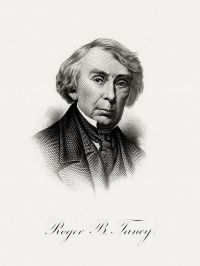
Portrait of Roger B. Taney Roger B. Taney Dred Scott v. Sandford — Opinion of the Court (1857)

And if the Constitution recognises the right of property of the master in a slave, and makes no distinction between that description of property and other property owned by a citizen, no tribunal, acting under the authority of the United States, whether it be legislative, executive, or judicial, has a right to draw such a distinction, or deny to it the benefit of the provisions and guarantees which have been provided for the protection of private property against the encroachments of the Government.
Source: Wikisource

Portrait of Roger B. Taney Roger B. Taney Dred Scott v. Sandford — Opinion of the Court (1857)

And after such an uniform course of legislation as we have stated, by the colonies, by the States, and by Congress, running through a period of more than a century, it would seem that to call persons thus marked and stigmatized, 'citizens' of the United States, 'fellow-citizens,' a constituent part of the sovereignty, would be an abuse of terms, and not calculated to exalt the character of an American citizen in the eyes of other nations.
Source: Wikisource

Get perspective with Kwize: daily news enlightened by great literature