Summary

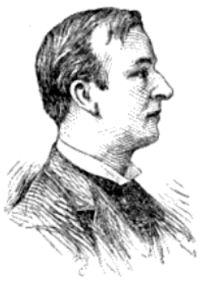
Portrait of Francis Newton Thorpe Francis Newton Thorpe The Essentials of American Constitutional Law

Therefore in America, government is another word for the delegation of powers,—for limitations of authority. Sovereignty is unlimited; government is limited. The Constitution of the United States is the supreme law of the land because through it the people of the United States,—not the people of any particular State or group of States,—have delegated larger powers than have the people of any particular State through its constitution.
Source: Gutenberg

Portrait of Francis Newton Thorpe Francis Newton Thorpe The Essentials of American Constitutional Law

Sovereignty itself is, of course, not subject to law, for it is the author and source of law; but in our system, while sovereign powers are delegated to the agencies of government, sovereignty itself remains with the people, by whom and for whom all government exists and acts. And the law is the definition and limitation of power. It is, indeed, quite true, that there must always be lodged somewhere, and in some person or body, the authority of final decision
Source: Gutenberg

Portrait of Francis Newton Thorpe Francis Newton Thorpe The Essentials of American Constitutional Law

We have a principle which leaves the power of taxing the people and property unimpaired; which leaves to a State the command of all its resources, and which places beyond its reach all these powers which are conferred by the people of the United States on the government of the Union, and all these means which are given for the purpose of carrying these powers into execution. We have a principle which is safe for the States and safe for the Union.100 We are relieved, as we ought to be, from clashing sovereignty.
Source: Gutenberg

Get perspective with Kwize: daily news enlightened by great literature