Summary

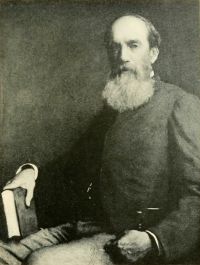
Portrait of Caleb William Loring Caleb William Loring Nullification, Secession, Webster's Argument…

A strict construction of the powers granted by the Constitution is a “State’s rights” that those who believe in the supremacy of the National Union can well favor. It is beyond human wisdom to enact laws of which there can be no question; the decisions of the Supreme Court show how hard it is to make a law whose constitutionality is not disputed. Government would have been impossible, if the power had been in each State to decide for itself as to the validity of every law passed and every act of the General Government, and to secede at its will whenever it chose.
Source: Gutenberg

Portrait of Caleb William Loring Caleb William Loring Nullification, Secession, Webster's Argument…

It was from Webster’s declaration, “It is the people’s Constitution, the people’s government; made for the people; made by the people and answerable to the people,” that Lincoln took the closing words of his short immortal Gettysburg address, and applied them to the national soldiers who had there died for the Union: “That this nation, under God, shall have a new birth of freedom, and that government of the people, by the people, for the people, shall not perish from the earth.”
Source: Gutenberg

Portrait of Caleb William Loring Caleb William Loring Nullification, Secession, Webster's Argument…

Indeed, Calhoun, the great expounder of the nullification and secession doctrine, considered this to be a vital matter, and always insisted that the United States was not a nation. He complained that the reporters made him say,
“this Nation instead of this Union.” “I never use the word nation in speaking of the United States: I always use the word union or confederacy. We are not a nation, but a union, a confederacy of equal and sovereign States. England is a nation, Austria is a nation, Russia is a nation, but the United States are not a nation.”
Source: Gutenberg

Get perspective with Kwize: daily news enlightened by great literature