Summary

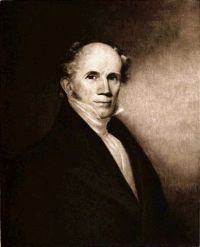
Portrait of Condy Raguet Condy Raguet ''The Examiner, and Journal of Political Economy'' (1835)

Thus has the question whether the Federal Courts are the sole expositors of the Constitution of the United States in the last resort, or whether the States, "as in all other cases of compact among parties having no common judge," have an equal right to interpret that Constitution for themselves, where their sovereign rights are involved, but decided against the pretension of the Federal Judges, by the people themselves the true source of legitimate power."
Source: Wikisource

Portrait of Condy Raguet Condy Raguet ''The Examiner, and Journal of Political Economy'' (1835)

It is urged by man, that the tax levied and collected is enormous in amount, and therefore unequal and unjust. It is readily admitted that this allegation is not entirely unfounded, and all must agree that it does not comport with the character of a State to afford any colour to accuse her of injustice. Even in the assertion of a right, it is highly derogatory for a State to act oppressively—and all injustice is oppression. It cannot be doubted, however, that the tax was levied as a penalty—and that it was not supposed the Bank would venture to incur it.
Source: Wikisource

Portrait of Condy Raguet Condy Raguet ''The Examiner, and Journal of Political Economy'' (1835)

Our great end and aim is to preserve the Union in its purity—the Union according to the compact of the Constitution—by arresting every perverse and wilful violation of its sanctity—and this, we contend, is to be effected by the exertion of a legitimate and rightful Injunction without departing from the pale of that Union, to which, in its state of purity, we are too much attached to bear with patience its continued violation and abuse.
Source: Wikisource

Get perspective with Kwize: daily news enlightened by great literature