Nullification

Definition and stakes

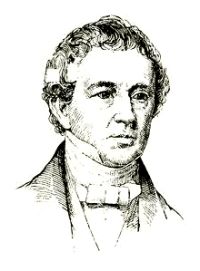
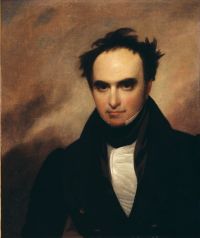
Portrait of Daniel Webster Daniel Webster,  The Works of Daniel Webster, Volume 1

“ Sir, the President of the United States is of opinion, that an individual, called on to execute a law, may himself judge of its constitutional validity. Does nullification teach any thing more revolutionary than that? The President is of opinion, that judicial interpretations of the Constitution and the laws do not bind the consciences, and ought not to bind the conduct, of men. Is nullification at all more disorganizing than that? The President is of opinion, that every officer is bound to support the Constitution only according to what ought to be, in his private opinion, its construction. ”
Source: Gutenberg

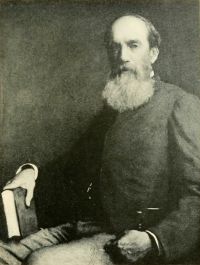
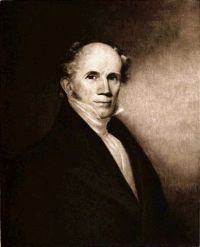
Portrait of Condy Raguet Condy Raguet,  ../../../ (1834)

“ It appears, then, that the principles upon which nullification proceeds, are (in the abstract) in strict conformity with those of the resolutions of 1798. But those principles, it is admitted, must be limited and qualified by the object in view. We are, then, to inquire whether nullification does, or does not, "arrest the progress of the evil." The evil is the exercise of an usurped power: nullification declares that the usurped power shall no longer be obeyed. ”
Source: Wikisource

Portrait of Condy Raguet Condy Raguet,  ../../../ (1834)

“ Now, sir, all these primary steps are, as you must in candour admit, precisely and strictly Nullification; but they are Nullification on a proper occasion, and asserted in a proper mode. There is not a State Rights man on earth, who can object to it as thus applied, as applied to such a case; and of course, as a doctrine, it is not wrong. Nullification and Secession are both rights; and the difference between them is simply this: Nullification proposes to preserve the Constitution, by annulling every act of the Federal Government, which the Constitution does not authorize ”
Source: Wikisource

Get perspective with Kwize: daily news enlightened by great literature