Summary

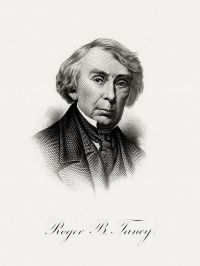
Portrait of Roger B. Taney Roger B. Taney Ex parte in the Matter of Kentucky v…

Under our system of government, administered in its true spirit, there never can be a conflict. It is pernicious to the best interests to build on this foundation, for 'a house divided against itself will fall.' The State functionary owes allegiance and obedience to the Constitution of the United States, and the laws made in pursuance thereof, before everything else. The State owes the same obedience and observance to the same power. The Constitution enters and pervades our system everywhere.
Source: Wikisource

Portrait of Roger B. Taney Roger B. Taney Ex parte in the Matter of Kentucky v…

Looking to the language of the clause, it is difficult to comprehend how any doubt could have arisen as to its meaning and construction. The words, 'treason, felony, or other crime,' in their plain and obvious import, as well as in their legal and technical sense, embrace every act forbidden and made punishable to a law of the State. The word 'crime' of itself includes every offence, from the highest to the lowest in the grade of offences, and includes what are called 'misdemeanors,' as well as treason and felony.
Source: Wikisource

Portrait of Roger B. Taney Roger B. Taney Ex parte in the Matter of Kentucky v…

The citizen owes obedience to the law, and is under obligation to perform the duties the law enjoins; but, if he fails, the court enforces the law, and secures the right which was infringed by the violation of the duty. Nothing can be more familiar than an obligation resting upon one party, and the right and power to enforce its execution vested in another. We submit, very respectfully, that this is just the case under our Constitution. The obligation to surrender the fugitive from justice rests upon the State; the power and duty to enforce the obligation reside in the General Government.
Source: Wikisource

Get perspective with Kwize: daily news enlightened by great literature