Summary

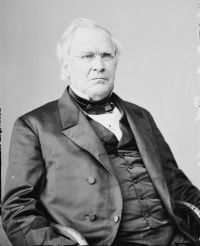
Portrait of Robert Cooper Grier Robert Cooper Grier Commercial Bank of Cincinnati v…

Now, in the supposed case, if it clearly appeared that the court of the State had misunderstood the law in making such application, if it were manifest that the legislature had no intention, in passing the law, to impair the charter, or in any way to apply it to the charter, would all that oust the jurisdiction of this court, or take the case out of the constitutional prohibition? Surely not. It is the fact, not the intention; the effect and application of the law, not the law itself, or the motive with which it was passed, that we must look to.
Source: Wikisource

Portrait of Robert Cooper Grier Robert Cooper Grier Commercial Bank of Cincinnati v…

What could be the object of this act of Congress, if it was not to sanction a revision of a judgment of the highest court of a State, founded upon its construction of a State law,-upon its holding a State law so construed to be valid, whether that construction was in itself right or wrong, Whenever the direct effect of such judgment was to impair, under color of that law, the obligation of a contract?
Even the language of the constitution itself is more comprehensive than if it meant to prohibit an infringement of its provision by a mere legislative 'act'
Source: Wikisource

Portrait of Robert Cooper Grier Robert Cooper Grier Commercial Bank of Cincinnati v…

It is the peculiar province and privilege of the State courts to construe their own statutes; and it is no part of the functions of this court to review their decisions, or assume jurisdiction over them on the pretence that their judgments have impaired the obligation of contracts. The power delegated to us is for the restraint of unconstitutional legislation by the States, and not for the correction of alleged errors committed by their judiciary.
Source: Wikisource

Get perspective with Kwize: daily news enlightened by great literature