Summary

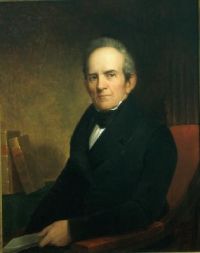
Portrait of Smith Thompson Smith Thompson Groves v. Slaughter — Opinion of the Court

If there was no provision in the constitution of the United States giving to congress the power to regulate commerce, and an act was passed by a state prohibiting the introduction of slaves for sale, would it not be an interference with commerce between the states.
The powers conferred on congress, are duties; and they are to be exercised for the good of the states. What is the foundation of the right to slaves? There is no law declaring slaves property any more than land. Slaves are property by the term 'slaves.' The master has a right to their services and labor.
Source: Wikisource

Portrait of Smith Thompson Smith Thompson Groves v. Slaughter — Opinion of the Court

If, however, the owner of slaves in Maryland, in transporting them to Kentucky or Missouri, should pass through Pennsylvania or Ohio, no law of either state could take away or affect his right of property; nor, if passing from one slave state to another, accident or distress should compel him to touch at any place within a state, where slavery did not exist. Such transit of property, whether of slaves or bales of goods, is lawful commerce among the several states, which none can prohibit or regulate, which the constitution protects, and congress may, and ought, to preserve from violation.
Source: Wikisource

Portrait of Smith Thompson Smith Thompson Groves v. Slaughter — Opinion of the Court

The slaves so introduced did not become free; they could not be so, by the laws and constitution of Mississippi. They did not belong to the state; no such regulation had been made; they were made the subjects of taxation. Could they not be sold, and the penalties attach to the importers; leaving the slaves the subjects of sale? Nothing is seen in the laws or constitution of Mississippi to prevent this. Buying and selling the slaves, when they are in this situation, seems to be a right not to be denied.
Source: Wikisource

Get perspective with Kwize: daily news enlightened by great literature