Summary

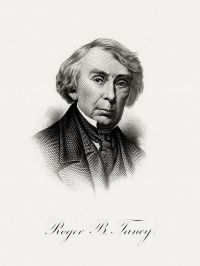
Portrait of Roger B. Taney Roger B. Taney Ableman v. Booth (62 U.S. 506)…

Nor can it be inconsistent with the dignity of a sovereign State to observe faithfully, and in the spirit of sincerity and truth, the compact into which it voluntarily entered when it became a State of this Union. On the contrary, the highest honor of sovereignty is untarnished faith. And certainly no faith could be more deliberately and solemnly pledged than that which every State has plighted to the other States to support the Constitution as it is, in all its provisions, until they shall be altered in the manner which the Constitution itself prescribes.
Source: Wikisource

Portrait of Roger B. Taney Roger B. Taney Ableman v. Booth (62 U.S. 506)…

Nor is there anything in this supremacy of the General Government, or the jurisdiction of its judicial tribunals, to awaken the jealousy or offend the natural and just pride of State sovereignty. Neither this Government, nor the powers of which we are speaking, were forced upon the States. The Constitution of the United States, with all the powers conferred by it on the General Government, and surrendered by the States, was the voluntary act of the people of the several States, deliberately done, for their own protection and safety against injustice from one another.
Source: Wikisource

Portrait of Roger B. Taney Roger B. Taney Ableman v. Booth (62 U.S. 506)…

And the sphere of action appropriated to the United States is as far beyond the reach of the judicial process issued by a State judge or a State court, as if the line of division was traced by landmarks and monuments visible to the eye. And the State of Wisconsin had no more power to authorize these proceedings of its judges and courts, than it would have had if the prisoner had been confined in Michigan, or in any other State of the Union, for an offence against the laws of the State in which he was imprisoned.
Source: Wikisource

Get perspective with Kwize: daily news enlightened by great literature