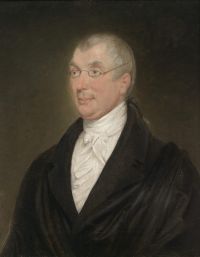
Spencer Roane

Spencer Roane

Summary

Portrait of Spencer Roane Spencer Roane On the Lottery Decision, No. 4 (1821)

Ought they still to deduce powers by distant and remote implication? Ought they by construction, to impute to the American people that they have made in effect, but one great consolidated government, when they have in fact established a confederation of independent states, have granted the powers it chose to confide to the general government, and reserved the rest to the states? Ought the court not to permit that government, which they say was “designed to approach immortality” to exist a single day in its original form and character?
Source: Wikisource

Portrait of Spencer Roane Spencer Roane On the Lottery Decision, No. 4 (1821)

The supreme court seems to perceive great evils, fellow citizens, from suing in the state tribunals those who act under the authority of the laws of the United States. If those mischiefs do exist, yet the power to correct the decisions is not thereby carried to the federal courts. No power, whatever the mischief may be, is possessed by them, unless it has been fairly conferred The constitution is not whatever that court thinks it ought to be. On that point, the people of the United states have also their opinion.
Source: Wikisource

Portrait of Spencer Roane Spencer Roane On the Lottery Decision, No. 4 (1821)

The right of a citizen to sue his state is not, therefore, in such case, coeval with the institution of his action, and the great principle is consequently violated which requires that there must be a cause of action, as well as proper parties at the time of instituting the suit. The ground of jurisdiction, or of action, may show itself for the first time, months and years after the institution of the suit, and the constitution or law, which is to give the court jurisdiction, may come out for the first time in the surrebutter of the defendant.
Source: Wikisource

Get perspective with Kwize: daily news enlightened by great literature