Summary

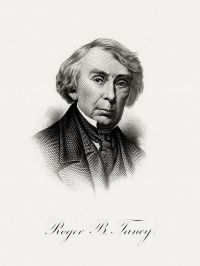
Portrait of Roger B. Taney Roger B. Taney Holmes v. Jennison — Opinion of the Court

If any such power is to be given to the President by treaty, it is not merely to regulate the mode and manner of exercising an existing power; but must be a treaty creating the power, and founded upon the mere comity of nations, and not resting upon any obligation, the performance of which a foreign nation has a right to demand of our government. This power to surrender fugitives from justice, to a foreign government, has its foundation, its very life and being, in a treaty, to be made between the United States and such foreign government
Source: Wikisource

Portrait of Roger B. Taney Roger B. Taney Holmes v. Jennison — Opinion of the Court

One state, perhaps, would surrender for political offences; another would not: and one state might deliver up fugitives to one nation only; while another state would select some other foreign nation, as the only object of this comity. Such conflicting exercises of the same power would not be well calculated to preserve respect abroad or union at home. In times of high excitement, nothing but mischief could grow out of it.
Source: Wikisource

Portrait of Roger B. Taney Roger B. Taney Holmes v. Jennison — Opinion of the Court

It is admitted that an affirmative grant of a power to the general government, is not of itself a prohibition of the same power to the states; and that there are subjects over which the federal and state governments exercise concurrent jurisdiction. But, where an authority is granted to the Union, to which a similar authority in the states would be absolutely and totally contradictory and repugnant, there the authority to the federal government is necessarily exclusive; and he same power cannot be constitutionally exercised by the states.
Source: Wikisource

Get perspective with Kwize: daily news enlightened by great literature