Summary

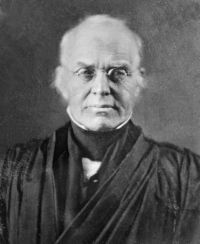
Portrait of Joseph Story Joseph Story Martin v. Hunter's Lessee — Opinion of the Court

God forbid that the judicial power in these states should ever, for a moment, even in its humblest departments, feel a doubt of its own independence. Whilst adjudicating on a subject which the laws of the country assign finally to the revising power of another tribunal, it can feel no such doubt. An anxiety to do justice is ever relieved by the knowledge that what we do is not final between the parties. And no sense of dependence can be felt from the knowledge that the parties, not the court, may be summoned before another tribunal.
Source: Wikisource

Portrait of Joseph Story Joseph Story Martin v. Hunter's Lessee — Opinion of the Court

Can a mere plea in defence be of itself a bar to further proceedings, so as to prohibit an inquiry into its truth or legal propriety, when no other tribunal exists to whom judicial cognizance of such cases is confided? Suppose an indictment for a crime in a state court, and the defendant should allege in his defence that the crime was created by an ex post facto act of the state, must not the state court, in the exercise of a jurisdiction which has already rightfully attached, have a right to pronounce on the validity and sufficiency of the defence?
Source: Wikisource

Portrait of Joseph Story Joseph Story Martin v. Hunter's Lessee — Opinion of the Court

If, then, it is a duty of congress to vest the judicial power of the United States, it is a duty to vest the whole judicial power. The language, if imperative as to one part, is imperative as to all. If it were otherwise, this anomaly would exist, that congress might successively refuse to vest the jurisdiction in any one class of cases enumerated in the constitution, and thereby defeat the jurisdiction as to all; for the constitution has not singled out any class on which congress are bound to act in preference to others.
Source: Wikisource

Get perspective with Kwize: daily news enlightened by great literature