Summary

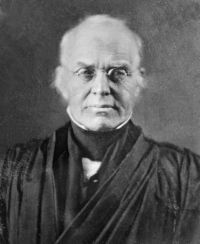
Portrait of Joseph Story Joseph Story Gelston v. Hoyt — Opinion of the Court

If the government refuse to adopt his acts or waive the forfeiture, there is an end to his claim: he cannot proceed to enforce that which the government repudiates. In legal propriety, therefore, he cannot be deemed a stranger to the decree in rem; he is at all events a privy, and as such must be bound by a sentence which ascertains the seizure to be tortious. But if he were a mere stranger, he would still be bound by such sentence, because the decree of a court of competent jurisdiction in rem is, as to the points directly in judgment, conclusive upon the whole world.
Source: Wikisource

Portrait of Joseph Story Joseph Story Gelston v. Hoyt — Opinion of the Court

Whenever it is exerted, all persons who act in obedience to the executive instructions, in cases within the act, are completely justified in taking possession of, and detaining the offending vessel, and are not responsible in damages for any injury which the party may suffer by reason of such proceeding. Surely it never could have been the intention of congress, that such a power should be allowed as a shield to the seizing officer, in cases where that seizure might be made by the ordinary civil means?
Source: Wikisource

Portrait of Joseph Story Joseph Story Gelston v. Hoyt — Opinion of the Court

And upon principle, where is there to be found a substantial difference between a sentence of condemnation and of acquittal in rem? If the former ascertains and fixes the forfeiture, and, therefore, it is conclusive, the latter no less ascertains that there is no forfeiture, and, therefore, restores the property to the claimant. It cannot be pretended that a new seizure might, after an acquittal, be made for the same subposed offence; or if made, that the former sentence would not, as evidence, be conclusive, and, as a bar, be peremptory against the second suit in rem.
Source: Wikisource

Get perspective with Kwize: daily news enlightened by great literature