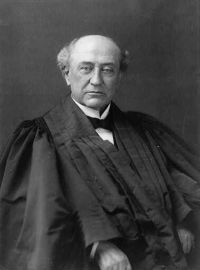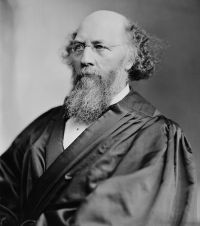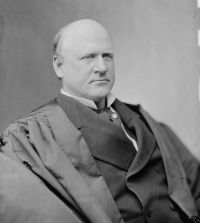
John Marshall Harlan

Biographical details

Portrait of John Marshall Harlan John Marshall Harlan Plessy v. Ferguson, 163 U.S. 537…

It is quite another thing for government to forbid citizens of the white and black races from traveling in the same public conveyance, and to punish officers of railroad companies for permitting persons of the two races to occupy the same passenger coach. If a State can prescribe, as a rule of civil conduct, that whites and blacks shall not travel as passengers in the same railroad coach, why may it not so regulate the use of the streets of its cities and towns as to compel white citizens to keep on one side of a street and black citizens to keep on the other?
Source: Wikisource

Portrait of John Marshall Harlan John Marshall Harlan Civil Rights Cases, 109 U.S. 3…

If, then, exemption from discrimination in respect of civil rights is a new constitutional right, secured by the grant of State citizenship to colored citizens of the United States — and I do not see how this can now be questioned — why may not the nation, by means of its own legislation of a primary direct character, guard, protect, and enforce that right? It is a right and privilege which the nation conferred.
Source: Wikisource

Portrait of John Marshall Harlan John Marshall Harlan Duncan v. Louisiana — Dissenting opinion

Still in these days of progress and experiment, when everything is on trial at the bar of human reason or conceit, it is quite the fashion to speak of jury trial as something that has outlived its usefulness. Intelligent and well-meaning people often sneer at it as an awkward and useless impediment to the speedy and correct administration of justice, and a convenient loop-hole for the escape of powerful and popular rogues. Considering the kind of jury trials we sometimes have in the United States, it must be admitted that this criticism is not without foundation.
Source: Wikisource

Get perspective with Kwize: daily news enlightened by great literature