Summary

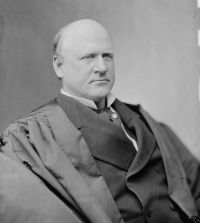
Portrait of John Marshall Harlan John Marshall Harlan Standard Oil Co. of New Jersey v…

The Supreme Law of the Land—which is binding alike upon all—upon Presidents, Congresses, the Courts and the People—gives to Congress, and to Congress alone, authority to regulate interstate commerce, and when Congress forbids any restraint of such commerce, in any form, all must obey its mandate. To overreach the action of Congress merely by judicial construction, that is, by indirection, is a blow at the integrity of our governmental system, and, in the end, will prove most dangerous to all.
Source: Wikisource

Portrait of John Marshall Harlan John Marshall Harlan Standard Oil Co. of New Jersey v…

As a public policy has been declared by the legislative department in respect of interstate commerce, over which Congress has entire control, under the Constitution, all concerned must patiently submit to what has been lawfully done until the People of the United States—the source of all National power—shall, in their own time, upon reflection and through the legislative department of the Government, require a change of that policy. There are some who say that it is a part of one's liberty to conduct commerce among the States without being subject to governmental authority.
Source: Wikisource

Portrait of John Marshall Harlan John Marshall Harlan Standard Oil Co. of New Jersey v…

Every contract, combination in the form of trust or otherwise, or conspiracy, in restraint of trade or commerce among the several States, or with foreign nations, is hereby declared to be illegal. Every person who shall make any such contract or engage in any such combination or conspiracy, shall be deemed guilty of a misdemeanor, and, on conviction thereof, shall be punished by fine not exceeding five thousand dollars, or by imprisonment not exceeding one year, or by both said punishments, in the discretion of the court.
Source: Wikisource

Get perspective with Kwize: daily news enlightened by great literature