Misdemeanor

Definition and stakes

Andrew W. Young,  The government class book

“ Causes, in which money is claimed for damage or for debt, are called civil causes; those for the trial of persons charged with crime, or some misdemeanor, are called criminal causes. All crimes, strictly speaking, are misdemeanors. In common usage, however, the word misdemeanor denotes a smaller offense, such as is usually punishable by fine, or by imprisonment in a county jail, and not in a state prison. Causes, actions, and suits, are words of similar meaning in law language, being generally used to signify prosecutions at law, or lawsuits. The party that sues is called plaintiff ”
Source: Gutenberg

The Offences against the Person Act 1861

“ Whosoever shall unlawfully and maliciously wound or inflict any grievous bodily Harm upon any other Person, either with or without any Weapon or Instrument, shall be guilty of a Misdemeanor, and being convicted thereof shall be liable, at the Discretion of the Court, to be kept in Penal Servitude for the Term of Three Years, or to be imprisoned for any Term not exceeding Two Years, with or without Hard Labour. ”
Source: Wikisource

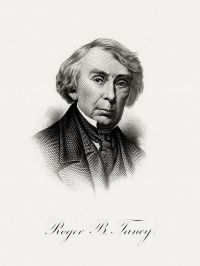
Portrait of Roger B. Taney Roger B. Taney,  Ex parte in the Matter of Kentucky v…

“ Crime can be extended in its signification. Crime is synonymous with misdemeanor, (4 Black. Com., 5,) and includes every offence below felony punished by indictment as an offence against the public, (9 Wendell, 222.) We know that, in the first draft of this clause of the Constitution, the words 'high misdemeanor' were used. They were stricken out, and 'other crime' inserted, because 'high misdemeanor' might be technical and too limited. The framers wanted 'to comprehend all proper cases.' (5 Elliott, 487.) To use the language of a learned judge, 'there is a dependence that justice will be done ”
Source: Wikisource

Get perspective with Kwize: daily news enlightened by great literature