Summary

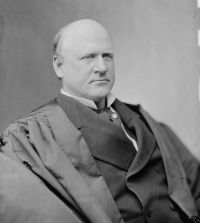
Portrait of John Marshall Harlan John Marshall Harlan Dinsmore v. Southern Express Company…

It shall be the duty of every railroad or steamboat company, carrier, express company, or corporation, or person whose occupation is to act as such, to issue to the shipper or consignor, or his agent, or person from whom any goods are accepted for transportation, a bill of lading, manifest, or other evidence of receipt and forwarding for each shipment received for carriage and transportation, whether in bulk or in boxes, bales, packages, bundles, or not so inclosed or included
Source: Wikisource

Portrait of John Marshall Harlan John Marshall Harlan Dinsmore v. Southern Express Company…

If the cause had not been submitted in the circuit court of appeals until after the act of 1901 took effect, that court, we apprehend, would have dismissed the suit upon the ground that by the operation of that legislation the whole subject-matter of litigation had disappeared, and that the order of the railroad commission, even if originally valid, ceased to have any effect.
Source: Wikisource

Portrait of John Marshall Harlan John Marshall Harlan Dinsmore v. Southern Express Company…

The object of this suit was to prevent the enforcement of the order of the railroad commission based upon its construction of that act. But whatever might be now held as to the meaning and scope of the act of 1898 as applied to express companies, the amendatory statute of 1901, in declaring what companies, corporations, and persons shall attach the required stamp to bills of lading, manifests, and receipts for goods or other property to be transported, distinctly excludes express companies.
Source: Wikisource

Get perspective with Kwize: daily news enlightened by great literature