Summary

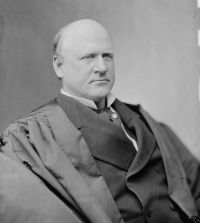
Portrait of John Marshall Harlan John Marshall Harlan Civil Rights Cases, 109 U.S. 3…

If, then, exemption from discrimination in respect of civil rights is a new constitutional right, secured by the grant of State citizenship to colored citizens of the United States — and I do not see how this can now be questioned — why may not the nation, by means of its own legislation of a primary direct character, guard, protect, and enforce that right? It is a right and privilege which the nation conferred.
Source: Wikisource

Portrait of John Marshall Harlan John Marshall Harlan Civil Rights Cases, 109 U.S. 3…

It would never occur to anyone that the presence of a colored citizen in a courthouse, or courtroom, was an invasion of the social rights of white persons who may frequent such places. And yet such a suggestion would be quite as sound in law — I say it with all respect — as is the suggestion that the claim of a colored citizen to use, upon the same terms as is permitted to white citizens, the accommodations of public highways, or public inns, or places of public amusement, established under the license of the law, is an invasion of the social rights of the white race.
Source: Wikisource

Portrait of John Marshall Harlan John Marshall Harlan Civil Rights Cases, 109 U.S. 3…

Whoever, by virtue of public position under a State government, deprives another of property, life, or liberty without due process of law, or denies or takes away the equal protection of the laws, violates the constitutional inhibition; and, as he acts under the name and for the State, and is clothed with the State's power, his act is that of the State. This must be so, or the constitutional prohibition has no meaning. Then the State has clothed one of its agents with power to annul or evade it. But the constitutional amendment was ordained for a purpose.
Source: Wikisource

Get perspective with Kwize: daily news enlightened by great literature