“ As I Watch the Ploughman Ploughing As I watch’d the ploughman ploughing, Or the sower sowing in the fields, or the harvester harvesting, I saw there too, O life and death, your analogies; (Life, life is the tillage, and Death is the harvest according.) ”
Ploughing
Definition and stakes
Ploughing, the act of turning soil to prepare for cultivation, has long symbolized labor, renewal, and the interplay between humanity and nature. From Walt Whitman’s poetic reflection on ploughing as an analogy for life’s cycles to Hesiod’s pragmatic advice on seasonal farming, authors have explored its physical and metaphorical aspects.
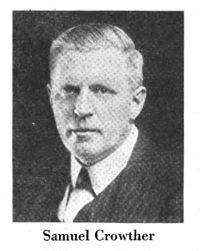
Bertha Thomas admired its artistic simplicity, while Samuel Crowther observed its mechanized evolution in modern agriculture. Whether as a ritual, a necessity, or a metaphor, ploughing encapsulates the enduring relationship between human effort and the earth’s fertility, bridging practicality and symbolism across cultures and eras.
Quotes about “ploughing”
Bertha Thomas, George Sand (1889)
“ The ploughing-scene in the opening—ploughing as she had witnessed it sometimes in her own neighbourhood, fresh, rough ground broken up for tillage, the plough drawn by four yoke of young white oxen new to their work and but half-tamed, has a simplicity and grandeur of effect not easy to parallel in modern art. The motif of the tale is that you often go far to search for the good fortune that lies close to your door. ”
Anonymous, Mother Stories from the Old Testament
“ Ploughing the land, sowing the seed, reaping the harvest, and winnowing the grain are often referred to. Our picture shows an Eastern husbandman ploughing. How different it is to ploughing in our own land! There is no coulter; and instead of the broad steel plough-share we see a pointed piece of wood. And the long handles with which our labourers guide their ploughs—where are they? The strong horses, too, harnessed one behind the other, are missing. Yes! none of these were used in Canaan. ”
Ella M. Sexton, Stories of California
“ The ploughing is done by a gang-plough, as it is called, which has four steel ploughshares that turn up the ground ten inches deep. Eight horses draw this, and as a seeder is fastened to the plough, and back of the plough a harrow, the horses plough, seed, harrow, and cover up the grain at one time. There the seed-wheat lies tucked up in its warm brown bed till rain and sunshine call out the tiny green spears, and coax them higher and stronger, and the hot sun of June and July ripens the precious grain. ”
 Hesiod,
 the Homeric Hymns, and Homerica
Hesiod,
Hesiod, the Homeric Hymns, and Homerica
“ So soon as the time for ploughing is proclaimed to men, then make haste, you and your slaves alike, in wet and in dry, to plough in the season for ploughing, and bestir yourself early in the morning so that your fields may be full. Plough in the spring; but fallow broken up in the summer will not belie your hopes. Sow fallow land when the soil is still getting light: fallow land is a defender from harm and a soother of children. ”
R. V. Russell, The Tribes and Castes of the Central Provinces of India…
“ Ploughing was probably despised as a form of manual labour, and hence an undignified action for a member of the aristocracy, just as a squire or gentleman farmer in England might consider it beneath his dignity to drive the plough himself. ”
 Thomas Hughes,
The Scouring of the White Horse…
Thomas Hughes,
The Scouring of the White Horse…
“ They are all mad for ploughing, Sir, these blockhead farmers; why, half of them keep their sheep standing on boards all the year round. They would plough and grow mangold-wurzel on their fathers’ graves. ”
[various: leave blank, and specify contributor per section], Egyptian Literature (1901)
“ Now at the time of ploughing his elder brother said unto him: “Let us make ready for ourselves a goodly yoke of oxen for ploughing, for the land has come out from the water, it is fit for ploughing. Moreover, do thou come to the field with corn, for we will begin the ploughing in the morrow morning.” ”
 Samuel Crowther,
My Life and Work
Samuel Crowther,
My Life and Work
“ The ploughing is done in about one fourth the time, with only the physical energy used to steer the tractor. Ploughing has become a matter of motoring across a field.Farming in the old style is rapidly fading into a picturesque memory. ”
active 1801-1820? S. W., A visit to a farm house; or, An introduction to various subjects connected with rural economy (1820)
“ Charles. What is the use of ploughing, grandpapa?Mr. Mansfield. To break up the earth, which would otherwise get so hard that no corn could grow in it. When a field has been ploughed, a [67] man walks over it, and scatters the seed all over the field. Then it is raked in by an instrument full of great iron teeth, called a harrow. Care must afterwards be taken to keep it free from weeds, but besides that nothing more can be done. It is left for the rain to water, and the sun to ripen it. ”
Marcus Porcius Cato, Roman Farm Management: The Treatises of Cato and Varro
“ A farmer should himself make sure that his ploughing has been well done, not alone by inspection, for the eye is often amused by a smooth surface which in fact conceals clods, but also by experiment, which is less likely to be deceived, as by driving a stout stick through the furrows: if it penetrates the soil readily and without obstruction, it will be evident that all the land there about is in good order: but if some part harder than the rest resists the pressure, it will be clear that the ploughing has been badly done. ”
Kate V. Saint Maur, Making Home Profitable
“ Have well-rotted stable manure scattered over the surface before ploughing, which should be deep at first. After two or three days’ airing, plough again, running the furrows crosswise; then harrow and roll and harrow again, until every clod is broken up. Thorough preparation of the soil should never be shirked, for it is more than half the battle. Let me caution you not to have the ploughing done if the ground be wet. Much of the disappointment which city people experience arises from the natural desire of the amateur to get to work. ”
Ernest Young, Peeps at Many Lands: Siam (1908)
“ When the ground has been cleared, the farmers wait for the rain, which falls in torrents, and in due course makes the ground soft enough to permit of ploughing. The plough is made of wood, and consists of a bent stick stuck in a pointed wooden block. ”
J. A. Wylie, Pilgrimage from the Alps to the Tiber
“ Nothing could be more primitive than the plough of the Romans. It consists of a single stick or lever, fixed to a block having the form of a sock or coulter, with a projection behind, on which the ploughman puts his foot, and assists the bullocks over a difficulty. The work done by this implement we would not call ploughing: it simply scratches the surface to the depth of some three or four inches, with which the poor husbandman is content. The soil is in general light, but it might be otherwise tilled; and, were it so, would yield far other harvests than those now known in Italy. ”
 George Fletcher Moore,
Diary of ten years eventful life of an early settler in Western Australia and also A descriptive…
(1884)
George Fletcher Moore,
Diary of ten years eventful life of an early settler in Western Australia and also A descriptive…
(1884)
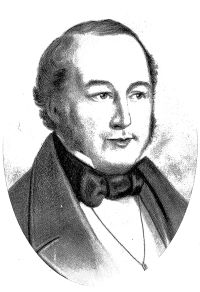
“ Saturday.—The business here is ploughing, sowing, harrowing, threshing, grubbing, and gardening—all at once. Two men are ploughing with six bullocks to one plough—very stiff land, never having been broke up before; one man harrowing with a pair of horses; two men thrashing, one grubbing bushes, one in the garden, one with the sheep, one with the cattle, and one helping in the kitchen. They all make a pretty good houseful. ”
Florence L. Bowman, Britain in the Middle Ages: A History for Beginners
“ When the ploughing was done, they were all very careful to throw up a little heap of earth to make a ridge between the strips in each field, so that each freeman might know his own strip in the wheat field and in the barley field too. ”
 Thomas Curtis Clarke,
American Pocket Library of Useful Knowledge
(1841)
Thomas Curtis Clarke,
American Pocket Library of Useful Knowledge
(1841)
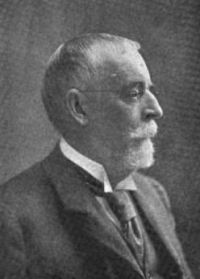
“ Here, as in all other departments of the farming business, much of the success depends on the skill and judgment of the farmer. In many cases three ploughings will be necessary, and one of these ploughings should be before winter, that the turned-up soil may be mellowed by the frost; the last ploughing has to be in the spring immediately before planting the seed; two ploughings in this country will be found sufficient; in all cases it should be well harrowed, and rolling will be an improvement that amply relays the expense. ”
 John Ruskin,
Mornings in Florence
John Ruskin,
Mornings in Florence
“ I believe both Giotto's design.17. Ploughing.The sword in its Christian form. Magnificent: the grandest expression of the power of man over the earth and its strongest creatures that I remember in early sculpture,— (or for that matter, in late) . It is the subduing of the bull which the sculptor thinks most of; the plough, though large, is of wood, and the handle slight. But the pawing and bellowing labourer he has bound to it!—here is victory. ”
J. G. Lockhart, Memoirs of the Life of Sir Walter Scott…
“ Besides, they find fault with his ho, and gee, and wo, when ploughing. 'He speaks to the horse,' they say, 'and they gang—and there's something no canny about the man.' In short, between the prejudices of laziness and superstition, the ploughman leads a sorry life of it;—yet these prejudices are daily abating, under the steady and indulgent management of the proprietor. Indeed, nowhere is improvement in agriculture more necessary. An old-fashioned Zetland plough is a real curiosity. ”
Velda Allis Eddy, The Allis Family; or, Scenes of Western Life
“ In order to "make a farm," this ground must be ploughed, or, as Western people say, "broken up." Some of the children would smile, I think, if they were to see a regular "breaking team" before a "breaking plough." This plough is quite unlike that which is used in the older States, and it takes five, six, and sometimes as many as eight yoke of oxen to draw it. This ploughing is usually done in June. After ploughing, the ground must be enclosed, and then it is ready for the seed.Some people make curious mistakes when they undertake to make a new farm. Mr. Allis was one of these persons. ”
 Richard Jefferies,
Hodge and His Masters
Richard Jefferies,
Hodge and His Masters
“ In the autumn comes the ploughing, the couch-picking and burning, often second ploughing, the sowing by drill or hand, the threshing, &c. In the spring will come more ploughing, sowing, harrowing, hoeing. Modern agriculture has increased the labour done in the fields. Crops are arranged to succeed crops, and each of these necessitates labour, and labour a second and a third time. The work on arable land is never finished. A slackness there is in the dead of winter; but even then there is still something doing—some draining, some trimming of hedges, carting manure for open field work. ”
Elijah Cobb, Elijah Cobb (1925)
“ Freeman says the sheer of the plough, has worn so small, that anew one is necessary, the present [Pg 110] one will not cut a furrow of any weadth, & under those circomstances, haveing considerable hard plouging to perform, this fall, & next spring, perhaps it will be advisable to git a new, & larger one, the present one can be fitted for light ploughing, and favour the new one. ”
 Joseph Jacobs,
More Celtic Fairy Tales
(1895)
Joseph Jacobs,
More Celtic Fairy Tales
(1895)
“ The earth is coming up!" He then began ploughing, kept at it all day at a terrible rate, and before the sun went down that night there was not a palm-breadth of the three fields which he had not ploughed, sowed, and harrowed. When the Farmer saw this he was exceedingly well pleased, for he had his work finished as soon as his neighbours. The Ploughman was quick and ready to do everything that he was told, and so he and the Farmer agreed well until the harvest came. But on a certain day when the reaping was over, the Farmer said to him that he thought the corn was dry enough for putting in. ”
 Frank G. Carpenter,
Canada and Newfoundland
(1924)
Frank G. Carpenter,
Canada and Newfoundland
(1924)
“ The ploughing may be done by the farmers, each on his own land, or by contractors who make a business of preparing fields for planting, and who, later on, do much of the threshing. The ordinary farmer uses a gang plough and from four to a half dozen horses. With four horses he is able to plough more than two acres a day. Much of the184 work is done by tractors, which pull gang ploughs that turn over a strip of sod as wide as the average city sidewalk. ”
James Inglis, Sport and Work on the Nepaul Frontier
“ Your ploughmen are mostly low caste men—Doosadhs, Churnars, Moosahurs, Gwallahs, et hoc genus omne. The Indian plough, so like a big misshapen wooden pickaxe, has often been described. It however turns up the light soft soil very well considering its pretensions, and those made in the factory workshops are generally heavier and sharper than the ordinary village plough. Our bullocks too, being strong and well fed, the ploughing in the zeraats is generally good. ”
W. Delisle Hay, Brighter Britain! (Volume 1 of 2…
“ This clearing is ready for the plough. Besides, there is a piece of flat, marshy ground below our shanty on the left, and this was only covered originally with flax, swamp-grass, and small shrubs. In the dry season we have burnt this off as it stood. The soil is not deep, but it is good, and we shall plough this in with the other. There will be about fifty acres of plough land altogether, and twice as much more next year, or the year after.We have borrowed a plough and harrows from a [Pg 222] neighbour, and are going to work. Ploughing is quite a new industry up here. ”
“ Or else he wished he were the abbot's huntsman, hunting in the forest; or a monk of St Germain, singing sweetly in the abbey church; or a merchant, taking bales of cloaks and girdles along the high [pg 027] road to Paris; anything, in fact, but a poor ploughman ploughing other people's land. An Anglo-Saxon writer has imagined a dialogue with him:'Well, ploughman, how do you do your work?' 'Oh, sir, I work very hard. ”
Ernest Young, Peeps at Many Lands: Siam — Chapter 15 A ploughing ceremony (1908)
“ If he chooses the longest piece of cloth, then there will be little rain that year, and men will be able to let the panoong drop to the ankle. If he chooses the shortest, a wet season will follow, and the men who work in the wet rice-fields will have to pull the panoong high above the knee. Having chosen the cloth, he fastens it round his body, and is ready to begin ploughing. He holds the handle of the plough and a long rod at the same time, and he has to guide the plough nine times round the space marked out by the three bamboos. ”
1911 Encyclopædia Britannica (1911)
“ The plough used has a 16-in. share, turns two furrows, and is drawn by five horses. Each plough covers about 250 acres in a season, travelling an average of 20 m. a day. The ploughing begins in October, and continues a month or six weeks, according to the season. ”
“ For if the ploughmen that now be, were made lordes, they would clean give over ploughing, they would leave of theyr labour and [xxvi] fall to lording outright and let the plough stand. For ever since the Prelates were made lords and nobles, the plough standeth, there is no work done, the people starve. ”
 Peter Rosegger,
The Forest Farm: Tales of the Austrian Tyrol
Peter Rosegger,
The Forest Farm: Tales of the Austrian Tyrol
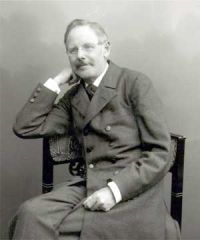
“ At the back of the plough, three "horns" or tails stick out; these are the handles by which the plough is driven by a powerful man. It depends upon the driving of this ploughman whether the sod be made wide or narrow and the furrow deep or shallow; it is this man's duty to fix and lift the plough at the edge of the field; he must also be able, on stony ground, to pull the plough out of the way of any larger stone than usual, for the oxen cannot be brought suddenly to a standstill; and the plough, if left to itself, would soon go to wreck and ruin. ”
“ Everyone who has seen an English plough will know that a few old swords would not supply material for one English ploughshare, but an Indian plough is a very different thing, and is well represented by the accompanying sketch. All the iron required is a little bit at the point which enters the ground. The plough is very light, and may easily be carried by a boy from the farmer’s house to his field in the morning, and back again in the evening. A man may be often seen carrying two ploughs, one on each shoulder. ”
 Thomas Wallace Knox,
The Boy Travellers in the Far East…
Thomas Wallace Knox,
The Boy Travellers in the Far East…
“ AN ANCIENT PLOUGH. "That the plough is the same here to-day that it was three thousand years ago, we have proof in the pictures of agriculture on the walls of the tombs at Thebes. The ancient implement is identical with the modern one, the propelling force is the same, and the principal difference we can see is in the costume of the ploughman.""The plough only scratches the earth," said Fred; "and if the soil was not very rich they would soon find out they needed something that would stir up the ground a little deeper." ”
 Andrew Kennedy Hutchison Boyd,
The Recreations of a Country Parson
Andrew Kennedy Hutchison Boyd,
The Recreations of a Country Parson
“ And when I have occasionally beheld a ploughman, bricklayer, gardener, weaver, or blacksmith, begin his work in the morning, I have envied him the readiness and willingness with which he took to it. The plough-man, after he has got his horses harnessed to the plough, does not delay a minute: into the turf the shining share enters, and away go horses, plough and man. ”
Sixty Folk-Tales from Exclusively Slavonic Sources
“ In the beginning, when man began to plough, when he had cut a furrow from one end to the other, he lifted his plough on to his shoulder, and when he had carried it back to the same end that he had begun from, he began again to plough thence. The Lord, in the form of an old man, passed by and said to him, ‘Not thus, my son, but when you make a furrow, turn your plough round at the same place to which you have cut the furrow, and plough back to the end from which you began.’ And thus the ploughman learnt to plough aright, as people plough at this day. ”
Related terms
Authors who wrote about “ploughing”
Ernest Young Walt WhitmanBertha ThomasHesiodR. V. RussellThomas Hughes[various: leave blank, and specify contributor per section…Samuel Crowtheractive 1801-1820? S. W.AnonymousElla M. SextonKate V. Saint MaurMarcus Porcius CatoGeorge Fletcher MooreJ. A. WylieThomas Curtis ClarkeJohn RuskinJ. G. LockhartFlorence L. BowmanVelda Allis Eddy
Walt WhitmanBertha ThomasHesiodR. V. RussellThomas Hughes[various: leave blank, and specify contributor per section…Samuel Crowtheractive 1801-1820? S. W.AnonymousElla M. SextonKate V. Saint MaurMarcus Porcius CatoGeorge Fletcher MooreJ. A. WylieThomas Curtis ClarkeJohn RuskinJ. G. LockhartFlorence L. BowmanVelda Allis Eddy