Summary

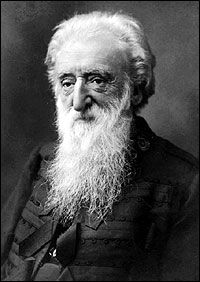
Portrait of William Booth William Booth,  In Darkest England, and the Way Out

“ As in Africa, it is all trees trees, trees with no other world conceivable; so is it here—it is all vice and poverty and crime. To many the world is all slum, with the Workhouse as an intermediate purgatory before the grave. And just as Mr. Stanley's Zanzibaris lost faith, and could only be induced to plod on in brooding sullenness of dull despair, so the most of our social reformers, no matter how cheerily they may have started off, with forty pioneers swinging blithely their axes as they force their way in to the wood, soon become depressed and despairing. ”
Source: Gutenberg

Portrait of William Booth William Booth,  In Darkest England, and the Way Out

“ This is no cast-iron Scheme, forged in a single brain and then set up as a standard to which all must conform. It is a sturdy plant, which has its roots deep down in the nature and circumstances of men. Nay, I believe in the very heart of God Himself. It has already grown much, and will, if duly nurtured and tended, grow still further, until from it, as from the grain of mustard-seed in the parable, there shall spring up a great tree whose branches shall overshadow all the earth. ”
Source: Gutenberg

Portrait of William Booth William Booth,  In Darkest England, and the Way Out

“ It is quite true that there are capitalists not a few who may be regarded as the enemies, not only of labour, but of the human race; but capital itself, so far from being a natural enemy of labour, is the great object which the labourer has constantly in view. However much an agitator may denounce capital, his one great grievance is that he has not enough of it for himself. Capital, therefore, is not an evil in itself; on the contrary, it is good—so good that one of the great aims of the social reformer ought to be to facilitate its widest possible distribution among his fellow-men. ”
Source: Gutenberg

Get perspective with Kwize: daily news enlightened by great literature