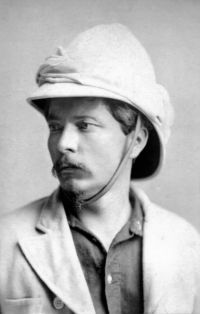
Henry Morton Stanley (1841–1904), a Welsh-American explorer and journalist, is renowned for his expeditions in Central Africa, notably his search for David Livingstone and his mapping of the Nile and Congo rivers. His work, though pivotal in advancing Western geographical knowledge, is entangled with controversy due to his role in facilitating the exploitation of the Congo Basin under King Leopold II.
Authors such as Orison Swett Marden praised his perseverance, portraying him as a self-made hero, while Franz Boas and contemporaries emphasized the mysterious and dangerous nature of his African ventures. Stanley’s own writings, like In Darkest Africa, reveal a practical, often stern leadership style, contrasting with the idealism of figures like Livingstone. His legacy combines groundbreaking exploration with the moral complexities of colonialism, leaving an indelible mark on both cartography and the history of imperialism.
 Orison Swett Marden,
Eclectic School Readings: Stories from Life
Orison Swett Marden,
Eclectic School Readings: Stories from Life