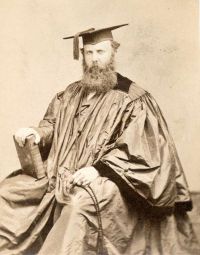
“ All literature worthy of the name is the expression of the writer's life, of his aspirations, and of his ultimate aims; and since man is a moral being, it cannot be severed from morality. To point a moral, if it be within the scope of imaginative art, is subordinate to its main purpose. To delight by stimulating the imagination, to give a new beauty to existence by widening the realm of thought,—these are some of the noblest purposes of literature; and while men and women of creative genius are among our wisest teachers, the wisdom we gain from them comes to us without direct enforcement. ”
John Dennis
Biographical details
John Dennis, an 18th-century literary critic and essayist, is best known for The Age of Pope and Littell's Living Age, works that examine the moral and aesthetic aspects of literature. His writings highlight the relationship between imagination and ethics, critiquing poets like Alexander Pope for their limited creative depth while praising the transformative power of art.
Dennis’s essays also delve into human nature, societal values, and the balance between intellectual depth and emotional impact. His legacy, defined by sharp analysis and a dedication to literary integrity, places him alongside contemporaries such as Samuel Johnson and Leslie Stephen, establishing his significance as a key voice in Enlightenment literary thought.
Quotes by John Dennis
John Dennis, An Essay on the Opera's After the Italian Manner (1706)
“ That so great is the sympathy of Souls, that it is impossible for a thinking Man to be Happy, but in the common Felicity of his Fellow Creatures; that He who never did any thing to promote that, never felt perfect Pleasure; that Man has infinitely more Pleasure, ev’n of Sense, from those acts by which he maintains his Species, than he has from those by which he preserves himself. What Raptures of mind must those Heroes feel, whose Virtue has been the preserver of Nations, and made a World Happy! That great Minds bravely contemn Death to further that Felicity ”
“ In poetry Pope takes a first place in the second order of poets. The deficiencies which forbid his entrance into the first rank are obvious. He cannot sing, he has no ear for the subtlest melodies of verse, he is not a creative poet, and has few of the spirit-stirring thoughts which the noblest poets scatter through their pages with apparent unconsciousness. There are no depths in Pope and there are no heights; he has neither eye for the beauties of Nature, nor ear for her harmonies, and a primrose was no more to him than it was to Peter Bell. ”