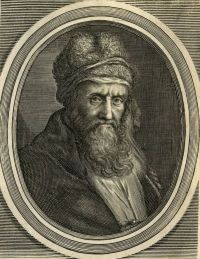
Diogenes Laërtius

Diogenes Laërtius

Summary

Portrait of Diogenes Laërtius Diogenes Laërtius Lives of the Eminent Philosophers… (1925)

Knowledge he defined as a habit of mind, not to be upset by argument, in the acceptance of presentations. Sometimes he used to say there was no single end of action, but it shifted according to varying circumstances and objects, as the same bronze might become a statue either of Alexander or of Socrates. He made a distinction between end-in-chief and subordinate end: even the unwise may aim at the latter, but only the wise seek the true end of life. Everything that lies between virtue and vice he pronounced indifferent.
Source: Wikisource

Portrait of Diogenes Laërtius Diogenes Laërtius Lives of the Eminent Philosophers… (1925)

By the nature with which our life ought to be in accord, Chrysippus understands both universal nature and more particularly the nature of man, whereas Cleanthes takes the nature of the universe alone as that which should be followed, without adding the nature of the individual.
And virtue, he holds, is a harmonious disposition, choice-worthy for its own sake and not from hope or fear or any external motive. Moreover, it is in virtue that happiness consists; for virtue is the state of mind which tends to make the whole of life harmonious.
Source: Wikisource

Portrait of Diogenes Laërtius Diogenes Laërtius Lives of the Eminent Philosophers… (1925)

Nature, they hold, aims both at utility and at pleasure, as is clear from the analogy of human craftsmanship. That all things happen by fate or destiny is maintained by Chrysippus in his treatise De fato, by Posidonius in his De fato, book ii., by Zeno and by Boethus in his De fato, book i. Fate is defined as an endless chain of causation, whereby things are, or as the reason or formula by which the world goes on. What is more, they say that divination in all its forms is a real and substantial fact, if there is really Providence.
Source: Wikisource

Get perspective with Kwize: daily news enlightened by great literature