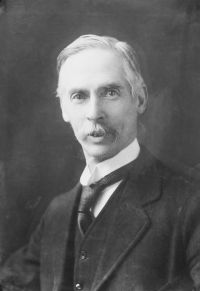
John Atkinson Hobson

John Atkinson Hobson

Summary

Portrait of John Atkinson Hobson John Atkinson Hobson Confessions of an Economic Heretic (1938)

In my early approaches towards economic study it had struck me as odd that the private ownership of land and the receipt of its rent seemed a matter of no importance to our political economists. Failing to recognize that rent played any part as a cost of production, they simply accepted it as belonging to the order of nature, beneficial no doubt to its recipients, but not injurious to anybody else.
Source: Wikisource

Portrait of John Atkinson Hobson John Atkinson Hobson Confessions of an Economic Heretic (1938)

The finest picture in the world has no effectual value if there is nobody available to appreciate its beauty. Even “a sheaf of wheat” may be devoid of “effectual” value if its owner has a surfeit, and it cannot pass to another who is in need of food. Curiously enough this view of wealth and value is here confined to the human utility of articles of wealth and takes no direct account of their human cost. This is the stranger inasmuch as Ruskin’s earliest and strongest charge against the economic system was that, by dividing and mechanizing labour, it took away all interest in and joy of work.
Source: Wikisource

Portrait of John Atkinson Hobson John Atkinson Hobson Confessions of an Economic Heretic (1938)

Though my heresies have led me to assign supreme significance to the financial situation of the consumer, I cannot pretend to possess intimate knowledge of anybody else’s standard of consumption, and living, as I have done for the most part upon the least defensible of all forms of unearned income, I have not been driven to the nice calculations of expenditure to which most men with families to keep are driven.
Source: Wikisource

Get perspective with Kwize: daily news enlightened by great literature