Summary

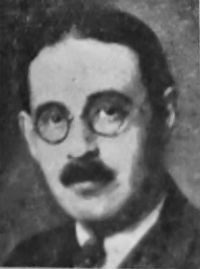
Portrait of Harold J. Laski Harold J. Laski Political Thought in England from Locke to Bentham

It is easy to praise Burke and easier still to miss the greatness of his effort. Perspective apart, he is destined doubtless to live rather as the author of some maxims that few statesmen will dare to forget than as the creator of a system which, even in its unfinished implications, is hardly less gigantic than that of Hobbes or Bentham. His very defects are lessons in themselves. His unhesitating inability to see how dangerous is the concentration of property is standing proof that men are over-prone to judge the rightness of a State by their own wishes.
Source: Gutenberg

Portrait of Harold J. Laski Harold J. Laski Political Thought in England from Locke to Bentham

It is here that the social contract emerges. But just as Locke's natural state implies a natural man utterly distinct from Hobbes' gloomy picture, so does Locke's social contract represent rather the triumph of reason than of hard necessity. It is a contract of each with all, a surrender by the individual of his personal right to fulfil the commands of the law of nature in return for the guarantee that his rights as nature ordains them—life and liberty and property—will be preserved.
Source: Gutenberg

Portrait of Harold J. Laski Harold J. Laski Political Thought in England from Locke to Bentham

It would be inaccurate, with Rousseau on the threshold, to say that his influence demolished the systems of political abstraction which, at their logical best, and in the most complete unreality, are to be found in Godwin's Political Justice; but it is not beyond the mark to affirm that after his time such abstract systems were on the defensive. Therein, with all his faults, he had given Burke the clue to those truths he so profoundly saw—the sense of the State as more than a mechanical contrivance, the high regard for prescription, the sense of law as the voice of past wisdom.
Source: Gutenberg

Get perspective with Kwize: daily news enlightened by great literature