“ In this way he read Blackstone through, acquiring so perfect a knowledge of its contents that he knew it almost by heart, and could quote from it verbatim to the very end of his life.His mind and thoughts were much occupied with the ominous news that continually reached them. Everywhere trouble seemed to be in the air. ”
Blackstone
Definition and stakes
Blackstone Inc. is an American alternative investment management company founded in 1985, known for its leadership in private equity, real estate, and asset management. Although the name "Blackstone" also refers to the 18th-century jurist William Blackstone, whose legal works shaped modern jurisprudence, the investment firm has been examined in literature from various perspectives.
Authors like Edward Francis Wilson portrayed "Blackstone" as a character in stories about frontier life, while others, such as Henry James Sumner Maine, cited Blackstone’s legal texts to discuss societal norms. These varied portrayals—from fictional figures to academic analyses—underscore the term’s dual significance, connecting historical legal ideas with modern financial influence.
Quotes about “Blackstone”
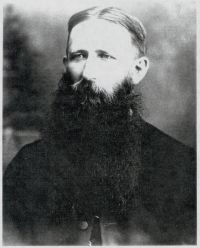 Edward Francis Wilson,
Missionary Work Among the Ojebway Indians
Edward Francis Wilson,
Missionary Work Among the Ojebway Indians
“ Soon the war-dancers appeared upon the scene, each with a whoop and a flourish of his knife or tomahawk. Conspicuous among them was Blackstone—no longer in European dress, but with legs bare on either side to his hips—a white shirt almost hidden by massive beadwork ornaments, long braided hair, feathers in his head, and his right hand flourishing a bayonet. ”
The Pamphleteer, Volume VIII, No…
“ Even Blackstone, a man who perhaps has written the most clear and certainly a most beautiful exposition of a difficult subject, who in all things, whether simple or intricate, has shown judgment and learning, seems, in spite of his great veneration for so high an authority, to lean to the opinion of the injustice of this passage. ”
 Henry James Sumner Maine,
Ancient Law
(1861)
Henry James Sumner Maine,
Ancient Law
(1861)
“ The only criticism which could be directly applied to the theory of Blackstone would consist in inquiring whether the circumstances which make up his picture of a primitive society are more or less probable than other incidents which could be imagined with equal readiness. ”
Various, Graham's Magazine, Vol. XXXV, No…
“ Blackstone’s fine person and commanding talents, gave him the welcome entrée of the first families of West Virginia: whether these are equal to the real F. F. V. of the eastern portion of the State, we do not know, but they were glad to find Blackstone among them. He married a young woman of good education—we mean of considerable school learning—and she was beside handsome and agreeable. She admired the position which Blackstone had achieved—was pleased with the fame of her husband, and not a little elated at the distinction which his character and popularity conferred on her. ”
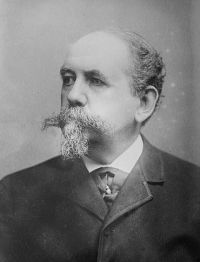 Ward McAllister,
Society as I Have Found It
Ward McAllister,
Society as I Have Found It
“ Blackstone did not wholly absorb all my time that winter. I exercised my memory in the morning and indulged my imagination of an afternoon, breathing soft words to lovely Southern maidens, in the piney groves which surround that charming city. From time immemorial they had always given these on Valentine’s Eve a Valentine party. ”
Various, The Southern Literary Messenger…
“ Blackstone should manifest a zeal for the institutions of his own country, disposing him to excuse what might be amiss, to vindicate what might be questionable, and to place in the highest relief and in the most favorable light whatever is praiseworthy. ”
 Leslie Stephen,
Dictionary of National Biography…
(1898)
Leslie Stephen,
Dictionary of National Biography…
(1898)
“ Blackstone was a consummate man of letters. Stephen showed the qualities in which Blackstone was comparatively deficient—consummate logical power and singular precision and accuracy of style. Had the work been published as an original treatise, it would have stood upon a level with Blackstone's work.’ In later editions the name of Blackstone is dropped, as larger additions became necessary in order to keep up with the alterations in the law. ”
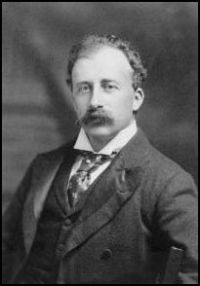 John Guille Millais,
Life of Frederick Courtenay Selous…
John Guille Millais,
Life of Frederick Courtenay Selous…
“ Blackstone'—the bailiff of the Pilton Range estate—said the labourer. Now Leroux had set his heart on visiting the magpie's nest, which he thought would be sure to contain eggs by now, and he was very averse to having his plans deranged by a visit to Mr. Blackstone. He first therefore offered to give his name to his captor to be reported to the headmaster, and when this proposition was received with a derisive laugh he pulled a letter from his coat pocket, and offered the envelope as a proof of his veracity. ”
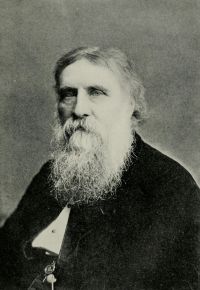 George MacDonald,
The Vicar's Daughter
George MacDonald,
The Vicar's Daughter
“ S., with a twinkle in his eye, as if he expected an indignant repudiation."I would rather keep a rag and bottle shop," I answered: at which Mr. Blackstone burst into one of his splendid roars of laughter; for if ever a man could laugh like a Christian who believed the world was in a fair way after all, that man was Mr. Blackstone; and even my husband, who seldom laughs at any thing I say with more than his eyes, was infected by it, and laughed heartily. ”
G. Hutchinson Smyth, The Life of Henry Bradley Plant
“ Timothy B. Blackstone is taken from the New York Herald of April 12, 1896:“Mr. Blackstone was born in a part of Branford known as Blackstoneville, on March 28, 1829. His father, Captain James Blackstone, in whose memory he erected this building, was a well-to-do farmer and stock-raiser. He derived his title of captain from being elected to that position in a company of local militia. He was elected to the Legislature in the sessions of 1825, 1826, and 1830, and was elected State Senator in 1840. ”
Yule Logs: Longmans' Christmas Annual for 1898
“ That last spurt saved Josh Blackstone's life. His outstretched arms had clasped neither pillar nor post, but King Philip's knees! and straightway Thusick sprang forward and pleaded that the white man should be delivered to her, that she might heal him, and so he would once again afford them sport. Her words were greeted with shouts of approval, for he had done bravely. Usually victims failed to traverse half the appointed space before they succumbed, but he had fallen at the goal and was still living! So Thusick's prayer was granted, and he was delivered into her hands. ”
 William Holmes McGuffey,
McGuffey's Sixth Eclectic Reader
William Holmes McGuffey,
McGuffey's Sixth Eclectic Reader
“ At first he could not obtain business enough in his profession to support himself, and for a time relinquished practice, and lectured at Oxford. He afterwards returned to London, and resumed his practice with great success, still continuing to lecture at Oxford. He was elected to Parliament in 1761; and in 1770 was made a justice of the Court of Common Pleas, which office he held till his death. Blackstone's fame rests upon his "Commentaries on the Laws of England," published about 1769. He was a man of great ability, sound learning, unflagging industry, and moral integrity. ”
 John Kendrick Bangs,
Toppleton's Client; Or, A Spirit in Exile
John Kendrick Bangs,
Toppleton's Client; Or, A Spirit in Exile
“ Why, Edward, there isn't a page in the Comic Blackstone that does not contain something that applies to your case, and that ought to [173] make you a winner if we could get around this horrible lack of body of yours."For instance," continued Toppleton, opening A'Beckett's famous contribution to legal lore, "in the very first chapter we find that Blackstone divides rights into rights of persons and rights of things. Clearly you have a right to your own person, and no judge on a sane bench would dare deny it. ”
George MacDonald,
The Vicar's Daughter
“ Yet what great difficulty would there be in combining the two sets of duties, especially with such a man as Blackstone? Of all the men I know, he comes the nearest to her in his devotion to the well-being of humanity, especially of the poor. Did you ever know a man with such a plentiful lack of condescension? His feeling of human equality amounts almost to a fault ”
Various, The Antiquarian Magazine & Bibliographer…
“ Speaking of Blackstone Edge and the glens leading therefrom down to Calder dale, we are reminded of the impression this mountain with its wild passes and rugged roads had on Taylor, the Water Poet, who crossed over in 1639, and this is what he says: “When I left Halifax I rode over such ways as were past comparison or amendment, for when I went down the lofty mountain called Blackstone Edge, I thought myself in the land of break-necke, it was so steep and tedious.” ”
George MacDonald,
The Vicar's Daughter
“ Blackstone with a smile, evidently wishing to draw Miss Clare out yet further."You turn me aside, Mr. Blackstone. I wanted to urge Mr. Morley to go into parliament as spiritual member for the poor of our large towns. Besides, I know you don't think as your question would imply. As far as my experience guides me, I am bound to believe that there is a spot of soil in every heart sufficient for the growth of a gospel seed. And I believe, moreover, that not only is he a fellow-worker with God who sows that seed, but that he also is one who opens a way for that seed to enter the soil. ”
George MacDonald,
The Vicar's Daughter
“ Blackstone do?" I insisted."All I should want of him would be to find out for me what Mr. Morley's liabilities are, and how much would serve to tide him over the bar of his present difficulties. I suspect he has few friends who would risk any thing for him. I understand he is no favorite in the city; and, if friendship do not come in, he must be stranded. You believe him an honorable man,—do you not?" ”
Various, The Bay State Monthly — Volume 1…
“ In 1633, the town granted to William Blackstone fifty acres of land wherever he might select. He accordingly selected upon the south-westerly slope of Beacon Hill, which included the Common. Being afterward compelled by the town to fence in his vacant land, he conveyed back to the town, for thirty pounds, all but the six-acre lot at the corner of Beacon and Spruce Streets, and extending westerly to Charles River, and northerly to Pinckney Street, where he lived until 1635, when he removed to Rhode Island, and founded the town which bears his name. ”
“ He addressed the Jefe. “No woman vexes you, yet are you troubled. But this man”—indicating Henry—“I cannot tell if all his vexation be due to woman. Perhaps, in part, it may be due to you, or to what some prompting of evil may make him meditate against you. Stand up, both men of you. I cannot judge between you. Yet is there the test infallible, the test of the Snake and the Bird. Infallible it is, as God is infallible, for by such ways does God still maintain truth in the affairs of men. As well does Blackstone mention just such methods of determining the truth by trial and ordeal.” ”
George MacDonald,
The Vicar's Daughter
“ Blackstone, addressing Mr. Morley, "if you do less—for more you cannot do—you will produce no effect whatever.""We have no right to make it a condition of our obedience, that we shall see its reflex in the obedience of others," said Miss Clare. "We have to pull out the beam, not the mote." ”
 Leigh Hunt,
The Town: Its Memorable Characters and Events
Leigh Hunt,
The Town: Its Memorable Characters and Events
“ A strong union has always existed between the law and the belles-lettres, highly creditable to the former, or rather naturally to be expected from the mode in which lawyers begin their education, and the diversity of knowledge which no men are more in the way of acquiring afterwards. Blackstone need not have written his farewell to the Muses. If he had been destined to be a poet, he could not have taken his leave ”
G. Hutchinson Smyth, The Life of Henry Bradley Plant
“ William Blackstone show him to have been a religious man, with literary tastes, of correct, industrious, thrifty habits, kind and philanthropic feelings, living for several years on Boston Neck, and demonstrating the ability of the white man to live in peace with only Indians for his neighbors. ”
George MacDonald,
The Vicar's Daughter
“ Blackstone carried his discoveries to Miss Clare and she to Lady Bernard."My dear Marion," said Lady Bernard, "this is a serious matter you suggest. The man may be honest, and yet it may be of no use trying to help him. ”
George MacDonald,
The Vicar's Daughter
“ Walton who would have thrown his pen in the fire if you had meddled with any thing he wrote. They would be praising me, if they praised at all. The name is nothing. Of all things, to have praise you don't deserve, and not to be able to reject it, is the most miserable! It is as bad as painting one's face.""Hardly a case in point," said Mr. Blackstone. "For the artificial complexion would be your own work, and the other would not." ”
Various, Punch, or the London Charivari…
“ BLACKSTONE, of BLACKSTONE & SONS, head of the great Coal Merchant Firm; that the man in blue and silver, supposed to be a Hungarian attaché, is the junior partner in BUNNUMS & Co., the Big Cake Purveyor; and that the warlike person, with a jingling sabre, is not a Prussian officer, but is Deputy JONES, in the gorgeous uniform of the Old Buckshire Yeomanry ”
 William Hone,
The Every-day Book and Table Book…
William Hone,
The Every-day Book and Table Book…
“ It is affirmed of sir William Blackstone, that so often as he sat down to the composition of his Commentaries on the Laws of England, he always ordered a bottle of wine wherewith to moisten the dryness of his studies; and in proof that other professional men sometimes solace their cares by otherwise disporting themselves, there is a kind of catch, the words of which, having reference to their art or mystery, do so marvellously inspire them, that they chant it with more glee than gravity, to a right merry tune:— A woman having settlement, Married a man with none ”
William Holmes McGuffey,
McGuffey's Sixth Eclectic Reader
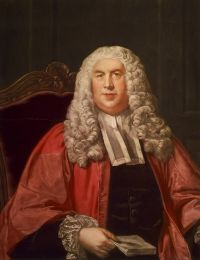
“ The Rhone flows through it, entering by a deep narrow gap, with mountain groups on either hand, eight or nine thousand feet above the water. The scenery about the lake is magnificent, the Jura mountains bordering it on the northwest, and the Alps lying on the south and east.CXVIII. ORIGIN OF PROPERTY. (410) Sir William Blackstone, 1723-1780, was the son of a silk merchant, and was born in London. He studied with great success at Oxford, and was admitted to the bar in 1745. ”
 Herbert Spencer,
Man or the State? — The Right to Ignore the State
(1919)
Herbert Spencer,
Man or the State? — The Right to Ignore the State
(1919)
“ "No human laws are of any validity if contrary to the law of nature; and such of them as are valid derive all their force and all their authority mediately or immediately from this original." Thus writes Blackstone, to whom let all honor be given for having so far outseen the ideas of his time,—and, indeed, we may say of our time. A good antidote, this, for those political superstitions which so widely prevail. A good check upon that sentiment of power-worship which still misleads us by magnifying the prerogatives of constitutional governments as it once did those of monarchs. ”
 William Blackstone,
Commentaries on the Laws of England
(1768)
William Blackstone,
Commentaries on the Laws of England
(1768)
“ The queen of England is either queen regent, queen consort, or queen dowager. The queen regent, regnant, or sovereign, is she who holds the crown in her own right; as the first (and perhaps the second) queen Mary, queen Elizabeth, and queen Anne; and such a one has the same powers, prerogatives, rights, dignities, and duties, as if she had been a king. ”
William Blackstone,
Commentaries on the Laws of England
(1768)
“ All regal governments must be either hereditary or elective: and, as I believe there is no instance wherein the crown of England has ever been asserted to be elective, except by the regicides at the infamous and unparalleled trial of king Charles I, it must of consequence be hereditary. Yet while I assert an hereditary, I by no means intend a jure divino, title to the throne. ”
William Blackstone,
Commentaries on the Laws of England
(1768)
“ They are the guardians of the English constitution; the makers, repealers, and interpreters of the English laws; delegated to watch, to check, and to avert every dangerous innovation, to propose, to adopt, and to cherish any solid and well-weighed improvement; bound by every tie of nature, of honour, and of religion, to transmit that constitution and those laws to their posterity, amended if possible, at least without any derogation. And how unbecoming must it appear in a member of the legislature to vote for a new law, who is utterly ignorant of the old! ”
William Blackstone,
Commentaries on the Laws of England
(1768)
“ The science thus committed to his charge, to be cultivated, methodized, and explained in a course of academical lectures, is that of the laws and constitution of our own country: a species of knowlege, in which the gentlemen of England have been more remarkably deficient than those of all Europe besides. ”
William Blackstone,
Commentaries on the Laws of England
(1768)
“ In England particularly, this diversity is carried to such a length, as if it had been meant to point out the power of the laws in regulating the succession to property, and how futile every claim must be that has not it's foundation in the positive rules of the state. ”
William Blackstone,
Commentaries on the Laws of England
(1768)
“ One of the greatest advantages of our English law is, that not only the crimes themselves which it punishes, but also the penalties which it inflicts, are ascertained and notorious: nothing is left to arbitrary discretion: the king by his judges dispenses what the law has previously ordained; but is not himself the legislator. How much therefore is it to be regretted that a set of men, whose bravery has so often preserved the liberties of their country, should be reduced to a state of servitude in the midst of a nation of freemen! ”
