AI-generated from sources
The enduring conflict: Republican promises of prosperity versus the critique of plutocracy
In Brief
- The Republican economic identity relies on an enduring promise of widespread prosperity ('golden harvest') achieved through sound money, protected industry, tax cuts, and deregulation.
- Critiques, both historical (tariffs creating monopolies) and modern (tax cuts favoring the wealthy), assert that GOP policies consistently benefit plutocratic interests at the expense of the general public.
- Contemporary fiscal debates reveal a willingness to use national stability (like the debt ceiling) as political leverage to dismantle social safety nets, illustrating a fundamental suspicion of the social contract.
- The schism between the promise of universal uplift and the critique of inequality reflects an unresolved conflict over the true beneficiary and purpose of the Republican economic policy framework.
Main authors

The Republican party has long anchored its political identity in a promise of widespread prosperity, envisioning an economy where progress and profit come together like a "golden harvest" [1]. This vision, articulated for over a century, suggests that national wealth is not created by political resolutions but must be unearthed through hard work, innovation, and sound economic principles [2]. The core mechanisms for achieving this abundance have evolved over time but consistently include policies aimed at fostering industry, such as sound money, protective tariffs, tax reductions, and deregulation [3, 4, 5]. The central message has remained remarkably consistent: these policies will create an environment where every American, from the farmer to the factory worker, can achieve greater financial success [6].
However, this narrative of universal uplift is persistently challenged by a powerful counter-argument which asserts that these same policies systematically favor a wealthy elite at the expense of the broader population [7, 8]. Critics, both historical and contemporary, contend that the party's platform often translates into a form of economic stratification, where tax cuts benefit corporations and the affluent, while essential social programs are left vulnerable [9, 10]. This critique extends beyond mere outcomes, charging that fundamental aspects of national financial stability, such as paying the country's debts, are sometimes used as political leverage, introducing a destabilizing precarity into the lives of ordinary citizens [11]. At the heart of this enduring debate lies a fundamental question: does the Republican economic framework build a foundation for mass prosperity, or does it, as its detractors claim, construct a system that funnels wealth upwards while betraying the interests of the many? [12].
Foundations of the promise: Sound money and protected industry
Historically, the Republican economic vision was built upon the twin pillars of a stable currency and protected domestic industries . The party championed the idea that money is a commodity, not a legal fiction, and that its value must be solid and dependable—a "full dollar for all labor and productions" . This emphasis on sound money was presented as the bedrock of a reliable economy, though it drew criticism for creating a "scarce money system" that could effectively confiscate the property of debtors by making currency harder to obtain [13]. The party's leadership, however, saw deviating from this principle as a dangerous experiment that could plunge the country into bankruptcy [14].
Alongside a stable dollar, the policy of protective tariffs was central to the promise of prosperity for generations . The argument was straightforward: by imposing duties on foreign goods, the government could shield American industries and laborers from external competition, thereby ensuring domestic growth and high wages [15, 16]. This protectionist stance was marketed as a direct benefit to the working populace, a core part of a system designed to help them make more money .
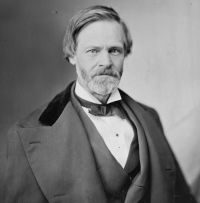
This foundational vision, however, was not without its trenchant critics. Opponents argued that Republican tariff policies were not designed for general revenue but rather to exert control over the nation's labor and capital, creating a perpetually "restless economic condition" [17, 18]. This approach was denounced as a "fraud" and a "robbery of the great majority" for the benefit of a select few, alleging that it fostered the growth of "gigantic corporate monopolies" [19, 20]. Critics like Samuel J. Tilden argued that such principles inherently tended toward corruption and an alliance with plutocratic interests, betraying the people to monopolists . This historical tension reveals that the debate over who truly benefits from Republican economic policy is as old as the policies themselves.
The modern apparatus: Tax cuts and deregulation
In the contemporary era, the primary instruments for delivering on the promise of prosperity have shifted from tariffs to tax cuts and deregulation [21]. The modern Republican platform frequently centers on the argument that lowering the tax burden on businesses, for instance from 35 percent to 15 percent, will incentivize companies to expand, return to the country, and create jobs . This is complemented by promises of significant tax relief for the middle class, creating a dual-pronged approach aimed at stimulating the entire economy .
Deregulation serves as the second key component of this modern strategy. The stated goal is to streamline federal rules, reduce the costs of compliance, and speed up crucial projects, particularly in manufacturing and infrastructure . Executive actions have been implemented to put a cap on the total costs that new regulations can impose on agencies, with the explicit aim of unshackling American industry . This combination of tax reduction and regulatory relief is presented as the most effective path to a vibrant economy, one that was, prior to the pandemic, described as the "greatest economy in the history of any country" [22].
Yet, this modern apparatus faces criticisms that echo the historical critiques of tariff policy. Opponents argue that these tax and regulatory changes disproportionately favor the wealthiest individuals and largest corporations . The charge is that while the wealthy receive tax cuts and corporations benefit from loopholes for things like corporate jets and favorable treatment for oil companies, the fiscal burden is shifted elsewhere . This creates a dynamic described by Barack Obama as "stacking the deck in favor of those at the top" rather than pursuing policies that grow the economy for everyone . The result, according to this view, is a system where the costs of government and the benefits of economic policy are unequally distributed .
A question of priorities: The social contract as political leverage
The debate over Republican economic policy extends deeply into the realm of the social contract and the role of government itself. Critics suggest that underlying the party's fiscal agenda is a fundamental suspicion of government commitments to social welfare programs such as Social Security, Medicare, and aid for impoverished children [23]. This ideological stance becomes particularly consequential during fiscal debates, where these programs are often portrayed as the source of financial strain rather than untouchable commitments .
This dynamic has led to accusations that Republican leaders have been willing to use the nation's financial stability as a bargaining chip to achieve their policy goals . During standoffs over the debt ceiling, for instance, the choice presented by opponents is that Republicans can either act responsibly by paying the nation's bills or risk triggering an economic crisis . The use of such high-stakes negotiations is condemned as an attempt to collect a "ransom in exchange for not crashing the American economy" . This tactic, critics argue, treats the well-being of the American people and the full faith and credit of the United States not as solemn obligations but as disposable leverage .
From the Republican perspective, however, these confrontations are often framed as necessary steps toward fiscal responsibility and reform [24]. The goal is not to create instability but to rein in what is seen as extravagant and wasteful spending, often linked to programs like the Affordable Care Act [25]. The promise is to replace these systems with more affordable, innovative, and market-based alternatives that deliver high-quality care without expanding the government's role [26]. The political friction, therefore, arises from two irreconcilable views: one that sees a dangerous willingness to sacrifice stability for ideology, and another that sees a necessary fight to restore fiscal sanity and prevent dependency on a state that has overstepped its bounds .
The Republican promise of affordability and mass prosperity is a powerful and enduring thread in American political discourse, woven from historical principles of sound money and industrial protection into a modern fabric of tax cuts and deregulation . Proponents have consistently argued that this framework is the only reliable path to national wealth, capable of restoring the country from economic distress and ensuring progress for all citizens through the protection and promotion of American labor and enterprise . This vision paints the party as the steward of a system that rewards hard work and maintains the integrity of the American dollar .
Yet, this vision is shadowed by a persistent and equally historic critique that the party's policies have consistently allied with "plutocratic interests," benefiting a favored few at the expense of the general public . This counter-narrative argues that whether through tariffs that create monopolies or tax cuts that favor the wealthy, the result is a system that exacerbates inequality . Furthermore, the charge that the party is willing to leverage the nation's economic stability to dismantle the social safety net raises profound questions about its governing priorities . Ultimately, the schism between the promise of a "golden harvest" for all and the critique of a system built for the few reflects a fundamental and unresolved conflict over the very purpose of economic policy and the role of government in shaping the nation's fortunes .