AI-generated from sources
The enduring paradox: Paternalism and contempt in Danish colonial Greenland
In Brief
- Danish governance was defined by a colonial paradox: a self-professed 'humane spirit' undercut by economic exploitation and an 'ingrained contempt' for the native population.
- Administrative policies treated Greenland as a remote 'appendage,' implementing a restrictive trade monopoly that actively stifled local enterprise and ensured economic dependence.
- European observers often constructed the Greenlander as the 'civilized savage,' recognizing their intelligence and literacy but viewing them as fundamentally inferior to Europeans.
- The colonial project exerted profound social control, from imposing Christian norms and European property concepts to reinforcing subordinate status through paternalistic restrictions.
Main authors

The long history of Danish governance in Greenland presents a study in contradictions, a colonial relationship characterized by both a self-professed humane spirit and a deeply ingrained institutional contempt [1, 2]. For centuries, Danish administrators, missionaries, and traders engaged with the Greenlandic people, resulting in significant cultural exchange and the emergence of a unique, literate society that blended indigenous and European elements [3]. This process of cultural assimilation, however, was perpetually shadowed by a paternalistic condescension that permeated Danish policy and attitudes, shaping a dynamic of control rather than partnership . The official Danish motive was often framed as a benevolent mission to bring civilization and Christianity to the native population, yet this objective coexisted with practices that revealed a profound disregard for the people it purported to help [4].
This fundamental paradox created a lasting tension between indigenous identity and external rule. While Greenlanders adopted new technologies, religion, and literacy, and while intermarriage created a substantial mixed-race populace that identified as Greenlandic, the administrative framework remained one of dominance and subordination [5]. Danish policies, from trade restrictions to the imposition of foreign social norms, often undermined the very fabric of Greenlandic society they claimed to be improving [6, 7]. The relationship between the colonizer and the colonized was thus established on what has been described as an "entirely wrong basis," one where even the best intentions were filtered through a lens of inherent superiority . Understanding this legacy requires dissecting how Danish administrative views, cultural perceptions, and civilizing efforts converged to create a complex and often damaging colonial inheritance.
A Distant Dominion: The Danish Administrative View of Greenland
From the perspective of Copenhagen, Greenland was often viewed not as a nation to be partnered with, but as a remote and peripherally useful "appendage" to the Danish Crown, alongside other territories like Iceland and the Faroe Islands [8]. This perception of Greenland as a distant possession, rather than an integral part of the kingdom, fundamentally shaped the nature of its governance [9]. The administration was structured around control and extraction, with trade established as a monopoly of the Danish government . This policy of commercial restriction, designed for the benefit of the metropole, had severe consequences for the colony itself, stifling local enterprise and leading to a moribund economic condition that made self-sufficiency nearly impossible [10]. The colony's survival depended on a tightly controlled lifeline to Denmark, reinforcing its subordinate status.
The official contempt for the colony was most starkly revealed in the quality of the people sent to administer and populate it. Early efforts to establish an official Danish presence involved not exemplary citizens, but convicts and "lewd and drunken women" who were deemed "good enough for the Eskimos" . This act demonstrates a profound lack of respect for the Greenlandic people, viewing their land as a dumping ground for the mother country's unwanted elements. Such actions stand in stark contrast to the later constitutional declaration that Greenland was an "integral part of the Danish realm" [11]. While this legal status suggested equality, the historical administrative practices painted a different picture, one of a territory managed with a blend of neglect and disdain, its people seen as subjects to be managed rather than as fellow citizens.
This administrative distance fostered an environment where the Greenlandic people were seen through a colonial lens of utility and control. Even the re-establishment of settlements in the eighteenth century was driven primarily by economic interests, particularly the value of fisheries, rather than a primary concern for the inhabitants [12]. The entire colonial structure, from the government-run stores to the presence of a few Danish officials in each settlement, was designed to maintain Danish authority and economic advantage [13]. The governance of Greenland was therefore not an exercise in mutual development but an assertion of Danish sovereignty over a territory and its people, who were regarded as resources to be managed from afar .
The Civilized Savage: European Constructions of Greenlandic Identity
European encounters with the Greenlandic people produced a complex and often contradictory portrait of their identity. Early descriptions focused heavily on physical characteristics, cataloging them in racialized terms as short, broad-faced, and dark-skinned [14]. Their social structures were frequently judged against European norms and found wanting; Greenlandic women, for instance, were depicted as degraded and burdened with excessive labor, a view that ignored the functional logic of their roles within an arctic survival context [15]. These initial perceptions established a framework of otherness, defining Greenlanders by their deviation from a European standard.
As interaction deepened, this view evolved into a more nuanced, yet still hierarchical, understanding. Observers acknowledged that Greenlanders possessed great natural intelligence, were receptive to instruction, and had become a largely literate population who read their own newspapers and embraced European culture to some extent . Some even described the northernmost tribes as intelligent and law-abiding despite lacking a formal government [16]. Yet, this recognition of their capacity for "civilization" did not erase the underlying perception of them as fundamentally primitive. One Danish account tellingly ignores traditional Eskimo virtues of self-sacrifice and fidelity, claiming such concepts were absent from their cultural myths [17]. The Greenlander was thus constructed as a figure capable of being civilized, but inherently lacking the moral and social sophistication of the European.
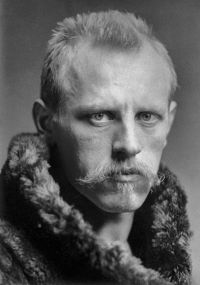
This duality is central to the colonial mindset described by observers like Fridtjof Nansen, who noted that even when the Danish approach was comparatively humane, it was impossible for the colonizers to shed their tendency to look down on the native people as inferiors . This "ingrained contempt" for so-called aborigines was a constant, regardless of stated intentions . The Greenlanders were often referred to by archaic and dismissive terms like "Skrælings," lumping them in with other heathens of the American lands [18]. Ultimately, the European view of the Greenlander was that of a civilized savage: a person who could learn to read, write, and pray like a Dane, but who remained, at their core, an inferior other.
Remaking a People: The Mechanics of Colonial Influence
The Danish colonial project was not merely administrative; it was an active and ambitious effort to reshape Greenlandic society in its own image. This transformative mission was epitomized by the work of Hans Egede, the "apostle of Greenland," who dedicated his life to teaching the Eskimos and establishing a Christian presence in the country [19, 20]. The goal was to replace indigenous spiritual and social systems with Danish-approved Christian norms. This mission was successful in many respects, leading to a population that could read and write its own language and practiced a form of Europeanized culture .
A significant and lasting outcome of this prolonged contact was the creation of a substantial mixed-race, or "half-breed," population . These children of Danish men and Greenlandic women often grew up fully integrated into local life, identifying as "complete Greenlanders." Their existence physically embodied the blending of the two cultures, yet they were also a direct product of the colonial power imbalance. This demographic shift highlights the intimate nature of the colonial encounter, where the lines between colonizer and colonized blurred through kinship, even as the political and social hierarchy remained rigid .
However, the process of cultural imposition was often disruptive and demeaning. The introduction of European concepts of property, for example, clashed directly with the Greenlanders' communal, "primitive socialistic" traditions, leading to social confusion and degeneration . Danish control was paternalistic and extended to the most minute details of life, reflecting a fundamental lack of trust in the native population. In a stark example of this control, Greenlandic men were permitted to have a single glass of schnapps only once per year, on the king's birthday, a rationed privilege reinforcing their subordinate, childlike status in the eyes of the administration [21]. This combination of religious instruction, cultural blending, and oppressive social control defined the Danish attempt to remake the Greenlandic people, an effort that simultaneously educated and subjugated them.
The Danish colonial chapter in Greenland is ultimately a story of profound dissonance. On one hand, the administration operated under a banner of a uniquely humane civilizing mission, a project that successfully introduced literacy and fostered a complex hybrid culture . On the other hand, this mission was consistently sabotaged by the administration's own actions, which were rooted in economic exploitation, restrictive policies, and an unshakable, paternalistic contempt for the very people it aimed to uplift . The desire to "bless" the natives was perpetually at odds with the impulse to control and look down upon them, creating a relationship built on fundamentally unequal and flawed premises .
This legacy of contradiction left an indelible mark on Greenlandic society. It fostered a population that was simultaneously indigenous and Europeanized, Christian yet retaining deep cultural traditions . Yet it also created systemic dependencies and social disruptions by imposing foreign norms that were ill-suited to the local context . The potential for Danish traditions to become mere obscure memories within a century of separation suggests that the colonial layer, while impactful, never fully erased the resilient Greenlandic identity beneath [22]. The inherited face of Danish colonization is thus one of a complex, intertwined history, but one scarred by an administrative contempt that ensured the relationship would always be one of ruler and subject, not of equals.