“ But like nothing else is the Greenland winter-night with its flaming northern lights; it is Nature’s own mystic spirit-dance.Strange is the power which this land exercises over the mind; but the race that inhabits it is not less remarkable than the land itself.The Eskimo, more than anyone else, belongs to the coast and the sea. He dwells by the sea, upon it he seeks his subsistence, it gives him all the necessaries of his life, over it he makes all his journeys, whether in his skin-canoes in summer, or in his dog-sledges when it is ice-bound in winter. ”
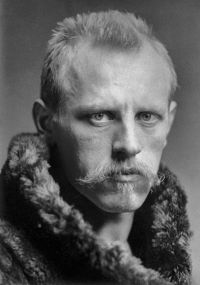
Fridtjof Nansen
Summary
Fridtjof Nansen’s Eskimo Life, authored by the Norwegian explorer and Nobel laureate, presents a vivid ethnographic portrayal of Greenland’s Indigenous peoples, their harmonious connection with the Arctic environment, and their cultural customs. Based on direct observations, Nansen describes the Eskimo’s dependence on hunting, the spiritual importance of the sea, and the endurance of their customs in the face of European expansion.
Themes of survival, the haunting beauty of Greenland’s landscapes, and the conflict between indigenous traditions and colonial influence run throughout the text, ultimately leading to a contemplative reflection on the vulnerability of cultural continuity amidst modernization.
Quotes from Eskimo Life (Fridtjof Nansen)
Fridtjof Nansen,
Eskimo Life
(1893)
“ If Norway is glorious, Greenland is in truth no less so. When one has once seen it, how dear to him is its recollection! I do not know if others feel as I do, but for me it is touched with all the dream-like beauty of the fairyland of my childish imagination. It seems as though I there found our own Norwegian scenery repeated in still nobler, purer forms. It is strong and wild, this Nature, like a saga of antiquity carven in ice and stone, yet with moods of lyric delicacy and refinement. It is like cold steel with the shimmering colours of a sunlit cloud playing through it. ”
Fridtjof Nansen,
Eskimo Life
(1893)
“ There is no finer sight possible than to see the kaiak-man breasting the heavy rollers that seem utterly to engulf him. Or when, overtaken by a storm at sea, the kaiaks run for the shore, they come like black storm-birds rushing before the wind and the waves, which, like rolling mountains, sweep on in their wake. The paddles whirl through air and water, the body is bent a little forwards, the head often turned half backwards to watch the seas; all is life and spirit—while the sea around reeks like a seething cauldron. ”
