The paddle, a basic tool of navigation and labor, represents the meeting of human effort and natural forces in literature. From E. Pauline Johnson’s lyrical tribute to a canoe’s “trembling keel” to William La Varre’s portrayal of paddlers harmonizing with rapids through song, writers have incorporated the paddle into stories of endurance and connection to water.
Whether as a sign of quiet skill in Agnes C. Laut’s otter hunts or a means of reflection in John Boyle O’Reilly’s athletic reverie, the paddle goes beyond its practical use, embodying both the physical act of movement and the poetic echo of water’s flow. These diverse depictions highlight its function as a link between human effort and the fundamental rhythms of nature.
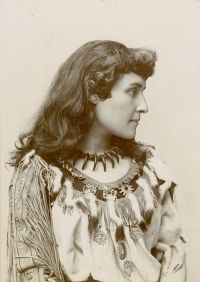 E. Pauline Johnson,
Flint and Feather — The Song my Paddle Sings
(1914)
E. Pauline Johnson,
Flint and Feather — The Song my Paddle Sings
(1914)